
Blog
Practical takes on vacation tracking, leave policies, project capacity planning, workload, ClickUp time tracking, budgets, and agency operations. Written by the team building BreezeLeave.
Latest updates
Fresh posts and recently revised guides.
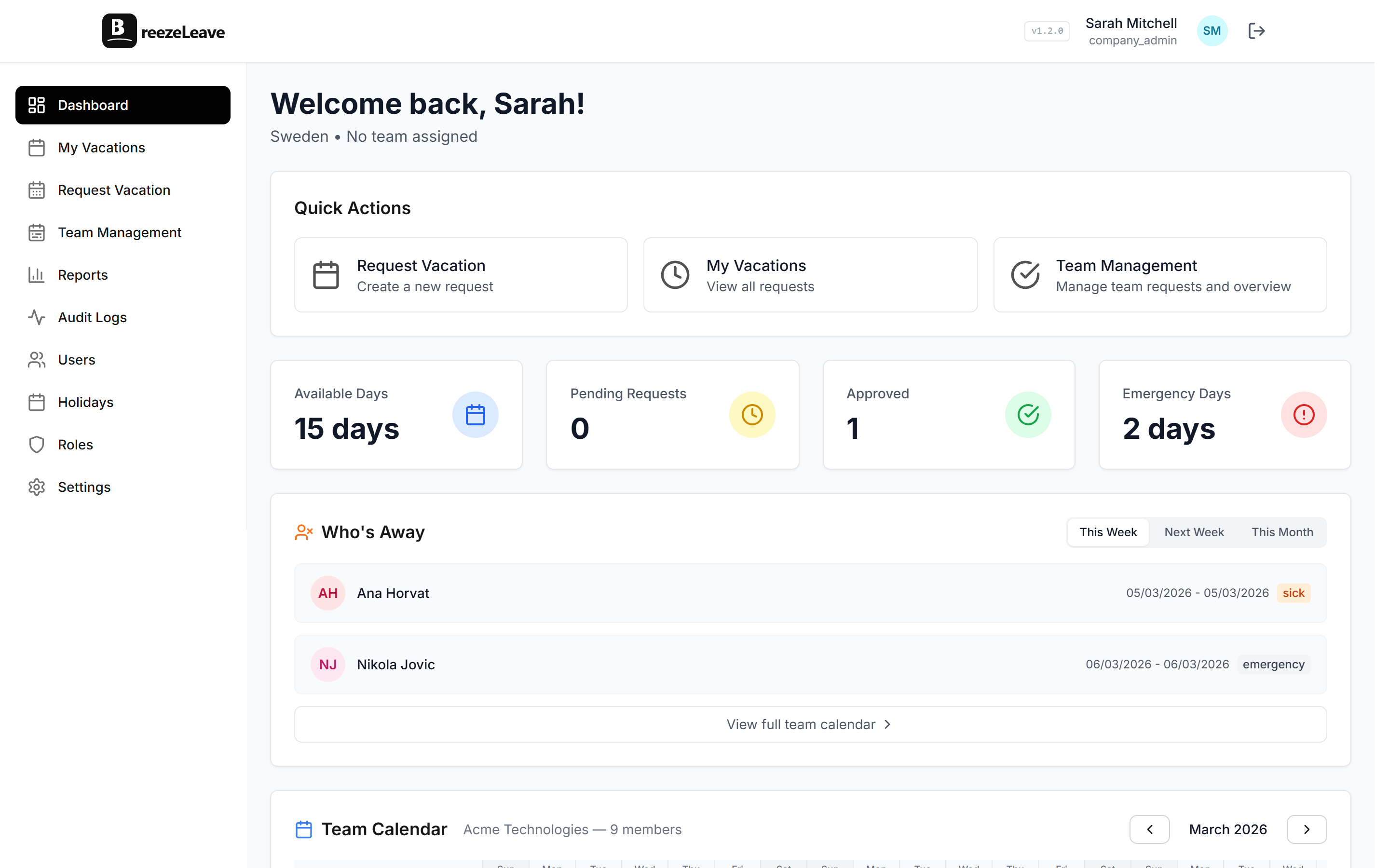
Bookkeeping and Payroll Export for Leave, Sick Days, and Carryover Balances
How HR and finance teams can use BreezeLeave bookkeeping views to reconcile approved leave, sick days, carryover, adjustments, CSV exports, and payroll-ready absence data.
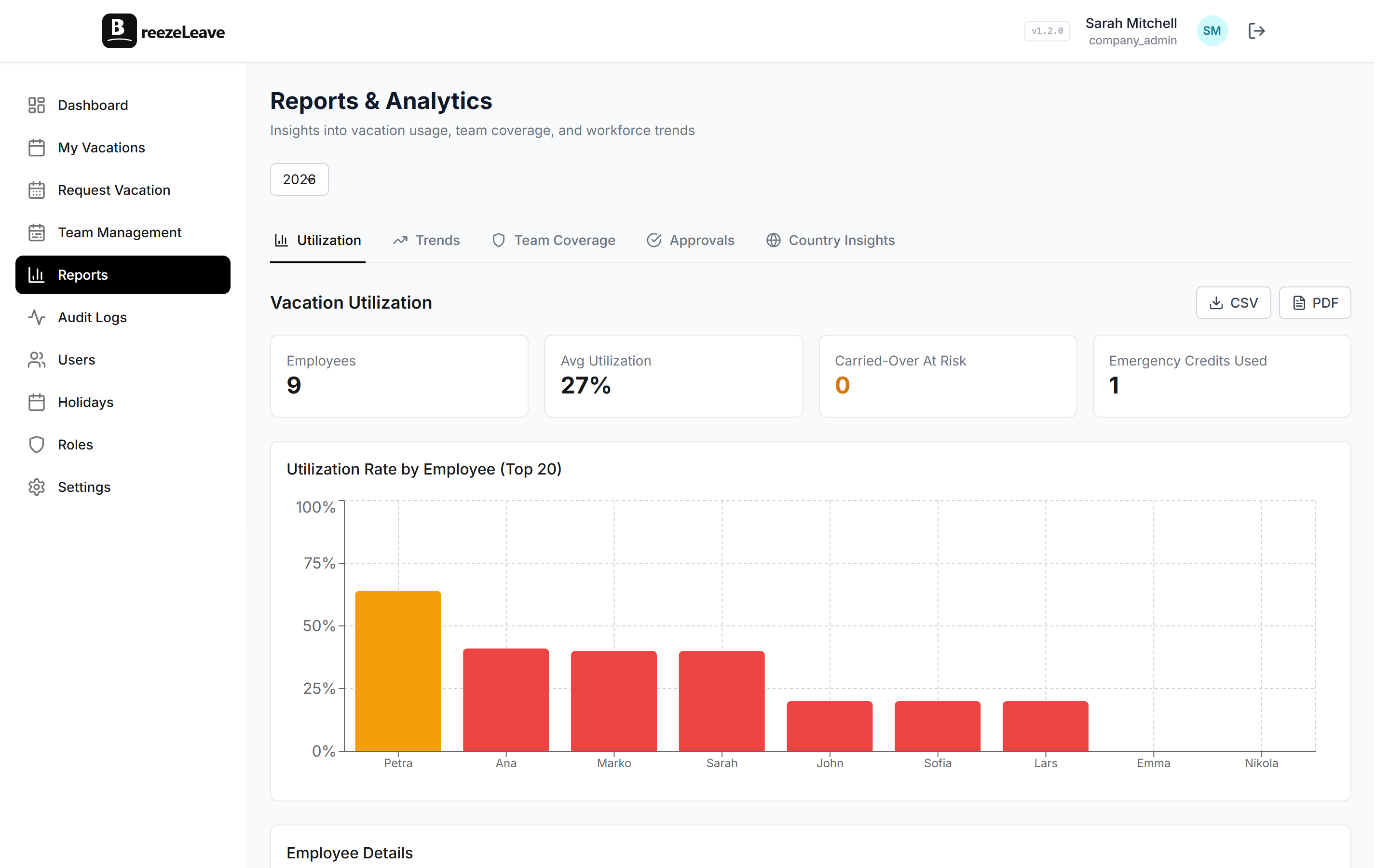
Leave Reports HR Actually Uses: Utilization, Coverage, Approvals, and Country Insights
A practical way to read BreezeLeave reports across utilization, trends, team coverage, approval patterns, country insights, and CSV/PDF exports.
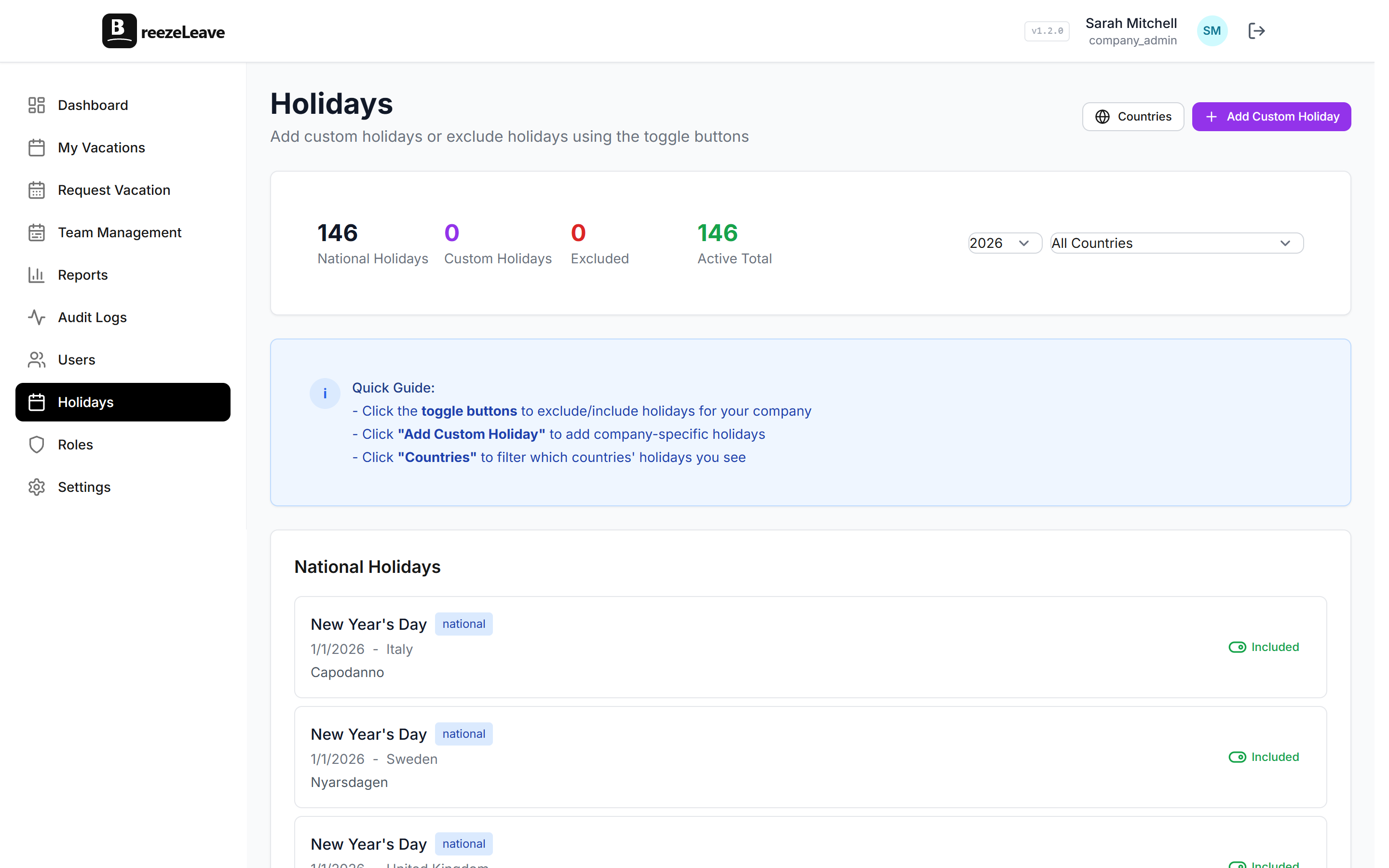
Holiday Management for Accurate Working-Day Calculations
How custom company holidays, national holidays, operating countries, and excluded holidays keep PTO balances and request durations accurate across countries.
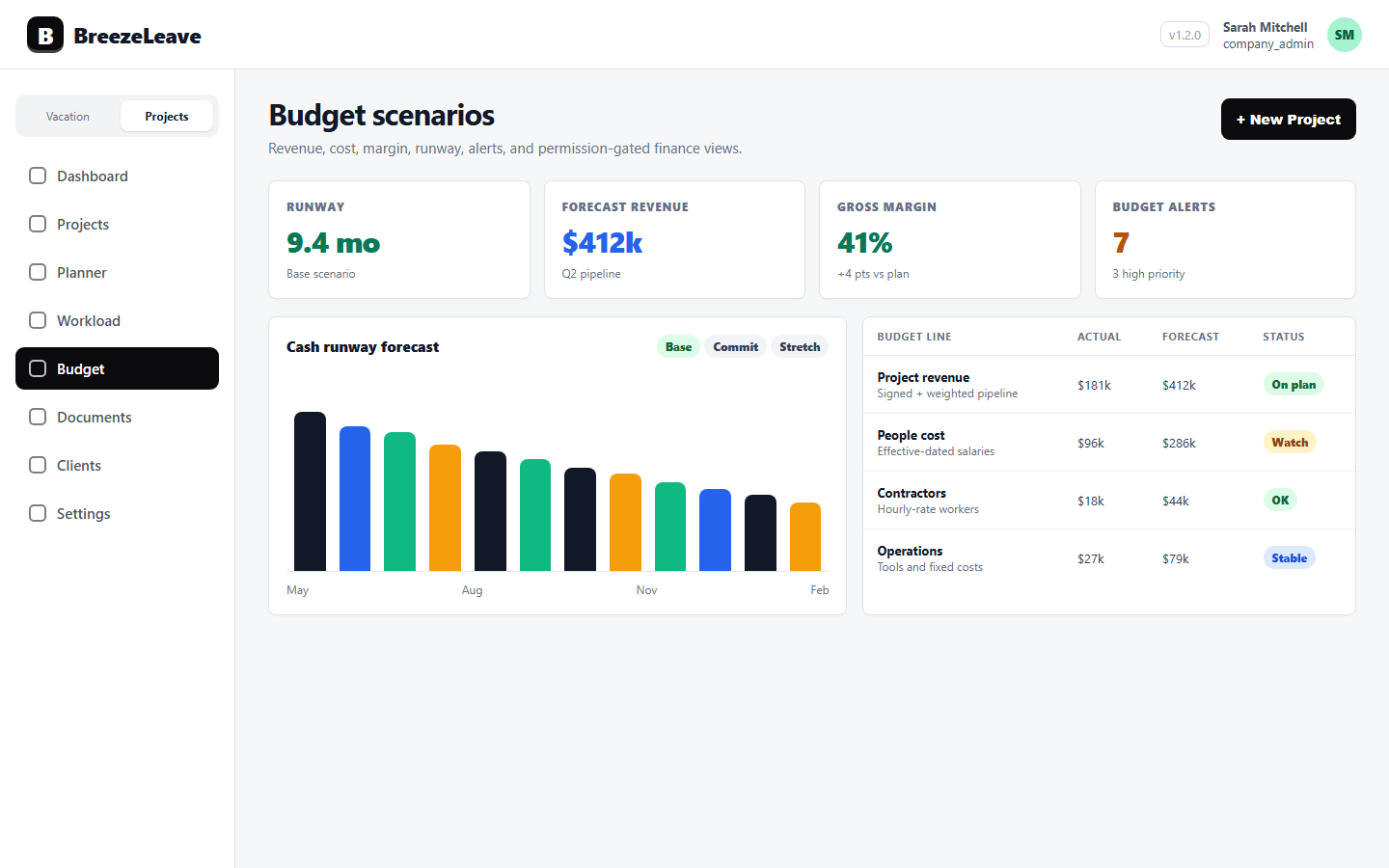
Agency Budget Reviews: Categories, Scenarios, Cash Runway, Alerts, and Headcount
How agency owners can run budget reviews with categories, scenarios, starting cash, runway, alerts, planned headcount, report views, and permission-gated cost data.
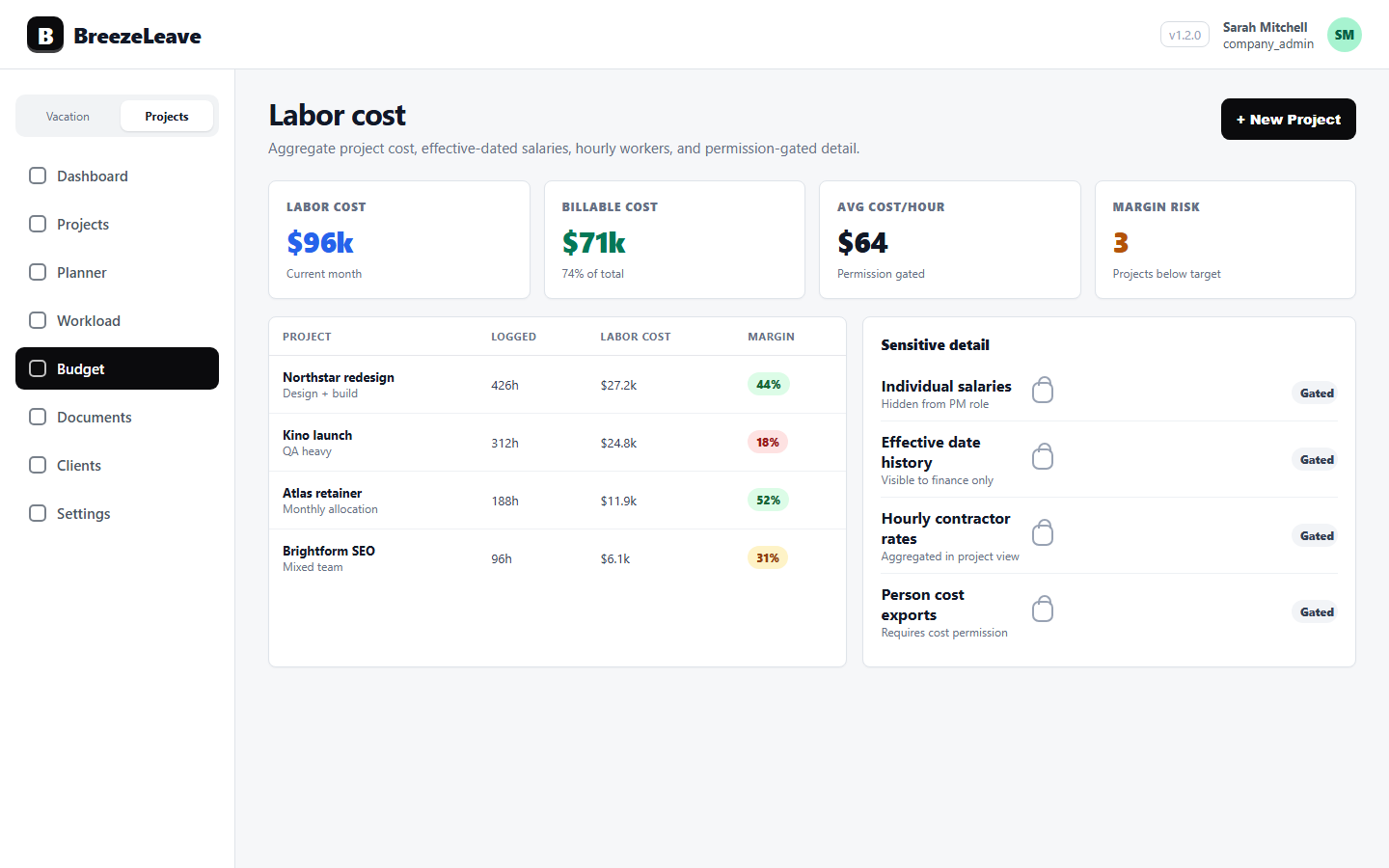
Labor Cost Tracking for Agencies Without Exposing Everyone's Salary
How effective-dated salary history, hourly-rate workers, permission gates, and aggregate cost reporting help agencies understand project labor cost safely.
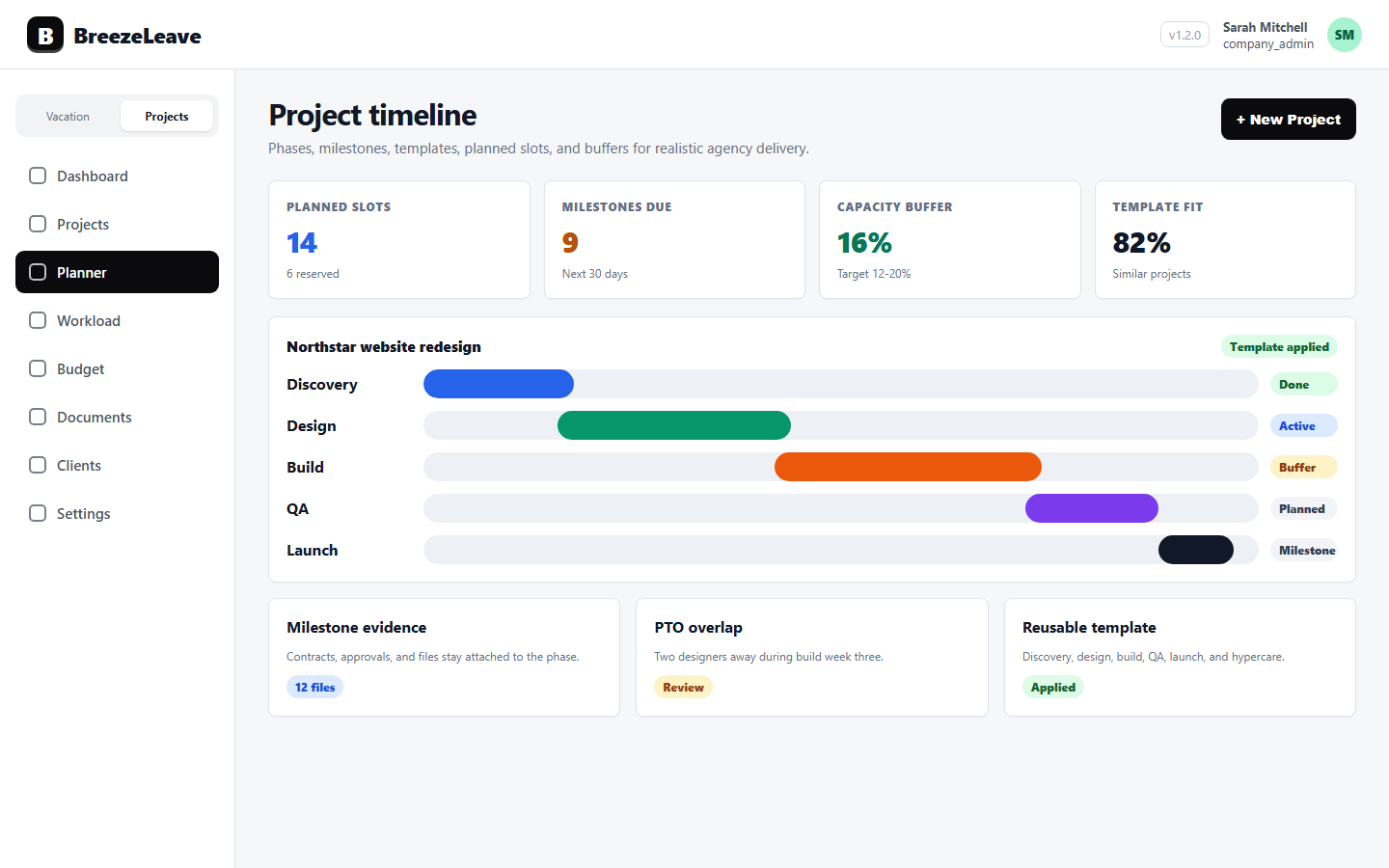
Agency Project Timelines: Phases, Milestones, Templates, and Capacity Buffers
How agency teams can use project phases, milestones, reusable templates, history, planned slots, and capacity buffers to keep delivery plans realistic.
Leave management essentials
15 articlesHow HR Managers Save 5 Hours/Week with Automated Leave Tracking
Breaking down exactly where HR managers spend time on leave management and how automation cuts that time from 6+ hours to under 1 hour per week.
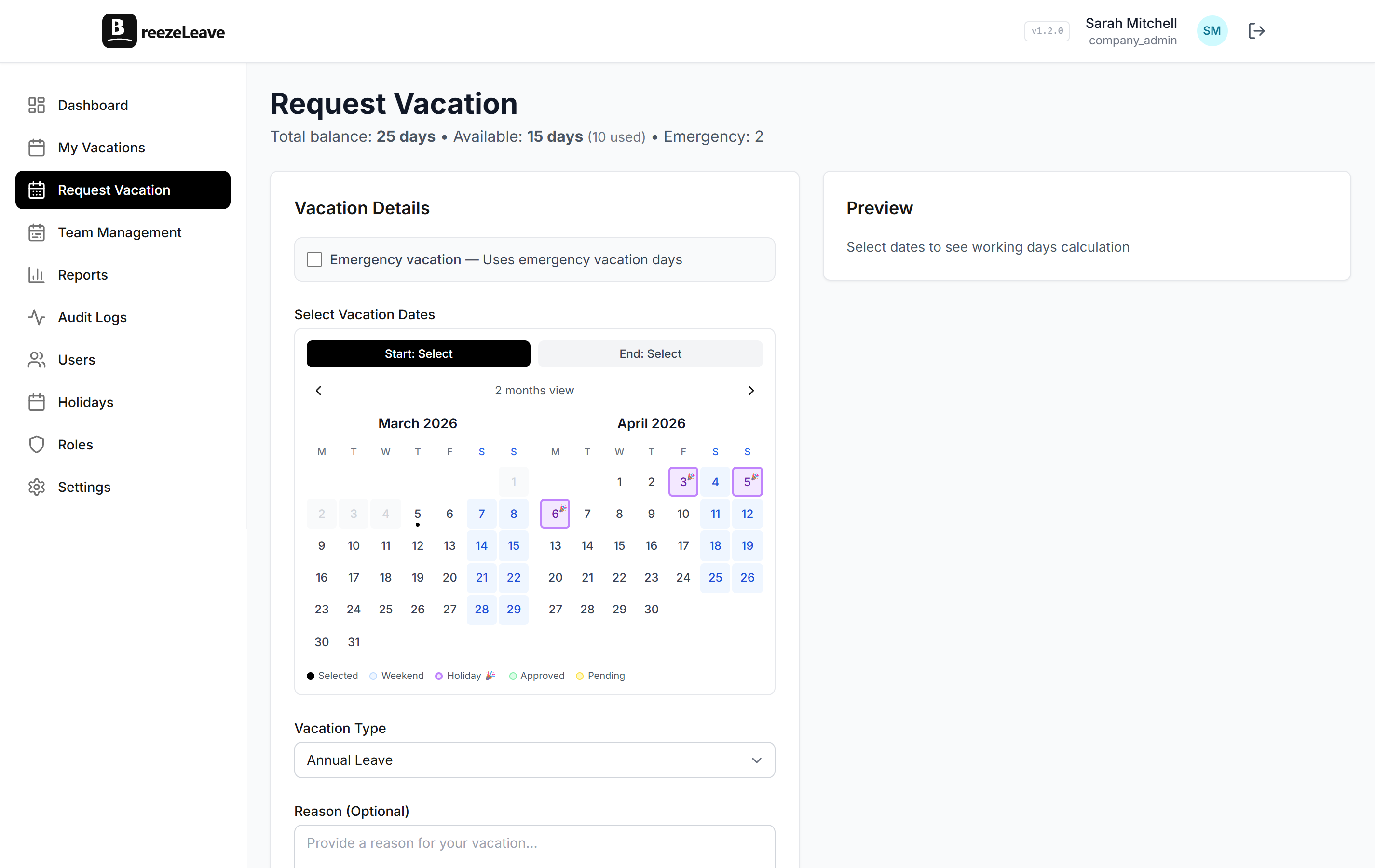
Cover Person Assignments: Never Leave a Role Uncovered
When someone goes on vacation, who handles their work? Cover person assignments make this explicit so nothing falls through the cracks.
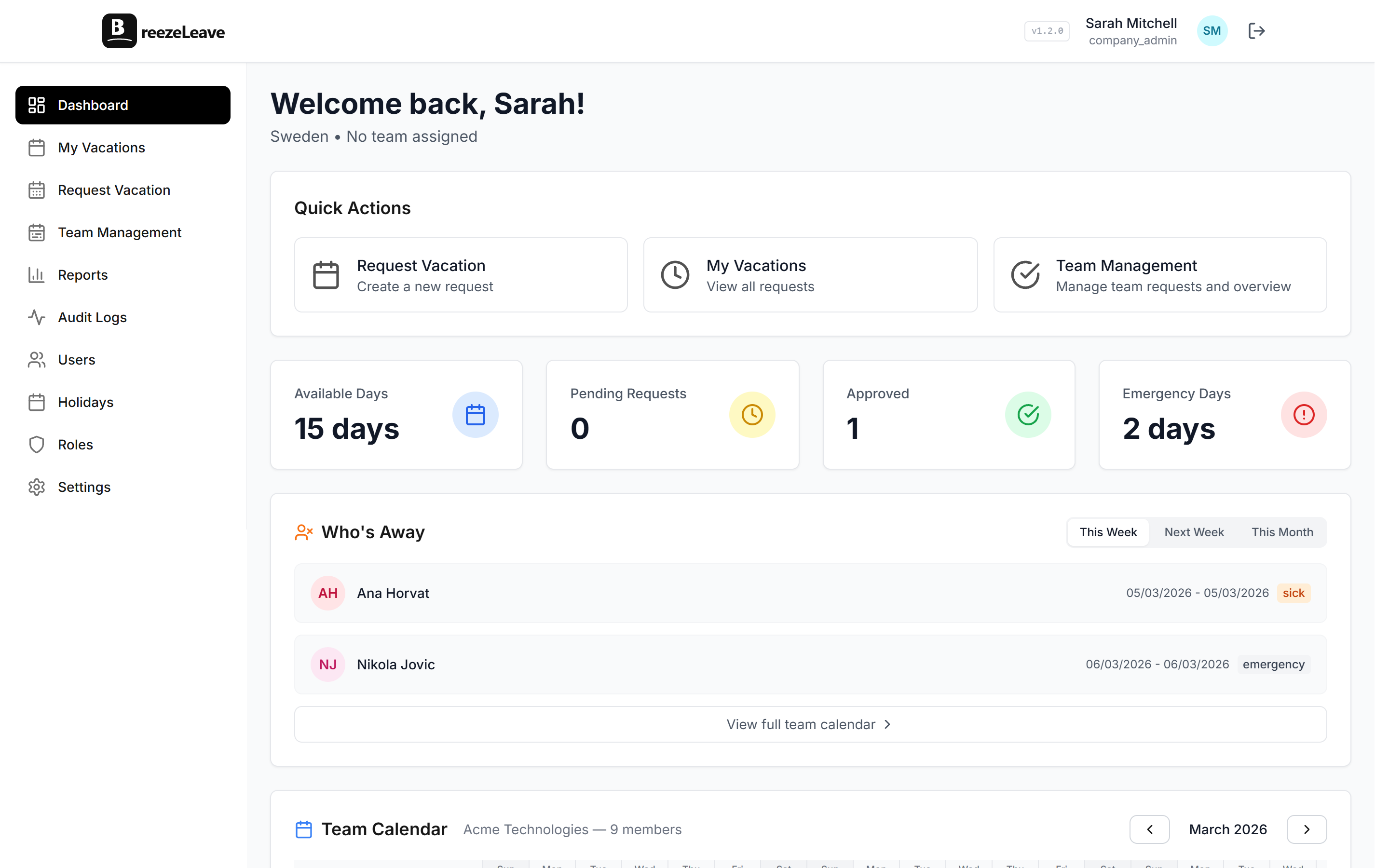
Team Capacity Planning: See Who's Available Before Approving Leave
Approving vacation requests without seeing the team calendar is like scheduling meetings without checking calendars. Here's how to plan around absences.
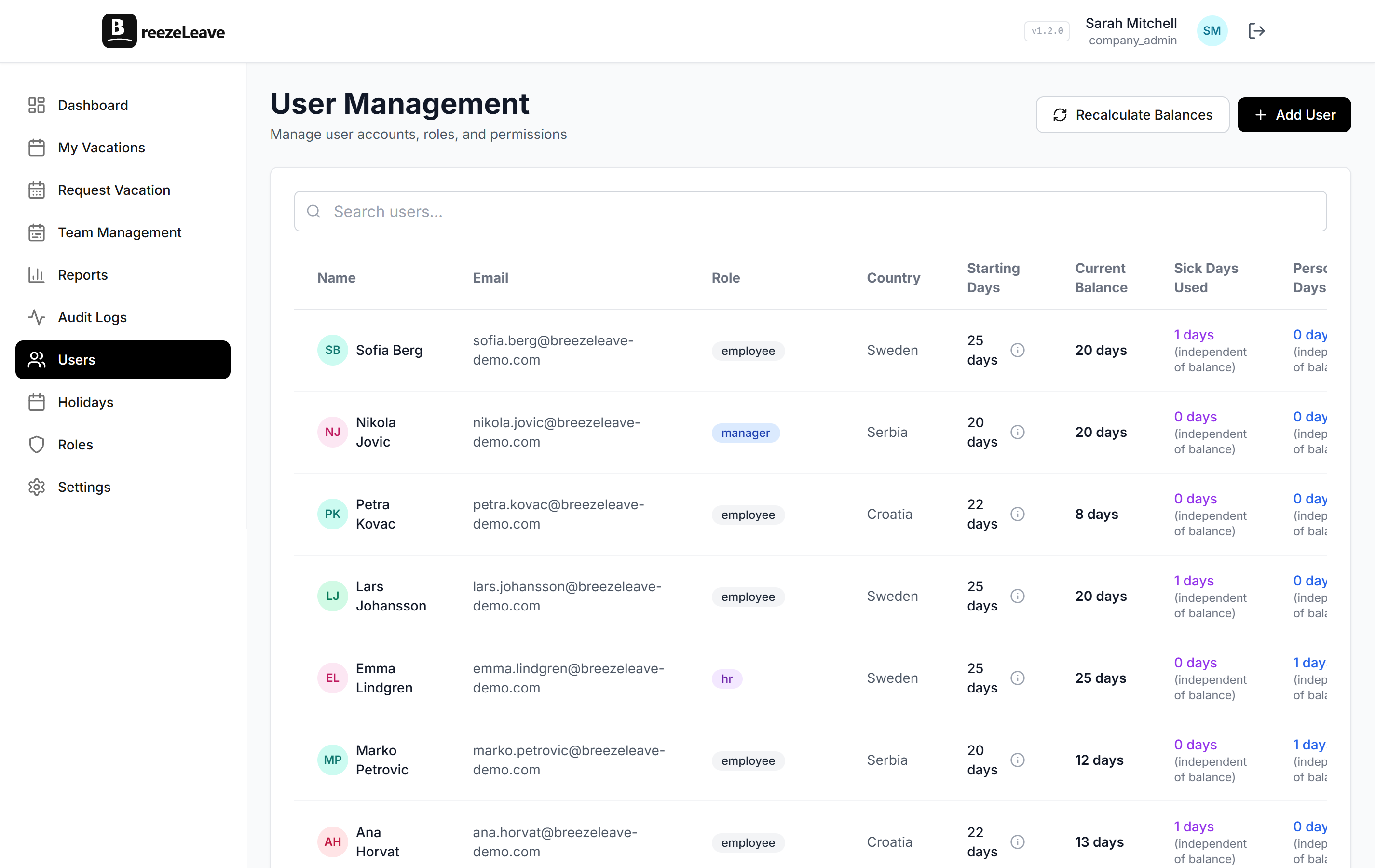
Vacation Adjustments: When and How to Manually Add or Remove Days
Automatic accruals handle 95% of cases. But what about signing bonuses, disciplinary deductions, or mid-year policy changes? That's where adjustments come in.
Why Every Team Needs a Shared Vacation Calendar
Slack messages and email chains are not a vacation calendar. A shared team view prevents scheduling disasters and saves everyone time.
Vacation Tracking for Growing Teams: When Spreadsheets Stop Working
Your team just hit 15 people and the shared Google Sheet is a mess. Here's how to fix vacation tracking before it becomes a full-time job.
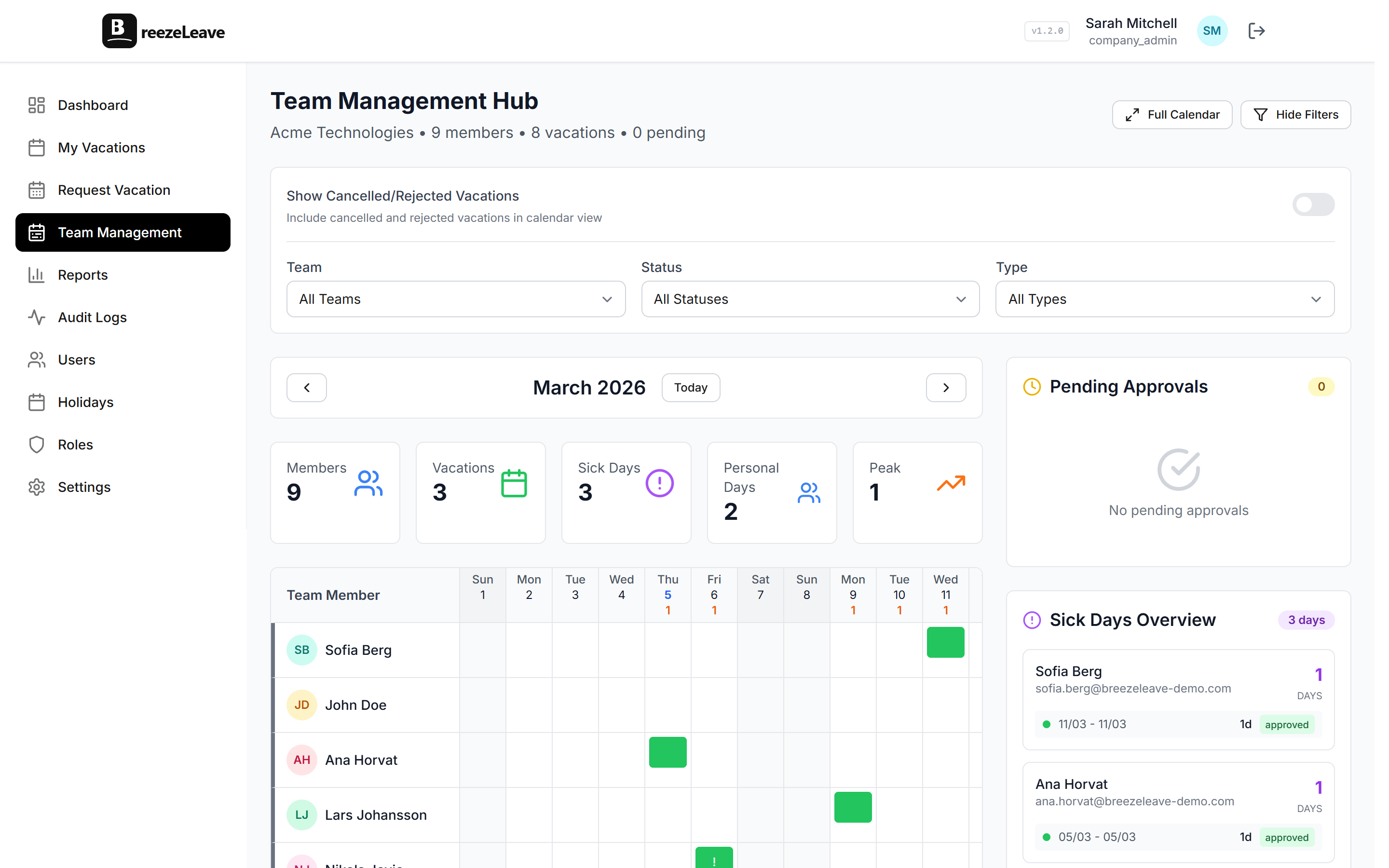
How to Prevent Team Vacation Conflicts Without Micromanaging
Half your engineering team booked the same week off. Again. Here's how to set guardrails that prevent this automatically.
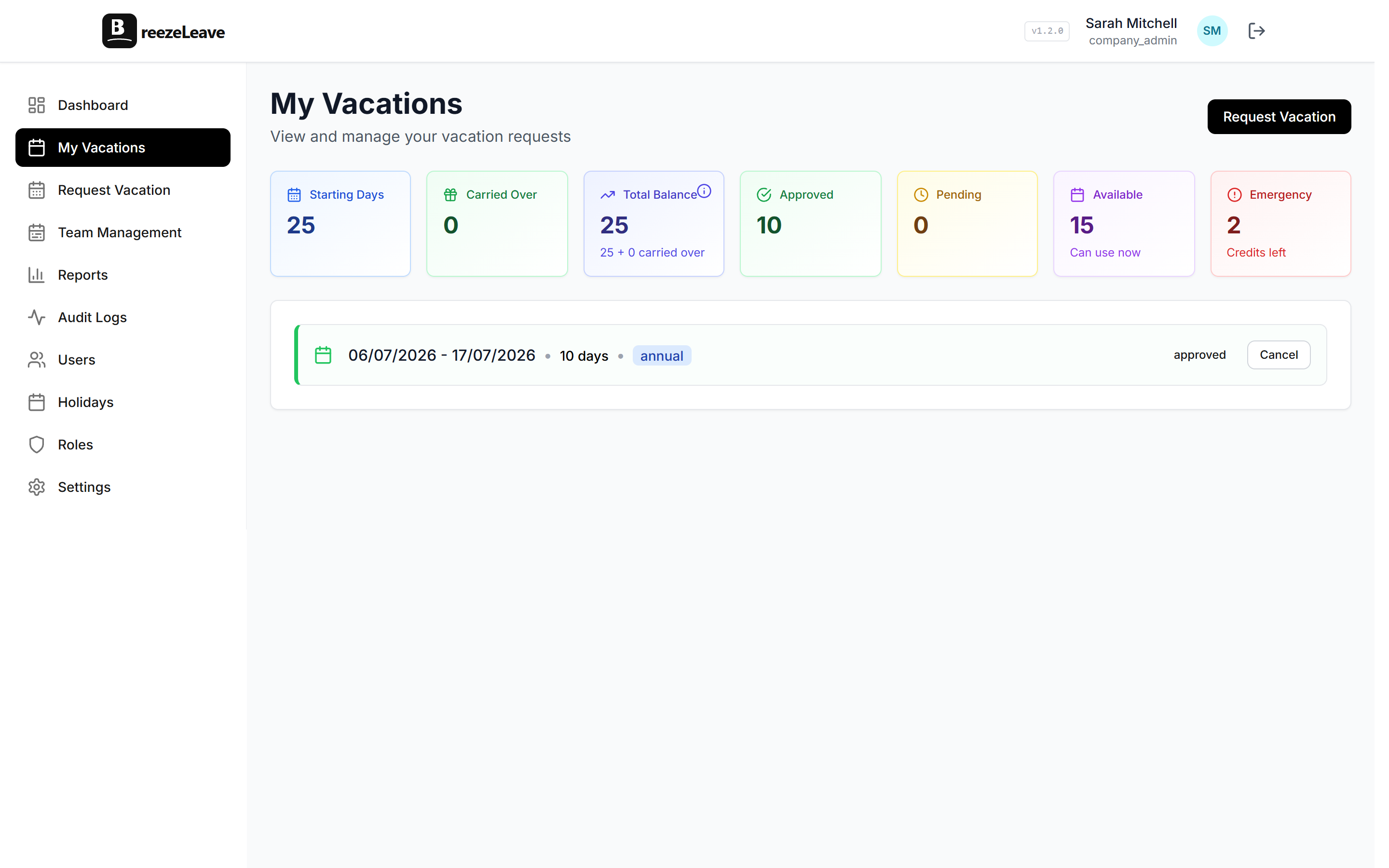
Sick Leave Tracking in Europe: What Companies Need to Know
European sick leave rules vary wildly by country. A practical overview for companies with employees in Sweden, Croatia, and beyond.
Automate Vacation Balance Tracking: Stop Calculating Days in Spreadsheets
Manual balance tracking breaks at scale. Here's how automatic accrual, carryover rules, and real-time dashboards work in practice.
Leave Management Software Implementation Checklist
A step-by-step implementation checklist for HR admins rolling out new leave management software: balances, approvers, holidays, integrations, and the first month.
Vacation Tracker vs Spreadsheet Template: When to Switch
A founder and HR admin comparison between a vacation tracker and a shared leave sheet: where each one breaks, what the switch costs, and what changes after.
Employee Vacation Calendar Guide for Managers
What a useful employee vacation calendar shows a team lead before approving leave: coverage gaps, overlaps, public holidays, and the request someone is about to send.
Personal Leave vs Emergency Leave Tracking
An HR admin's guide to separating personal leave from emergency leave in BreezeLeave: when each applies, how the approval chain changes, and what shows up on the report.
Cover Person Assignment Checklist
A team lead's checklist for assigning cover persons before approving leave: scope of coverage, calendar visibility, handoff notes, and what to confirm before the requester goes offline.
Concurrent Absence Limits by Team: A Practical Guide
A team lead's guide to setting concurrent absence limits in BreezeLeave: how many people from a team can be off at once, when to use a hard limit, and how the rule reads on the calendar.
Approvals, policies, and automation
16 articlesHoliday Management for Accurate Working-Day Calculations
How custom company holidays, national holidays, operating countries, and excluded holidays keep PTO balances and request durations accurate across countries.
Multi-Person Approval: Why One Manager Shouldn't Be a Single Point of Failure
Most leave tools let one person approve or reject. That works until they're on vacation themselves, or the team is too diverse for a single approver to cover. Here's how multi-person approval works in BreezeLeave.
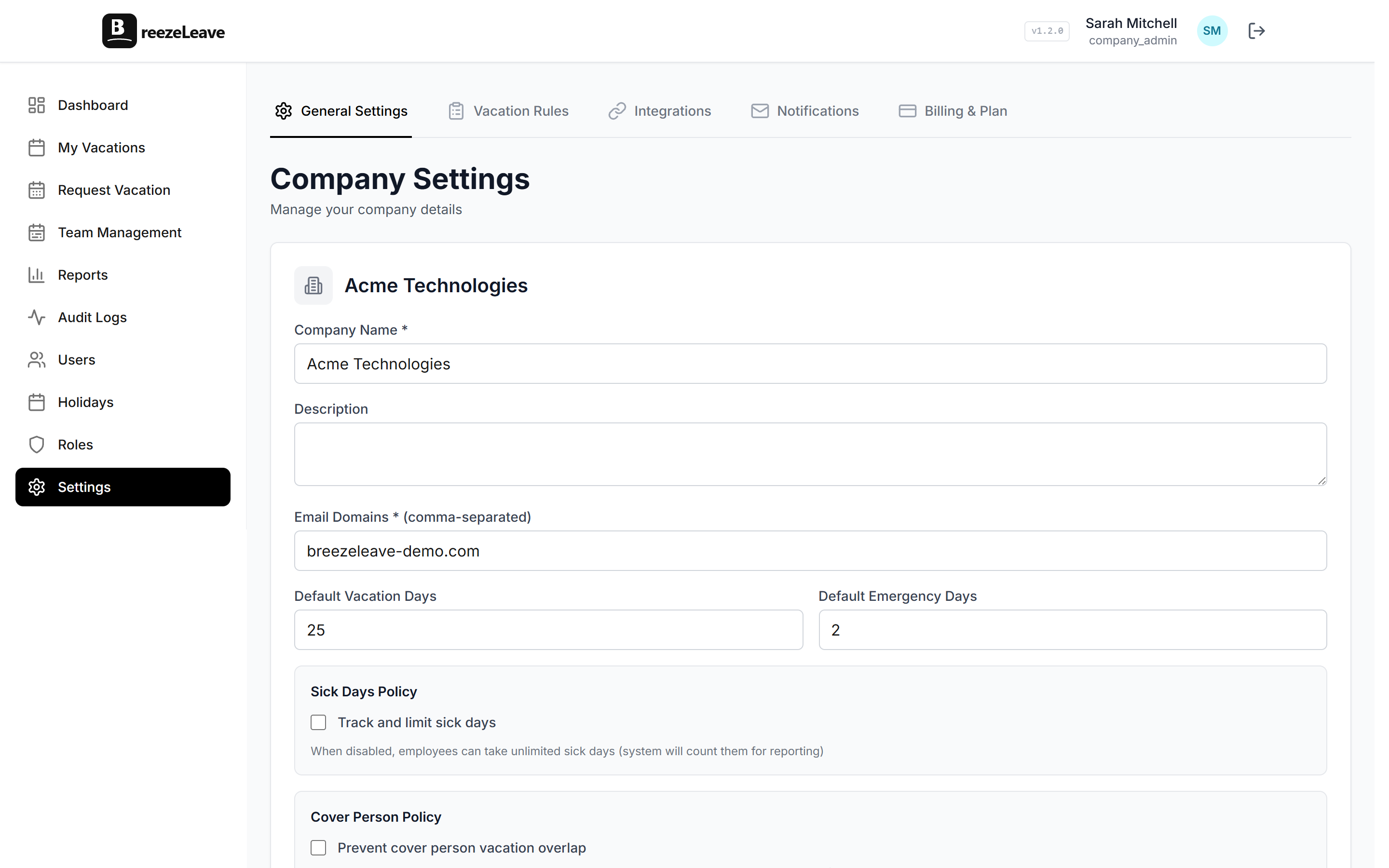
How Seniority-Based Vacation Accruals Work in BreezeLeave
Employees who've been with you for five years shouldn't get the same vacation days as someone who started last month. Here's how to automate seniority-based accruals.
Vacation Carry-Over: Rules, Expiry Dates, and How to Automate It
Unused vacation days don't have to disappear on December 31st. Here's how carry-over rules, expiry dates, and caps work in practice.
Blackout Dates: How to Block Leave During Critical Business Periods
End-of-quarter, product launches, audit season. Some weeks you can't afford to have people out. Here's how to enforce blackout periods without micromanaging.
Birthday & Loyalty Bonuses: Reward Employees with Extra PTO
A birthday day off or an anniversary bonus costs almost nothing but signals that you value people. Here's how to automate these perks.
Probation Period Lockouts: Restrict Leave Requests for New Hires
Many companies restrict vacation during the probation period. Here's how to enforce this automatically without awkward conversations or manual tracking.
Why You Should Auto-Approve Most Vacation Requests
Manual approval workflows waste everyone's time. Here's how rule-based auto-approval works and why it's better for your team.
Vacation Rules Engine Examples: Accruals, Carryover, Blackout Dates, and Probation
Concrete rules-engine examples for accruals, carryover, blackout dates, and probation lockouts that an HR admin can configure on day one and live with year after year.
How to Design a Multi-Step Leave Approval Workflow
A checklist for HR admins designing multi-step leave approvals: when a second approver helps, sequential vs simultaneous routing, scoped approvers, and what to never gate.
PTO Accrual Rule Examples for Growing Teams
PTO accrual rule examples for growing teams: monthly vs yearly, seniority tiers, pro-ration for mid-year hires, and how to set the carryover and exit-payout edges.
PTO Carryover Expiry Checklist for HR Teams
A step-by-step checklist HR teams can use before carried PTO expires: caps, expiry dates, employee comms, and what to reconcile with payroll.
Blackout Date Policy Examples for Busy Teams
Real blackout date policy examples for support, retail, finance, and engineering teams, plus how to scope and communicate them in BreezeLeave.
Birthday and Loyalty PTO Bonus Policy Guide
An HR admin's guide to writing and configuring birthday and loyalty PTO bonus policies in BreezeLeave: trigger rules, one-time versus annual, and how it shows up on the balance.
Advance Notice Leave Policy Template
An HR admin's template for an advance notice leave policy: how many days to require by leave length, the carve-outs for emergencies, and how to enforce it in the BreezeLeave rules engine.
Probation Leave Policy Guide for New Hires
An HR admin's view on writing a probation leave policy: which leave types are restricted, how to handle pre-booked trips, and how to enforce the rule in BreezeLeave from the hire date.
Reporting, audit, and compliance
6 articlesBookkeeping and Payroll Export for Leave, Sick Days, and Carryover Balances
How HR and finance teams can use BreezeLeave bookkeeping views to reconcile approved leave, sick days, carryover, adjustments, CSV exports, and payroll-ready absence data.
Leave Reports HR Actually Uses: Utilization, Coverage, Approvals, and Country Insights
A practical way to read BreezeLeave reports across utilization, trends, team coverage, approval patterns, country insights, and CSV/PDF exports.
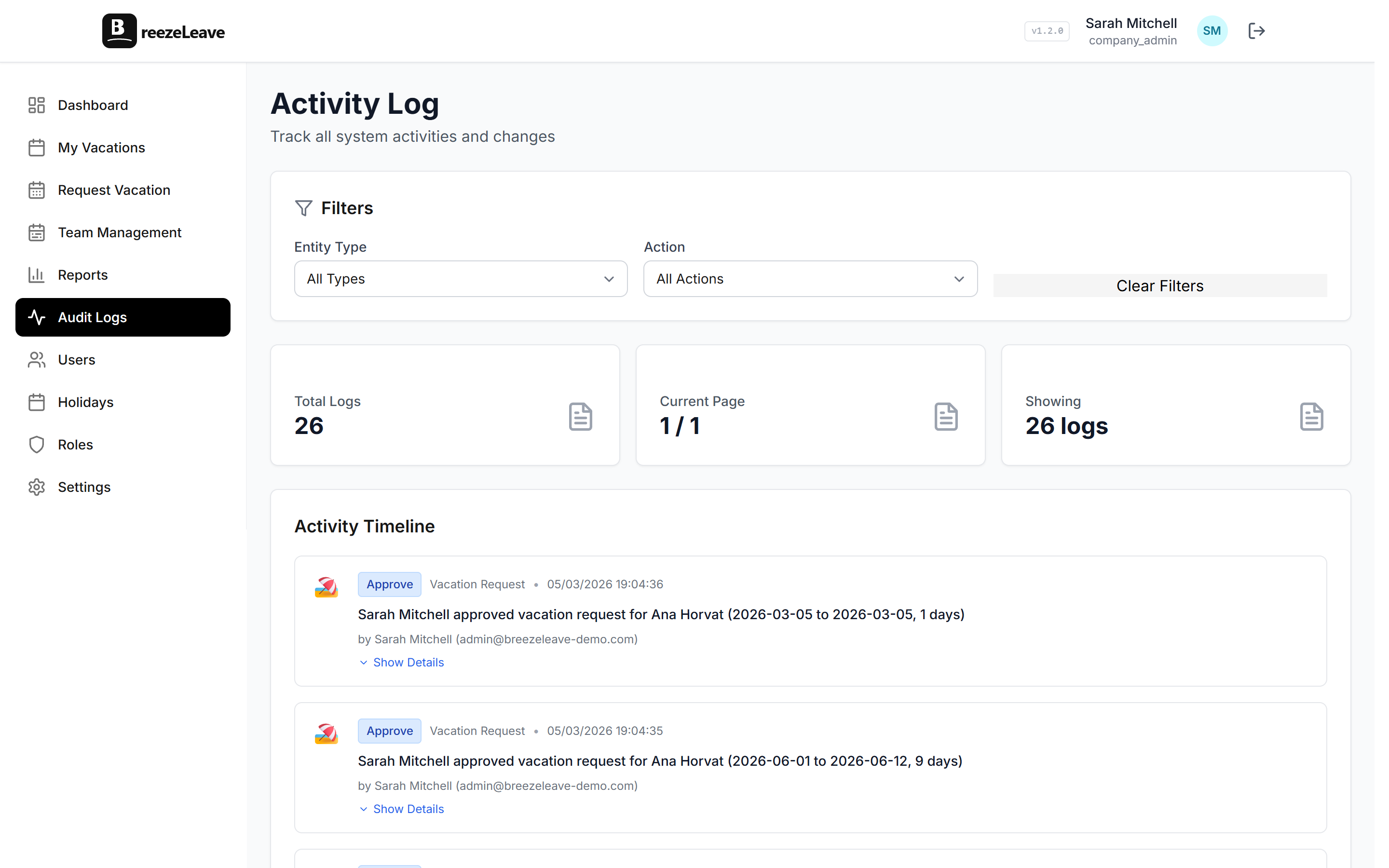
Why Audit Logging Matters for Leave Management
When an employee disputes their balance or a manager changes a request, you need a paper trail. How audit logs protect everyone.
Monthly Leave Reporting Dashboard Guide
A monthly routine for reading BreezeLeave leave reports: utilization, coverage, approvals, country insights, and what to escalate to leadership.
Monthly Payroll Leave Handoff Checklist
A step-by-step checklist for the monthly leave-to-payroll handoff: reconciliations, exports, adjustments, and what to verify before the cutoff.
How Audit Logs Resolve Vacation Balance Disputes
The audit-log trail HR follows when an employee disputes their vacation balance: starting balance, accruals, deductions, adjustments, and the timestamped events behind each one.
Integrations and connected workflows
16 articles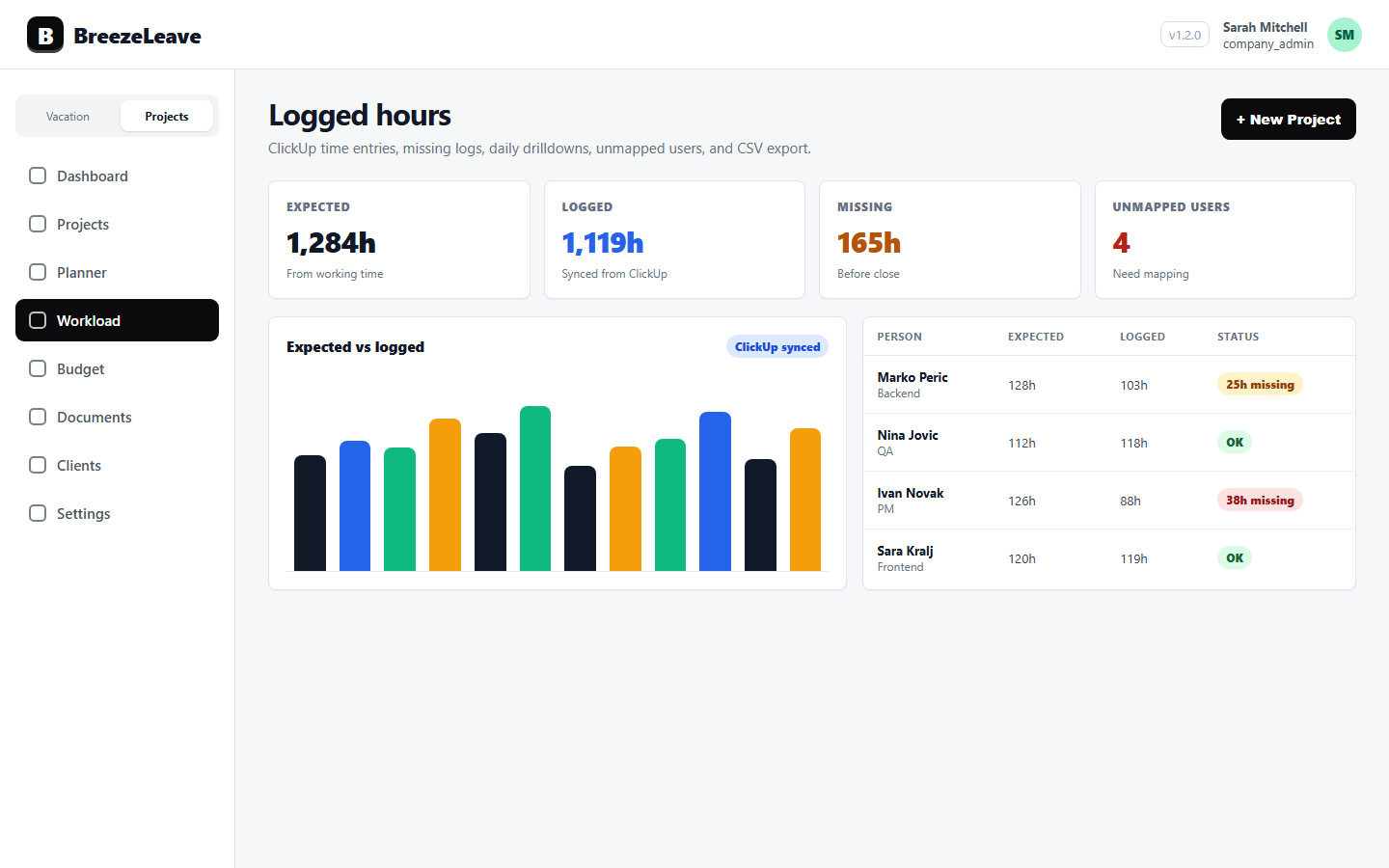
ClickUp Time Tracking for Agency Projects: From Logged Hours to Cleaner Delivery
How agencies can use ClickUp logged hours in BreezeLeave to improve time hygiene, spot card-level delivery drift, and connect actual effort to project capacity.
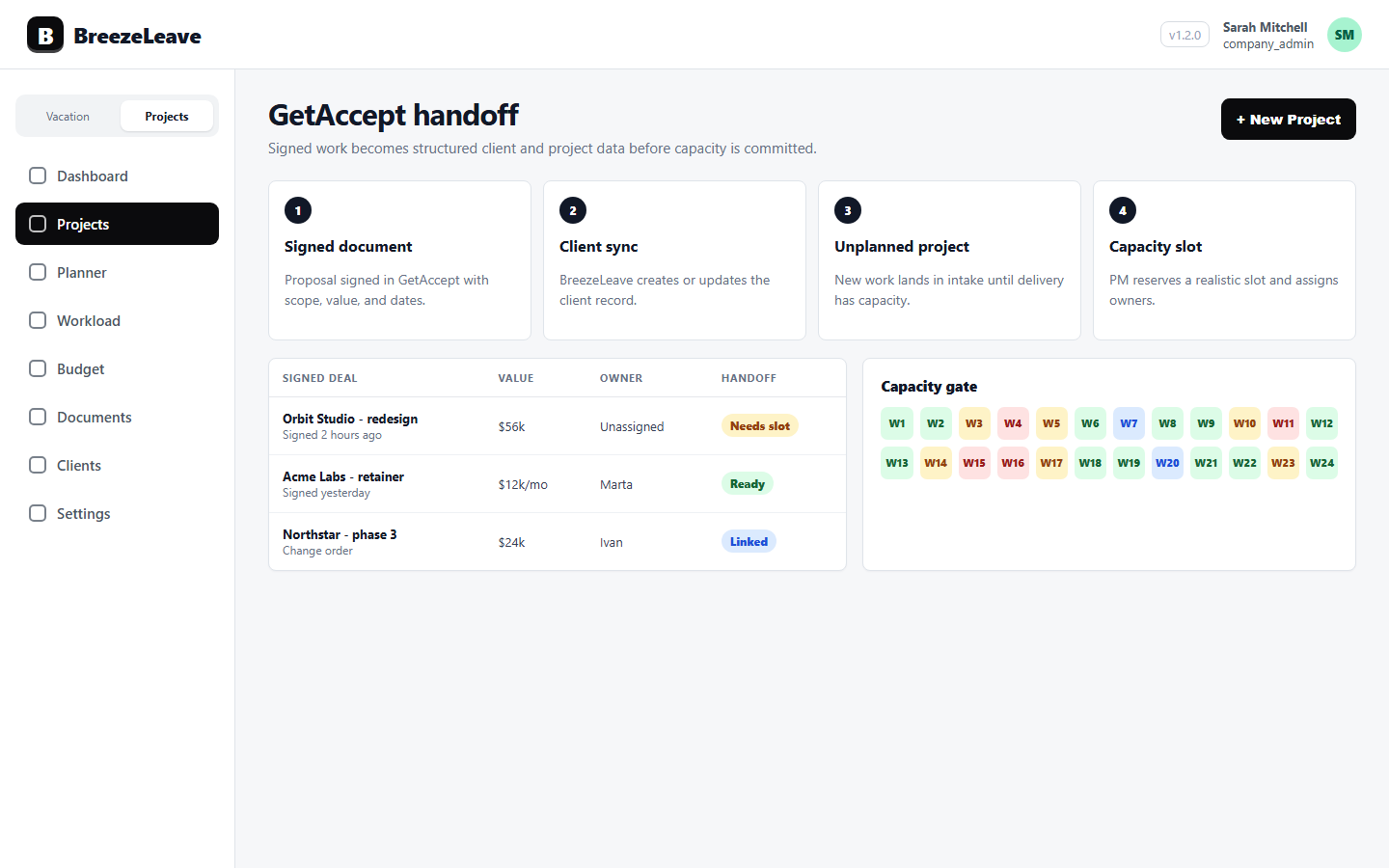
GetAccept Sales-to-Delivery Handoff for Agency Projects
How signed GetAccept documents can create or update clients and projects, then move new work into a capacity-aware delivery handoff.
Logged Hours Hygiene for Agency Teams: Fix Missing Time Before Month Close
A practical logged-hours hygiene workflow for agencies using expected vs logged hours, no-log periods, unmapped users, daily drilldowns, and CSV exports.
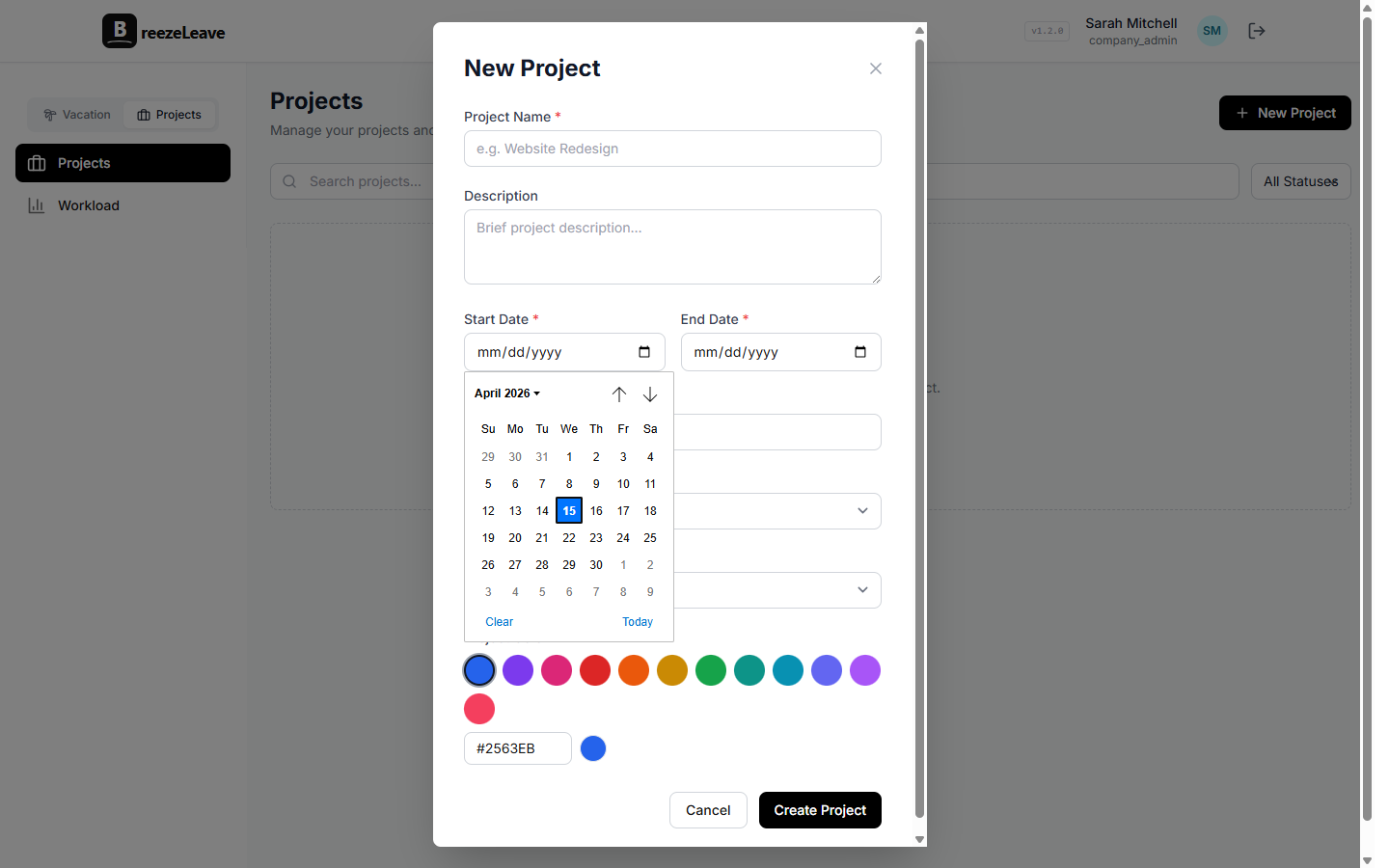
Card Efficiency Analytics for Agency Delivery Teams
How agencies can use card-efficiency signals like QA-heavy work, missing QA, design-heavy effort, and unclassified time to review delivery drift.
How to Sync Your Vacation Days to Google Calendar with BreezeLeave
Approved leave now appears in your Google Calendar automatically. No manual entry, no forgotten events. Here's how the per-user Google Calendar sync works and why it matters.
How to Set Up Microsoft Teams Leave Management with BreezeLeave
Your team lives in Microsoft Teams. Your leave management should too. Here's how to connect BreezeLeave to Teams for notifications, approvals, and absence visibility.
Vacation Request Notifications That Actually Get Read
Most leave tools send notifications nobody checks. Practical advice on email and Slack alerts that keep approvals moving.
How to Set Up a Slack Vacation Bot That Actually Works
Step-by-step guide to connecting your leave management to Slack with slash commands, interactive approvals, and smart notifications.
Slack vs Microsoft Teams for Leave Approval Workflows
A dated comparison of running leave approvals through Slack or Microsoft Teams: slash commands, adaptive cards, channel patterns, and best-fit scenarios.
Google Calendar PTO Sync vs Shared Vacation Calendar
A dated comparison of syncing PTO to each employee's Google Calendar versus using a shared vacation calendar, with best-fit guidance for HR and team leads.
Leave Request Email Notification Templates
Copy-ready email notification templates for leave management: request submitted, approved, rejected, reminders, and digests, with subject and body for each event.
Slack Who-Is-Off Digest Guide
A guide for team leads and HR admins on configuring the BreezeLeave Slack who-is-off digest: daily versus weekly cadence, channel patterns, and the slash command teams reach for first.
Microsoft Teams Adaptive Cards for Leave Approvals
A guide for IT admins and HR admins on how the BreezeLeave Teams adaptive cards handle leave approvals: card behavior, channel mapping, common scope mistakes.
ClickUp Logged-Hours Hygiene Checklist
A delivery-lead checklist for keeping ClickUp logged hours clean before invoicing: no-log periods, unmapped users, expected vs logged deltas, and the conversation that happens next.
Card Efficiency Analytics Explained for Delivery Teams
A delivery-lead guide to card efficiency analytics: estimated vs logged time at the card and assignee level, how to read over- and under-runs, and what to change next sprint.
No-Log Period Reminders for Agency Teams
A delivery lead's view of no-log periods in ClickUp. How BreezeLeave flags business days without time entries, how to send reminders that work, and where the limits sit.
Project operations for agencies
20 articlesAgency Project Timelines: Phases, Milestones, Templates, and Capacity Buffers
How agency teams can use project phases, milestones, reusable templates, history, planned slots, and capacity buffers to keep delivery plans realistic.
Project Capacity Planning for Agencies: Connecting PTO, Workload, and Budget
Leave, project planning, logged hours, and budget health belong in the same conversation. Here is how BreezeLeave helps agencies see capacity before delivery slips.
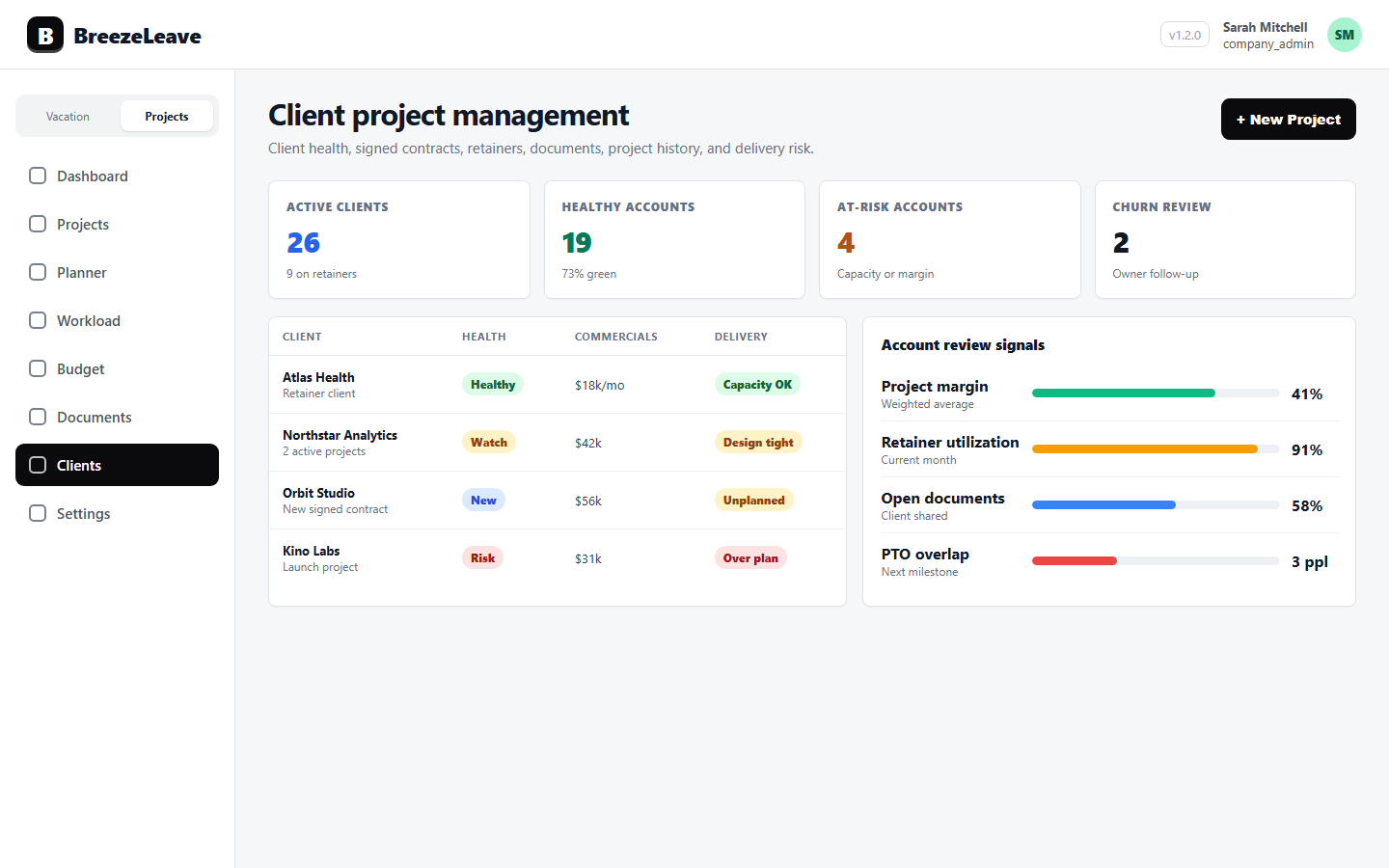
Client Project Management for Agencies: Projects, Retainers, Documents, and Health
How agencies can manage client work in BreezeLeave with projects, retainers, documents, health status, capacity context, and budget visibility.
Workload Capacity Planning with PTO, Planned Slots, and Logged Hours
How agencies can plan workload with PTO-aware capacity, planned slots, unplanned intake, and logged hours in one operating review.
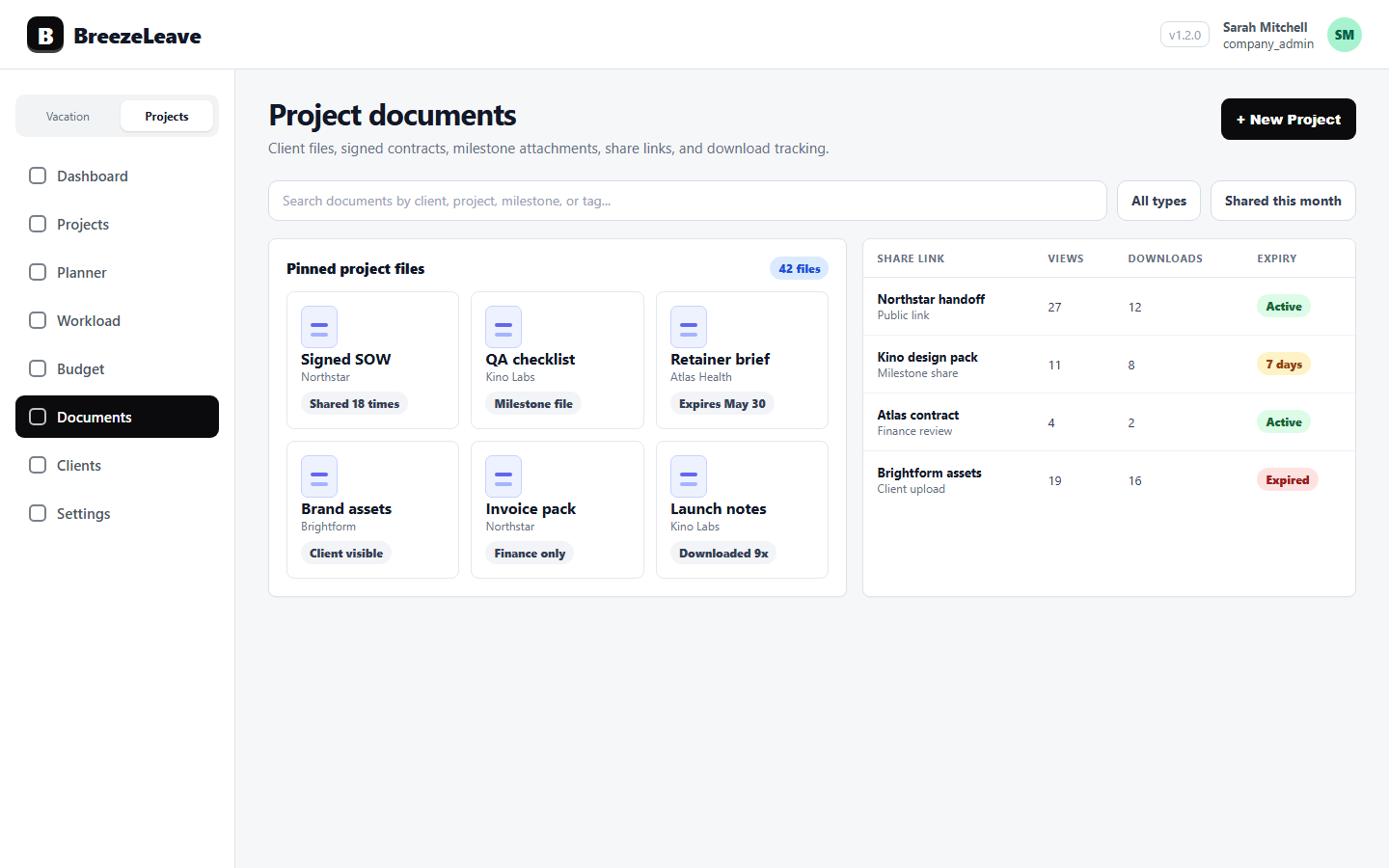
Project Document Management for Client Work
How agencies can keep client, project, and milestone documents connected to delivery with public share links, thumbnails, and view or download tracking.
Project Planner for Agencies: Planned Slots, Unplanned Work, and Capacity
How agencies can use planned slots and unplanned project intake to avoid committing delivery dates before capacity is clear.
Resource Planning for Agency Projects: Roles, FTE, Assignments, and Capacity
A practical guide to agency resource planning with role requirements, assignments, planned hours, FTE demand, PTO, and workload context.
Agency Workload Forecasting with PTO, Public Holidays, and Active Projects
How agencies can forecast workload using planned work, PTO, public holidays, logged hours, utilization, active projects, and free capacity.
Multi-Country Project Capacity Planning for Agencies
How agencies can plan client work across countries by combining PTO, public holidays, project workload, logged hours, and capacity forecasts.
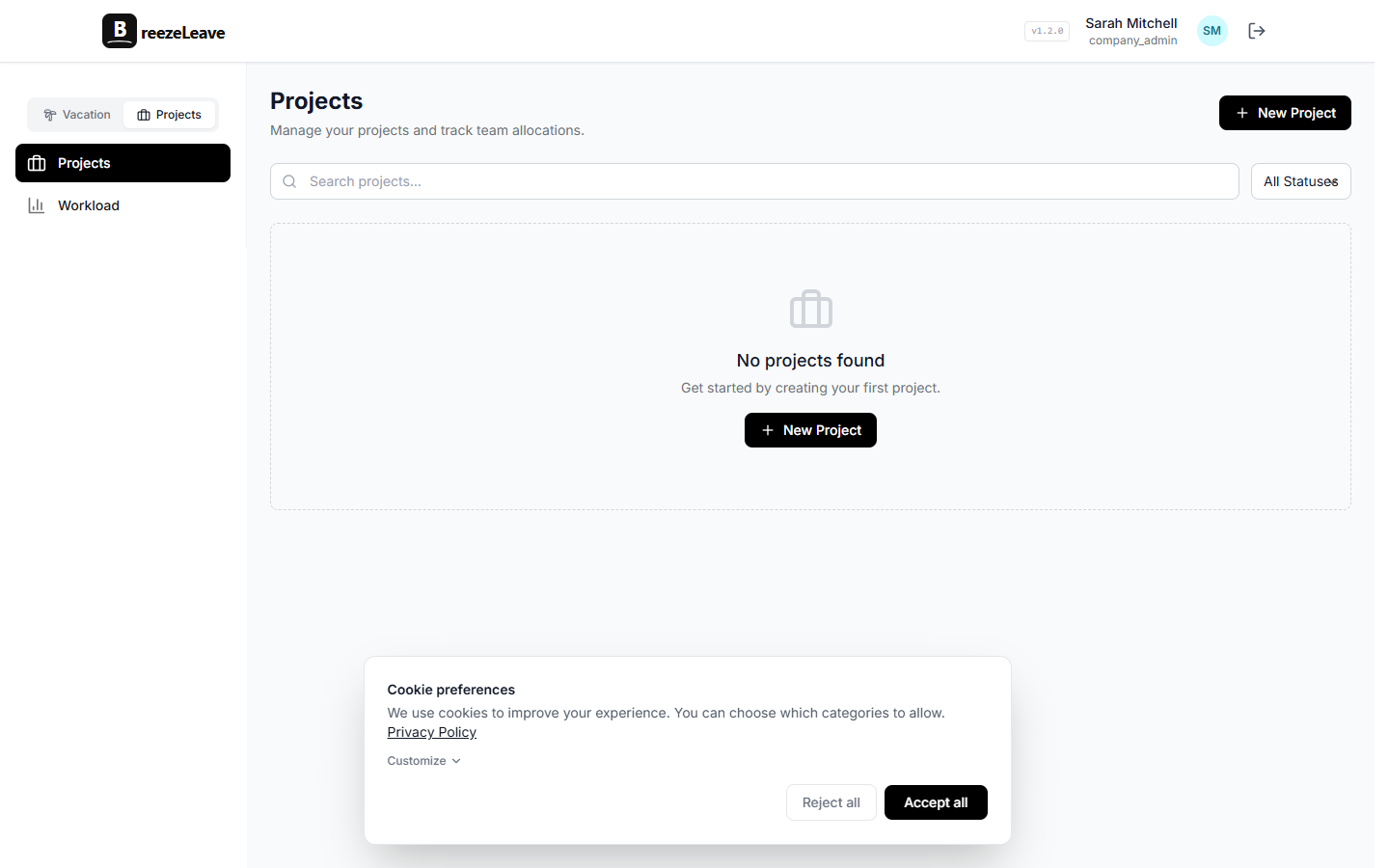
Agency Sales-to-Delivery Handoff Checklist
A practical checklist for moving signed client work into delivery with project records, documents, capacity checks, retainers, and budget context.
Project Capacity Planning Template for Agencies
A reusable capacity planning template for agency delivery leads: PTO-aware availability, role demand, planned slots, holidays, and logged-hour reality checks.
Capacity Planning vs Resource Planning for Agencies
Capacity and resource planning are not synonyms. A clear comparison for agency owners covering PTO-aware availability, role demand, FTE, planned slots, and logged hours.
Agency Resource Planning Template: Roles, FTE, PTO, and Planned Slots
A reusable resource planning template for agency delivery leads: role demand, named assignments, FTE for mixed teams, PTO-aware availability, and planned slots.
Secure Client Document Sharing Checklist for Agencies
A project-manager checklist for sharing client documents safely: expiry, passwords, view and download tracking, project context, and what to never email as an attachment.
Client Health Status Workflow for Agencies
A health status process for agency owners and account leads: how to label clients as healthy, at-risk, or churned, when to review, and what each label triggers.
Sales-to-Delivery Handoff After a Signed Contract
A signed-contract handoff checklist for agency owners and delivery leads: turn the signed agreement into client and project records, attached documents, and a capacity-aware kickoff.
Project Timeline Buffer Guide for Agencies
A practical reference for agency delivery leads and project managers: how to add timeline buffers per phase, when buffer matters, how to defend it to clients, and how to use it for unplanned work.
Project Milestone Document Handoff Checklist
A project-manager checklist for handing off documents at each milestone: which files attach to the milestone, what gets shared with the client, expiry, password, and tracking decisions.
Planned Slots and Unplanned Work Guide
A planning reference for agency delivery leads: how to use planned slots for committed project work, how to size unplanned work, and how to keep both honest against PTO and logged hours.
FTE Planning for Mixed Full-Time and Freelance Teams
A resource manager's view of FTE planning when the team includes full-time staff, part-time contributors, and rotating freelancers. With assumptions named.
Finance, budgets, and profitability
12 articlesAgency Budget Reviews: Categories, Scenarios, Cash Runway, Alerts, and Headcount
How agency owners can run budget reviews with categories, scenarios, starting cash, runway, alerts, planned headcount, report views, and permission-gated cost data.
Labor Cost Tracking for Agencies Without Exposing Everyone's Salary
How effective-dated salary history, hourly-rate workers, permission gates, and aggregate cost reporting help agencies understand project labor cost safely.
Project Budget Tracking for Agencies: Revenue, Cost, Margin, and Retainers
A practical guide to agency budget reviews using project revenue, costs, margins, retainers, scenarios, and logged-hour context in BreezeLeave.
Retainer Capacity Planning for Agencies: Monthly Allocations Without Spreadsheet Drift
How agencies can plan retainer capacity with monthly allocations, logged hours, PTO-aware workload, client context, and budget visibility.
Project Profitability Metrics for Agency Owners
Which project profitability signals agency owners should review across revenue, cost, margin, logged hours, retainers, owners, and client work.
Project Financial Forecasting for Agencies: Scenarios, Cash Runway, and Headcount
How agencies can connect project revenue, costs, scenarios, cash runway, planned headcount, logged hours, and capacity signals in financial forecasts.
Project Margin Reporting with ClickUp Time Entries
A finance-led guide to project margin reporting using ClickUp time entries, labor cost, retainer hours, and BreezeLeave budget data. State assumptions, defend numbers.
Agency Budget Scenario Review Guide
A finance lead's guide to running a project budget scenario review. How baseline, stretch, and downside versions are built, defended, and used for staffing decisions.
Project Profitability Review Cadence for Agency Owners
An operational checklist for running a monthly project profitability review. Which projects to flag, which numbers to defend, and how to keep the meeting under an hour.
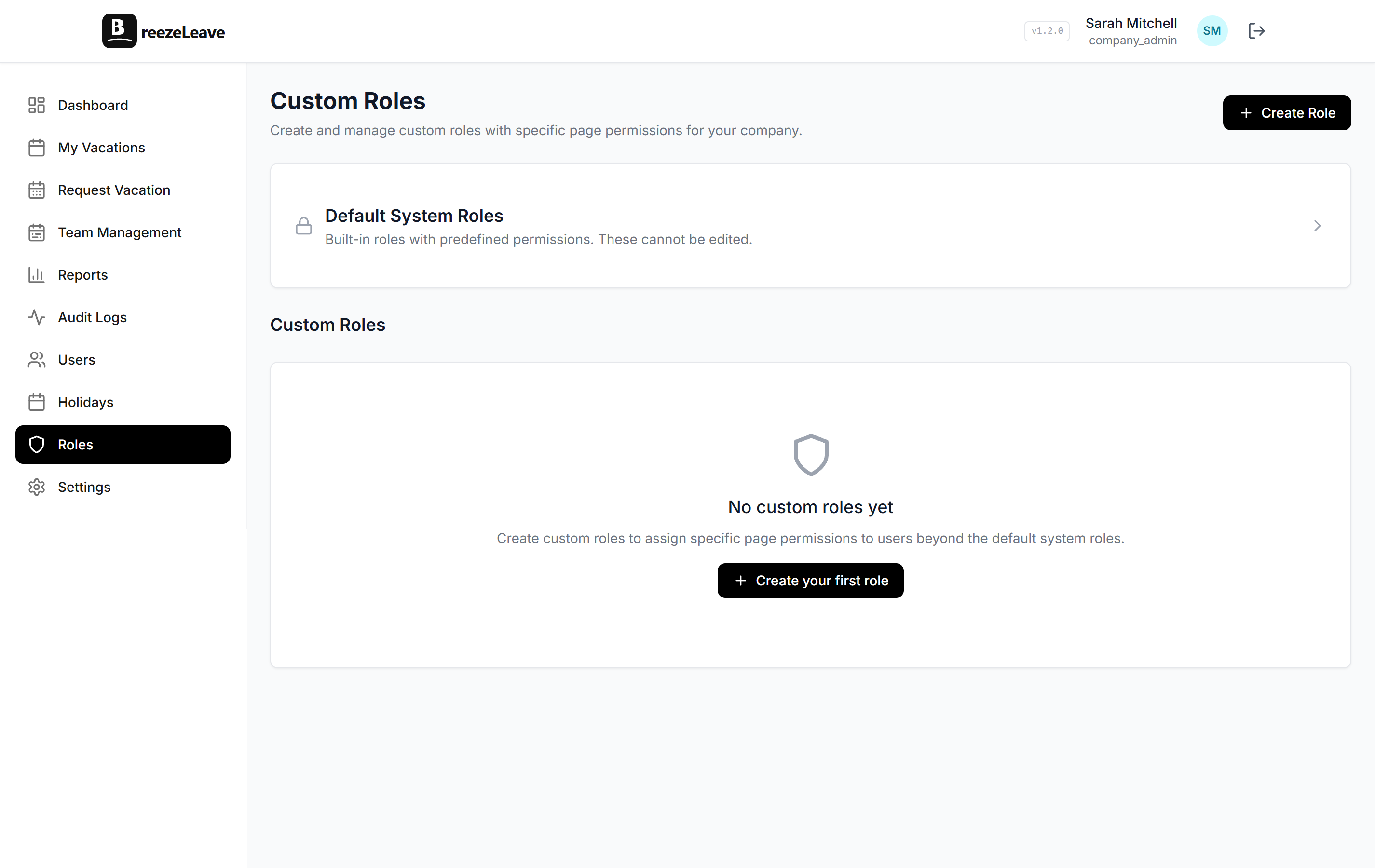
Labor Cost Permissions Guide for Agency Operations
An HR lead's guide to setting up labor cost permissions in BreezeLeave. Which permissions gate aggregate cost, per-person cost, revenue, and budget views.
Retainer Management, Capacity, and Budgeting Guide
A practical guide to retainer management for agencies. Monthly allocation hours, retainer teams, capacity planning around other projects, and budget math you can defend.
Cash Runway for Agency Owners: Budget Signals to Watch
An agency owner's guide to cash runway. The four signals worth watching each month, what the runway view does and does not do, and a worked scenario for a 12-person agency.
Enterprise admin and multi-company
7 articlesExternal HR Users: Managing Leave Across Country Offices
When your HR team spans multiple countries, external HR users let regional staff manage their own office's leave without seeing everyone else's data.
Role-Based Access in Leave Management: Who Should See What
Not everyone needs the same view. How Employee, Manager, HR, and Admin roles keep leave data organized without overexposing information.
Managing Leave Across Multiple Companies from One Dashboard
Agencies and holding companies need separate leave policies per entity. How to run multiple companies without multiple tools.
Role-Based Permissions Matrix for Leave Management
A permission-by-permission matrix for leave management roles: who can approve, edit rules, see costs, change balances, and manage users without overexposing data.
Multi-Company HR Admin Guide
An operational checklist for the HR admin who runs leave for two or more legal entities: policies, balances, approvers, holidays, and the audit trail across companies.
External HR Scoped Access Guide
How to give an outsourced HR provider or regional coordinator HR-level access scoped to specific companies or countries, with audit, offboarding, and access review.
Self-Hosted Leave Management Implementation Checklist
An implementation checklist for self-hosting BreezeLeave: deployment decisions, infrastructure, backups, security, integrations, upgrades, and day-one verification.
By industry and use case
14 articlesHow a 50-Person Agency Manages PTO Across 3 Countries
A creative agency with offices in Sweden, Croatia, and Serbia shares how they went from spreadsheet chaos to automated leave management across three very different labor markets.
Leave Management for Remote-First Teams: A Complete Playbook
Remote teams face unique leave management challenges: no visual cues, timezone gaps, and workers who don't take enough time off. Here's how to solve all of it.
Managing PTO Across Countries: A Practical Guide for Distributed Teams
Sweden has 25 vacation days. Croatia has different public holidays. Serbia celebrates Christmas in January. Here's how to handle all of it.
Building a Vacation Policy for Remote Teams That People Actually Follow
Remote workers take less time off, not more. Here's how to build a policy and tooling that encourages people to actually use their days.
Holiday Calendar Management Guide for Multi-Country Teams
How HR admins can keep national holidays, custom company days, and excluded holidays in sync so PTO requests across countries calculate the right number of days.
How Working-Day PTO Calculations Should Work
An HR admin and payroll-focused guide to working-day PTO calculations: weekends, country holidays, custom company days, half-days, and the places day counts usually drift.
Sick Leave Tracking Without Turning Your Tool Into Legal Advice
An HR admin's view on configuring sick leave tracking in BreezeLeave: a separate leave type, certificate thresholds, audit trail, and a clear line between tracking and legal interpretation.
Small Business Leave Policy Setup Guide
An operational checklist for small business owners and first HR hires setting up a leave policy: entitlement, accrual, holidays, approvers, and the documents employees need on day one.
The First HR Process Startups Should Automate
A founder guide to making leave management the first HR process you automate at a startup: balances, approvals, the shared calendar, and what to delay until later.
Consulting Firm Capacity Planning with PTO
A consulting partner guide to capacity planning that respects PTO, public holidays, and partner utilization across active engagements without overbooking the bench.
Law Firm PTO Coverage and Audit Trail Guide
A law firm office manager guide to PTO coverage, conflict prevention, and the audit trail that holds up when balances, approvals, or compliance reviews are challenged.
Nonprofit Leave Management on a Budget
A nonprofit ED and HR coordinator guide to running leave tracking on a tight budget without spreadsheets, with policy for program staff, grant cycles, and event seasons.
Sprint Planning Around PTO for Tech Teams
An engineering manager and scrum master guide to sprint planning that respects PTO, on-call rotations, and release windows without over-committing the team.
Agency Capacity Planning Across Multi-Country Holidays
An agency owner and delivery lead guide to capacity planning that respects multi-country public holidays, PTO, and logged hours across distributed delivery teams.
Comparisons and alternatives
8 articlesBreezeLeave vs Flamingo: Which Slack Leave Bot Is Better?
Both BreezeLeave and Flamingo let you manage leave from Slack. But one also works with Microsoft Teams, supports seniority accruals, and handles multi-country teams. Here's the honest comparison.
BreezeLeave vs Vacation Tracker: Feature-by-Feature Comparison
Vacation Tracker is a popular leave management tool with solid Slack and Teams support. But BreezeLeave goes deeper on seniority accruals, blackout dates, and multi-company management. Here's the full comparison.
BreezeLeave vs LeaveBoard: Which One Fits Your Team?
LeaveBoard is a feature-rich HR and leave management platform. BreezeLeave is a focused leave tool built for Slack and Teams. Here's how they compare for teams that just need leave management to work.
5 Best Leave Management Tools for Startups in 2026
Startups need leave management that works without an HR department. Here are the 5 best tools in 2026, compared by features, pricing, and what kind of team each one fits best.
Why Dedicated Leave Management Beats HR Suite Add-Ons
HR platforms like BambooHR, Personio, and Factorial all include leave modules. But a dedicated leave tool goes deeper, sets up faster, and costs less. Here's why.
Why Small Teams Don't Need a Full HR Suite for Leave Management
Enterprise HR suites are great platforms. But if you need vacation tracking for 10-100 people, you're paying for features you'll never use.
Full HR Suite vs Dedicated Leave Management: Which Makes Sense for Your Team?
Full HR platform or focused leave tool? An honest comparison for companies deciding how to manage employee time off.
Free vs Paid PTO Tracker: What Changes as Teams Grow
A founder's view on when a free PTO tracker stops being enough: the operational signals that suggest a paid plan would carry the team, with a dated comparison and best-fit guidance.