BreezeLeave vs Vacation Tracker: Feature-by-Feature Comparison
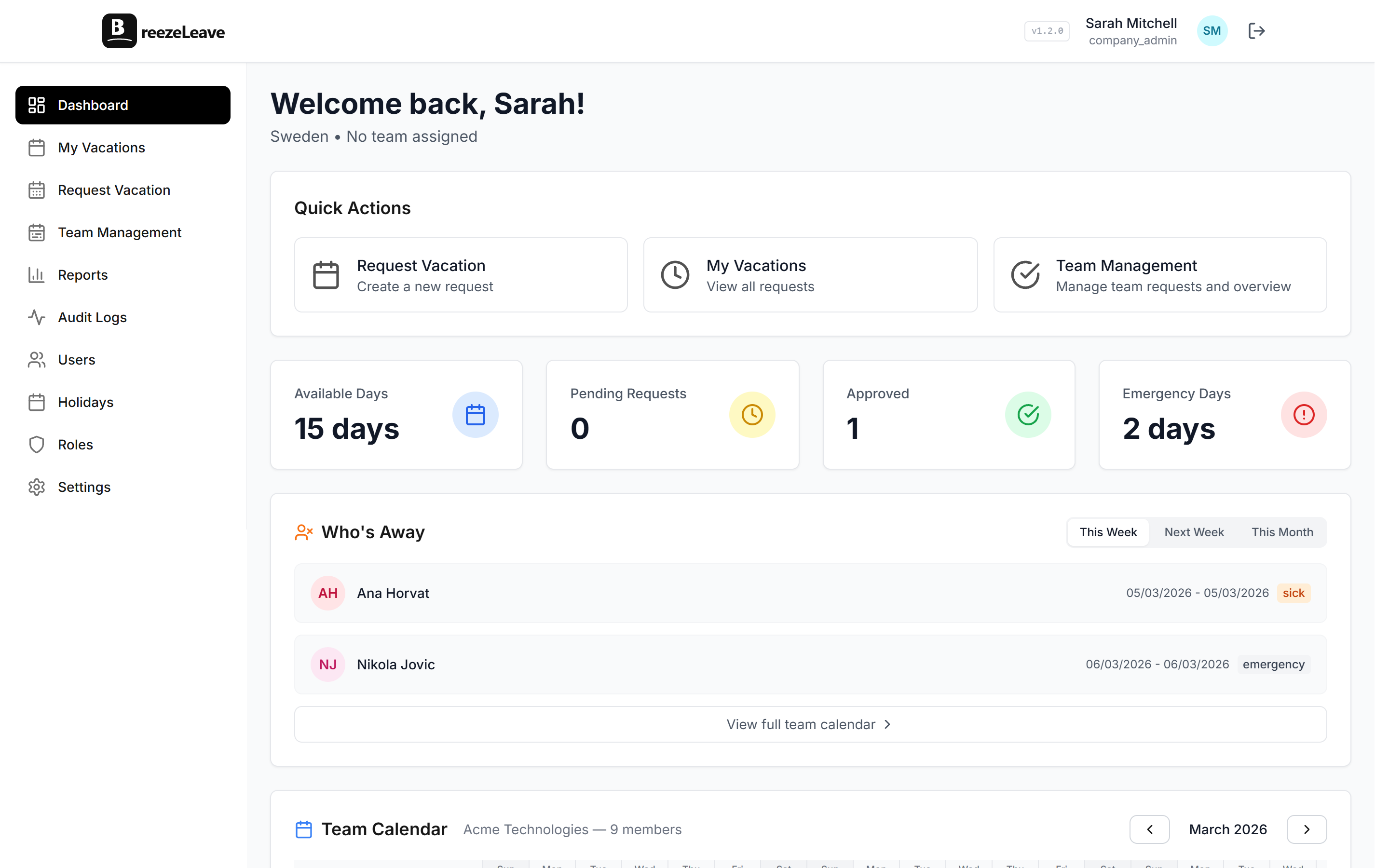
Vacation Tracker is a popular leave management tool with solid Slack and Teams support. But BreezeLeave goes deeper on seniority accruals, blackout dates, and multi-company management. Here's the full comparison.
Reviewed: 2026-05-13. Competitor pricing and features change frequently. Check the Vacation Tracker site for current packaging before deciding.
Vacation Tracker is one of the more established leave management tools on the market. It supports Slack, Microsoft Teams, and email-based workflows. It has a clean interface and a solid reputation. If you are comparing it to BreezeLeave, you are already past the spreadsheet stage, which is a good sign.
Both tools solve the same fundamental problem: making it easy to request, approve, and track time off. The differences are in the details, and those details start to matter once your team hits 30 or 40 people, spans multiple countries, or needs leave policies that evolve with employee tenure.
What Both Tools Do Well
Before getting into the differences, credit where it is due. Both BreezeLeave and Vacation Tracker handle the core leave management workflow:
- Leave requests via Slack, Teams, or web dashboard
- Manager approvals with notifications
- Leave balance tracking with multiple leave types
- Team calendar showing who is out
- Public holiday management
- Reports and exports
If your needs stop at that list, either tool will serve you well. The divergence happens when your policies get more nuanced or your organizational structure gets more complex.
Seniority-Based Vacation Accruals
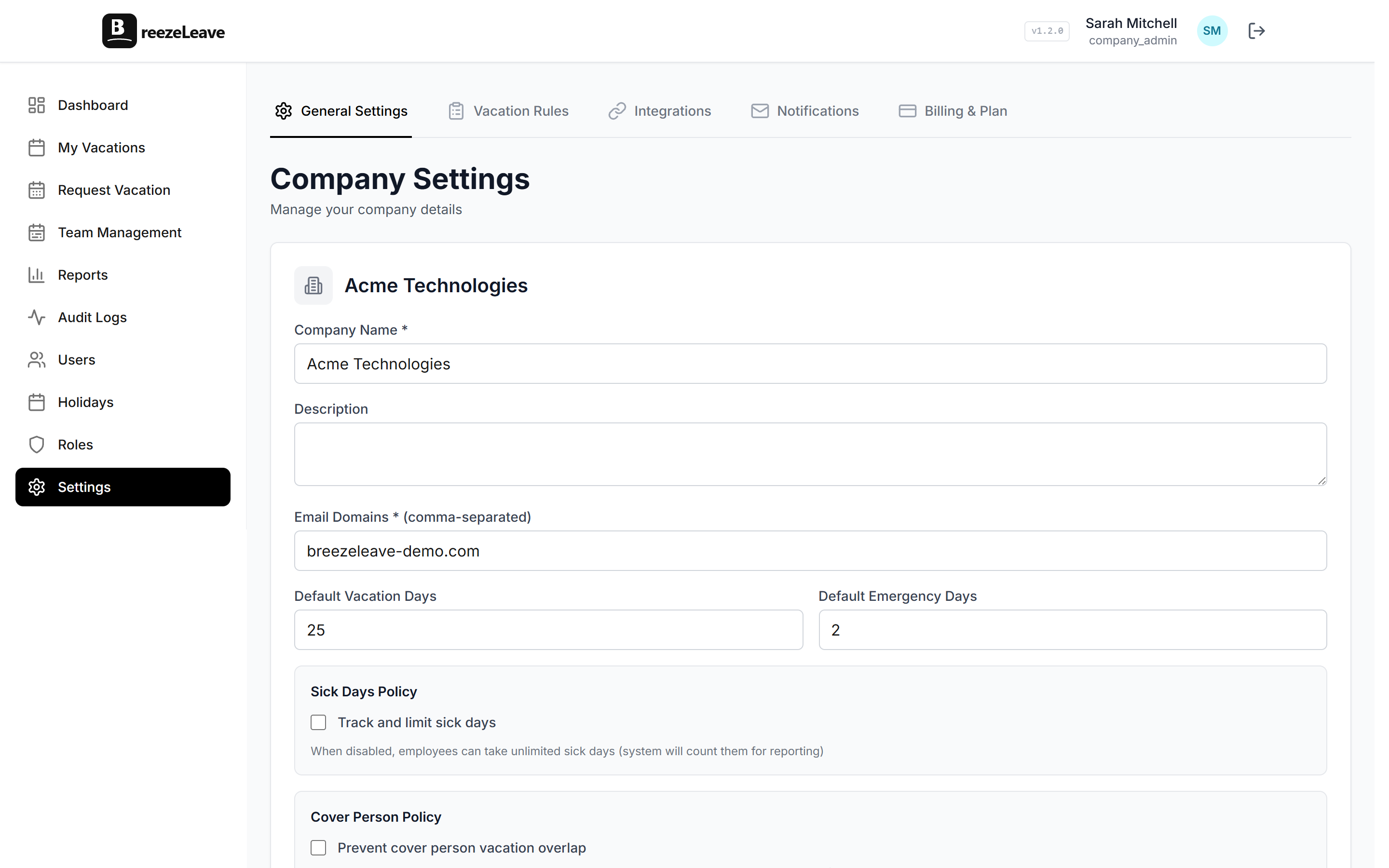
This is one of the clearest differentiators. In many companies, especially in Europe, employees earn additional vacation days based on how long they have been with the company. A new hire might start with 20 days, then get 22 after two years, 24 after five, and so on.
BreezeLeave handles this automatically. You define accrual rules tied to years of service, and the system adjusts each employee's balance on their work anniversary. No manual intervention. No spreadsheet tracking. We wrote a detailed walkthrough of how this works in our seniority-based vacation accruals guide.
Vacation Tracker supports accrual policies, but does not offer the same depth of seniority-based rules that automatically scale with tenure. For teams where this is a contractual obligation, the difference is significant.
Blackout Dates
Certain weeks in the year are off-limits for vacation. Maybe it is end-of-quarter, a product launch window, or annual audit season. BreezeLeave lets you define blackout periods where leave requests are automatically blocked. Employees see the restriction when they try to book, so there is no awkward back-and-forth with their manager.
Vacation Tracker does not currently offer blackout date functionality. Managers need to manually decline requests during critical periods, which means the policy lives in people's heads rather than in the system.
Cover Person Assignments
When someone takes a week off, the question "who is covering for them?" needs an answer. BreezeLeave lets employees assign a cover person when they submit a leave request. That person gets notified, and the assignment is visible to the whole team. It turns an implicit arrangement into an explicit one.
This is not a feature Vacation Tracker offers. For teams where handoffs are important, like customer-facing roles or project-based work, cover assignments prevent the "I thought you were handling that" conversations.
External HR Users
If your company has offices in multiple countries, you might have a local HR person in each office who needs to manage leave for their own team without seeing data from other offices. BreezeLeave supports external HR users who can be scoped to specific countries or teams. They get their own access with visibility limited to their assigned employees.
This is particularly useful for companies with 50 to 200 employees across three or four countries. The Berlin office manager does not need to see Stockholm's leave data, and vice versa. We covered this in depth in our external HR users article.
Full Feature Comparison
| Feature | Vacation Tracker | BreezeLeave |
|---|---|---|
| Slack integration | Yes | Yes |
| Microsoft Teams | Yes | Yes |
| Email notifications | Yes | Yes |
| Seniority-based accruals | Limited | Automatic, rule-based |
| Blackout dates | No | Yes |
| Cover person assignments | No | Yes |
| External HR users | No | Yes, country-scoped |
| Multi-company support | No | Yes |
| Audit logs | Basic | Requests, balances, roles, key admin actions |
| Custom roles | Admin / Approver | Employee, Manager, HR, Admin |
| Pricing | From $1/user/month | Free <10 users, $1-1.50/user Pro |
Multi-Company Management
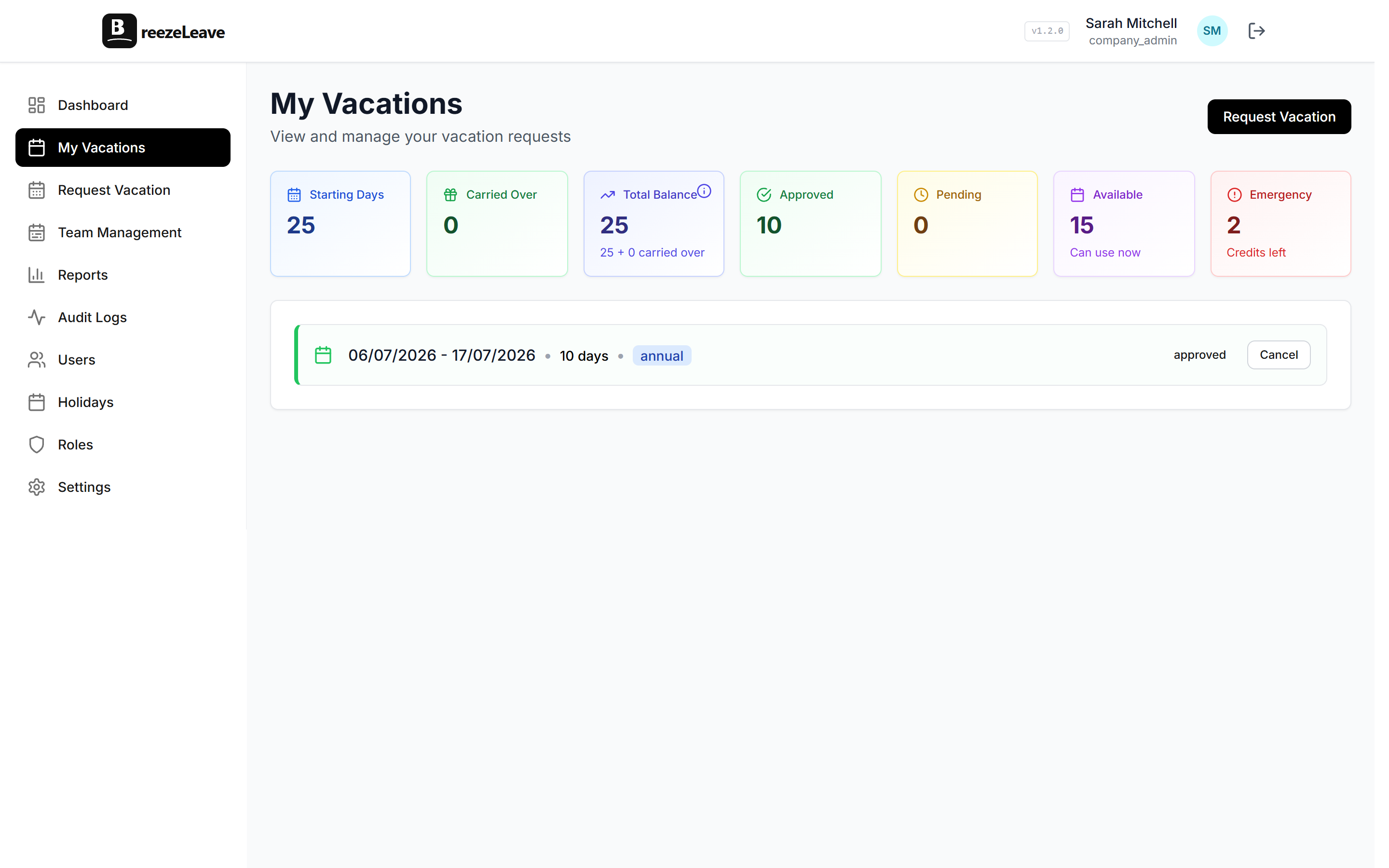
If you run an agency, a holding company, or any structure where multiple legal entities need separate leave policies, BreezeLeave lets you manage them from a single dashboard. Each company has its own settings, leave types, holiday calendars, and employee lists. But you, as the admin, see everything in one place.
Vacation Tracker is designed for single-company use. If you have two entities, you need two separate accounts. That means two logins, two sets of configurations, and no unified reporting.
Audit Logs and Role-Based Access
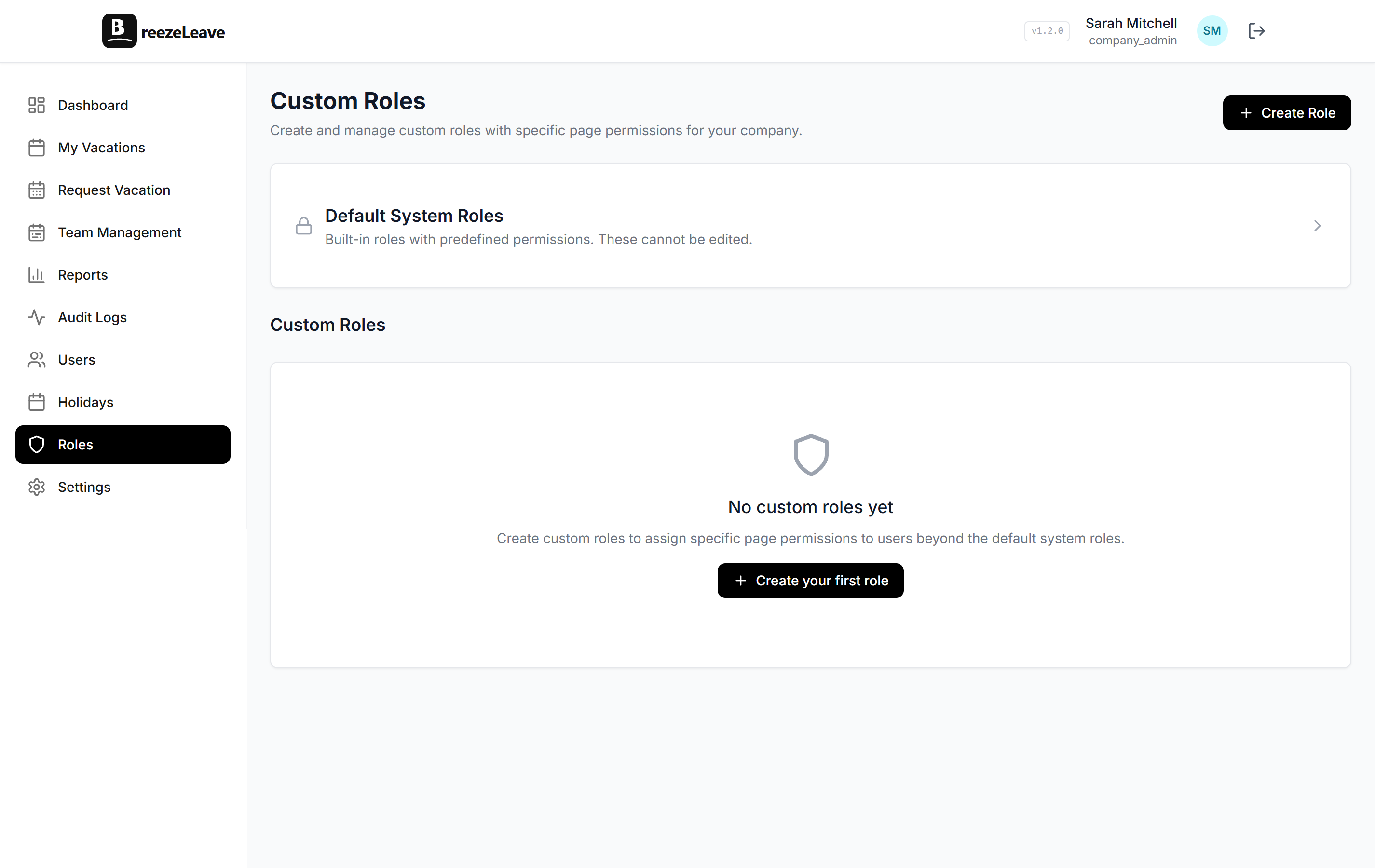
BreezeLeave provides a granular role system with four levels: Employee, Manager, HR, and Admin. Each role sees exactly what they should, nothing more. The audit log covers request, balance, role, and key administrative actions. Rule changes and integration toggles flow through settings change history. For companies that need to demonstrate compliance or simply want a clear paper trail, this is table stakes.
Vacation Tracker has basic role management, but the audit trail and permission granularity do not go as deep. For teams in regulated industries, this gap matters.
When Vacation Tracker Is a Solid Choice
Vacation Tracker has earned its popularity. It is a well-executed product for teams that need straightforward leave management across Slack, Teams, or email. If your team is in one country, does not need seniority accruals, and has simple approval workflows, Vacation Tracker will serve you well.
Vacation Tracker's sweet spot
Single-country teams of 10 to 50 people with uniform leave policies and basic approval needs. It does that well and the setup is fast.
When BreezeLeave Pulls Ahead
BreezeLeave is the stronger choice when your leave management needs extend beyond the basics:
- Multi-country teams where holiday calendars and leave entitlements vary
- Seniority-based accruals that need to work automatically
- Blackout dates during critical business periods
- Cover person workflows for explicit handoffs
- External HR users scoped to specific offices or countries
- Multi-company management from one dashboard
- A full audit trail for compliance
Vacation Tracker covers the 80% case well. BreezeLeave covers the remaining 20% that becomes important as your team grows and your policies mature.
If you are evaluating both, start with the features you need today and the ones you will likely need in 12 months. Migrating leave management tools is not hard, but it is annoying enough that picking the right one upfront saves you the hassle.
Browse other comparisons on the BreezeLeave alternatives hub or check current plans on the pricing page.