Agency Project Timelines: Phases, Milestones, Templates, and Capacity Buffers
How agency teams can use project phases, milestones, reusable templates, history, planned slots, and capacity buffers to keep delivery plans realistic.
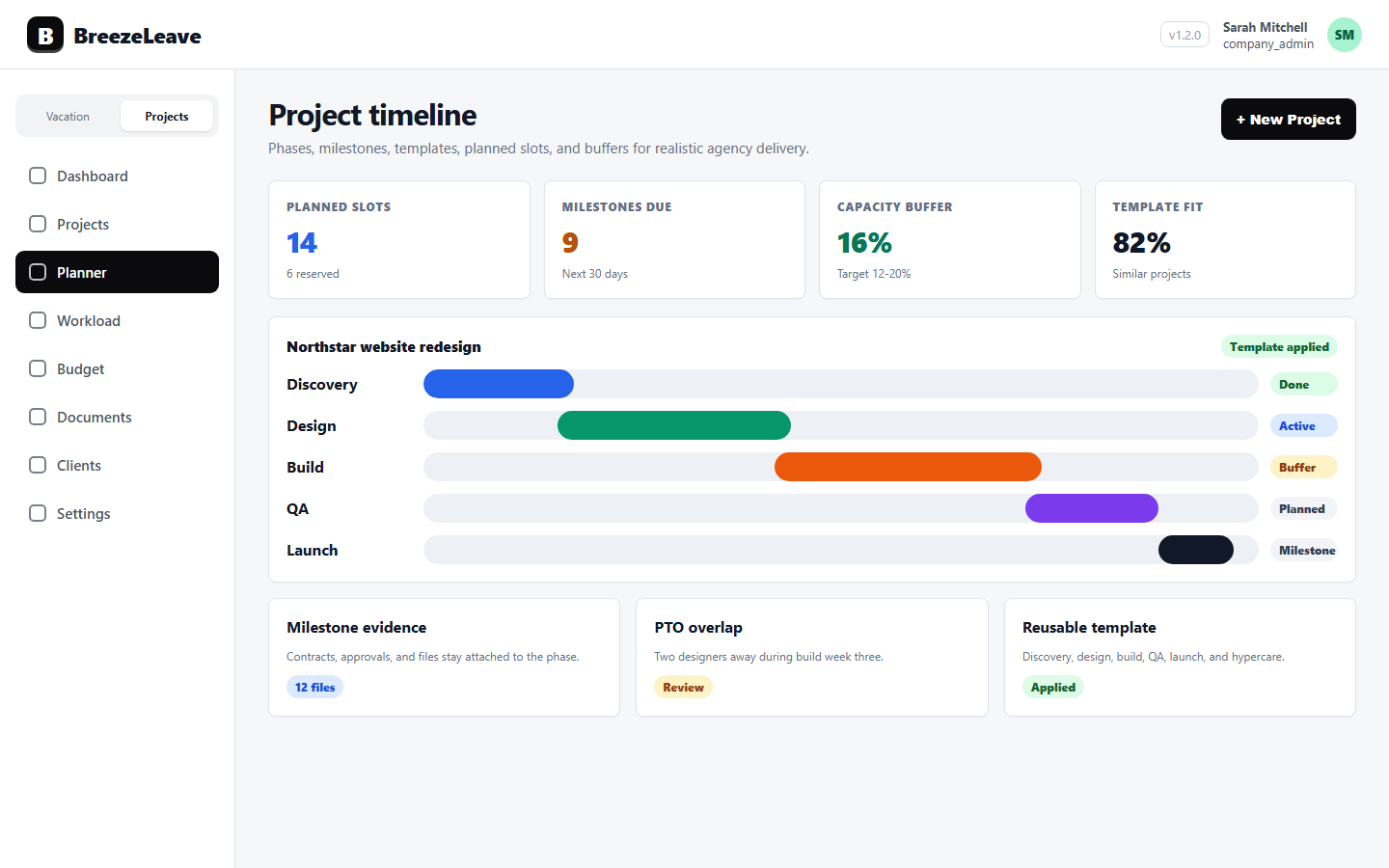
Agency timelines fail when they are treated as static dates. Delivery plans move because scope changes, people take PTO, public holidays reduce capacity, and sales signs work before delivery has a slot.
BreezeLeave project planning combines phases, milestones, templates, project history, planned slots, resources, and capacity buffers so the timeline can reflect the real operating plan.
1. Use phases to make delivery shape visible
Phases such as discovery, design, development, QA, launch, maintenance, and hypercare make the project timeline easier to reason about than one large date range.
They also give delivery teams a cleaner way to align resource demand with the capacity planning view.
2. Tie milestones to evidence
Milestones should carry context: what was delivered, which documents matter, and whether the milestone is complete. Without that, project history turns into scattered chat updates.
For document context, see project document management.
3. Use templates without hiding capacity
Reusable project templates help agencies avoid rebuilding the same structure for every similar engagement. The risk is assuming the same template always fits the current team capacity.
A good workflow uses templates for structure, then validates timing with planned slots, PTO, holidays, and resource availability.
4. Protect the plan with buffers
Capacity buffers give delivery teams room for uncertainty: reviews, QA rework, client delays, and unexpected absences. Buffers are not padding for its own sake; they are a way to keep a commitment believable.
Planned-slot workflows are covered in the project planner guide.