Agency Sales-to-Delivery Handoff Checklist
A practical checklist for moving signed client work into delivery with project records, documents, capacity checks, retainers, and budget context.
A weak handoff creates delivery risk before the first task is assigned. Sales has the signed agreement. The project manager has heard the work is "basically ready." Finance expects the payment schedule to be correct. Delivery is already busy. And somewhere between those four truths, the client gets told a start date that nobody has properly checked.
The handoff is not a ceremony. It is the point where a promise becomes operational work. If the client record is wrong, the signed document is buried in someone's inbox, the budget is vague, or the team is already overcommitted, delivery starts by cleaning up sales debris instead of serving the client.
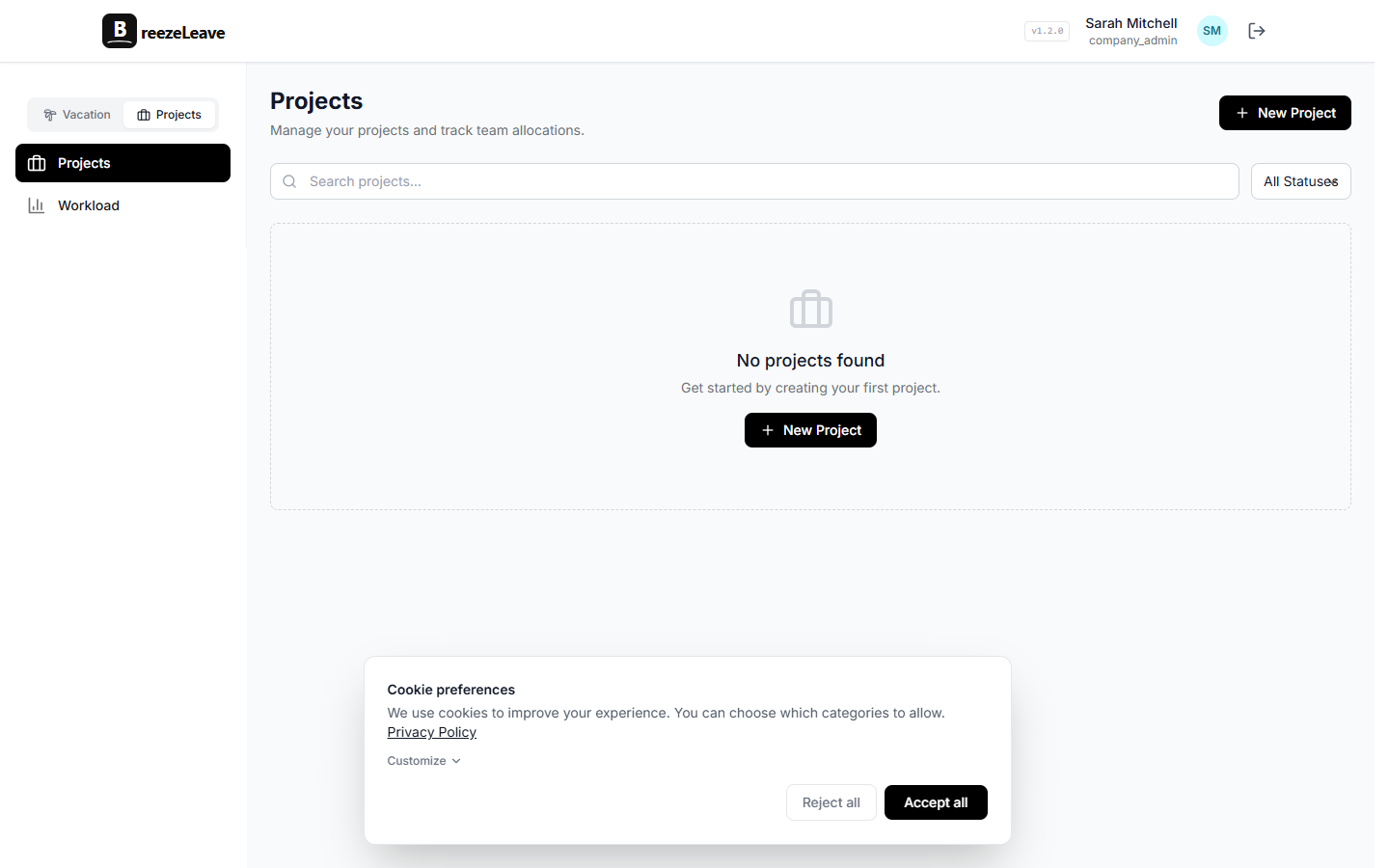
BreezeLeave helps agencies make that bridge more structured: signed documents can connect to client and project records, new work can remain unplanned until capacity is reviewed, and documents, retainers, budget context, and workload can stay visible to the people taking over. This checklist is the plain version of that workflow: what to confirm before the kickoff call, and why each item matters.
What Usually Breaks During Handoff
Agency handoffs rarely fail because people do not care. They fail because the information is split across tools, channels, and assumptions. A salesperson knows the client cares most about a launch date, but that detail never reaches the delivery lead. The signed proposal says three review rounds, but the account manager remembers two. The project is sold as a retainer, but nobody has planned the monthly hours. The creative lead is named in the pitch, but they are on vacation during the first production week.
None of these are dramatic on their own. Together, they create the messy first month every agency recognizes: extra internal meetings, awkward scope clarifications, late staffing changes, and a client wondering why the team that sold the work seems different from the team now delivering it.
The goal of a sales-to-delivery handoff is simple: the delivery team should inherit the signed promise, the commercial context, and a realistic staffing plan before they inherit the deadline.
The Practical Handoff Checklist
A good handoff does not need to be heavy. It needs to be consistent. Before a signed project moves into active delivery, someone should be able to answer these questions without searching Slack, asking three people, or reopening the sales pipeline.
- Client record: Does the client exist, and is the owner correct?
- Project record: Is the project created or updated with the right client, owner, status, project type, and commercial context?
- Signed document: Is the signed proposal, statement of work, or agreement attached where delivery can actually find it?
- Scope and assumptions: Are deliverables, exclusions, dependencies, review rounds, and client responsibilities clear enough for kickoff?
- Budget context: Does delivery understand the fee, expected margin, payment schedule, milestone assumptions, or monthly retainer value?
- Capacity check: Has anyone reviewed team workload, PTO, public holidays, role coverage, and existing client commitments?
- Planned slot: Has the work been placed into a realistic delivery window, or should it remain unplanned until staffing is confirmed?
That last point is where many agencies get into trouble. A signed deal feels like it should become a scheduled project immediately. In practice, it should become a reviewed intake item first. If capacity is available, great. If not, the honest answer is better found internally before it becomes a client expectation.
1. Start With The Signed Source Of Truth
The signed document is not just legal storage. It is the source of truth for what was sold. Delivery needs to see the actual language around scope, milestones, review cycles, commercial terms, and client obligations. A summary from sales is useful, but it should not replace the document the client signed.
This matters most when the work has nuance: a fixed-scope project with a tight milestone, a retainer with a monthly hour bank, a discovery phase that may become implementation, or a client who bought a specific senior person as part of the pitch. Those details affect how the work should be staffed and how much flexibility delivery has when reality gets messy.
If your sales process uses GetAccept, the cleaner workflow is to avoid retyping the deal into a separate operational system. BreezeLeave's GetAccept project handoff workflow is built around signed documents creating or updating the related client and project records, so the handoff starts from the signed agreement instead of someone's memory of it.
Handoff question
If a project manager joined the account tomorrow, could they find the signed document, understand what was sold, and see which project it belongs to without asking sales?
2. Create The Client And Project Context
The project record is where the handoff becomes operational. It should answer the basic ownership questions: who owns the client, who owns delivery, what kind of work is this, and what state is it in? New projects should not float around as a signed PDF, a Slack message, and a calendar invite.
For a one-off project, the record should make the expected delivery window, budget, payment assumptions, and responsible team visible. For a retainer, it should make the contract period, monthly budget or hour expectations, and recurring staffing needs visible. The point is not to turn the handoff into paperwork. The point is to give delivery enough context to make good planning decisions.
This is also where agencies should separate "sold" from "ready to schedule." A project can be commercially won and still not ready for a planned slot. Maybe the client has not sent assets. Maybe the strategist is unavailable. Maybe three other projects already need the same designer. The project record should preserve that nuance instead of forcing every signed deal straight into the calendar.
For the broader operating model, see client project management and project document management.
3. Review Scope Before You Review Dates
Dates are tempting because they make the handoff feel concrete. But delivery dates only mean something after the scope is understood. Before the team commits to a kickoff, the PM should review what was actually sold and translate it into delivery assumptions.
- Deliverables: What needs to be produced, reviewed, shipped, or handed back to the client?
- Exclusions: What was explicitly not included, and where are the likely scope-pressure points?
- Dependencies: What does the client need to provide before the team can start meaningful work?
- Approvals: Who signs off, how many review rounds are included, and what happens if feedback is late?
- Special promises: Did sales mention a named expert, a faster-than-usual turnaround, or a reporting format that delivery needs to honor?
This is where the sales team adds the most value after signature. A good salesperson does not simply throw the document over the wall. They explain the client context: what the buyer cares about, what risks came up during sales, where the client is flexible, and where they are not. That context is hard to reconstruct later.
4. Put Budget And Retainer Context In The Open
Delivery teams do not need every finance detail, but they do need enough commercial context to protect the work. A project sold with a thin margin needs tighter scope control than one with room for discovery. A retainer with a monthly hour bank needs different planning from a fixed milestone project. A delayed payment milestone may affect when work should start.
The handoff should make budget context practical, not mysterious. What is the project fee? Is there a payment schedule? Are milestones tied to delivery acceptance? Is this a recurring retainer, a one-off project, or a mixed arrangement? If it is a retainer, how much work is expected each month, and which roles need recurring coverage?
| Commercial Detail | Why Delivery Needs It | Handoff Risk If Missing |
|---|---|---|
| Fixed project budget | Helps PMs plan effort and control scope | Team burns time before anyone sees margin pressure |
| Payment milestones | Connects delivery events to expected cash timing | Finance expectations drift from delivery reality |
| Retainer hours | Guides monthly staffing and workload planning | Recurring work quietly overfills the same people |
| Included roles | Shows which skills must be reserved | The agency sells capacity it cannot actually cover |
The important thing is not that delivery becomes finance. It is that delivery can see the commercial shape of the promise before work starts.
5. Make Capacity Part Of The Handoff, Not An Afterthought
A signed deal is good news, but it is not proof of delivery capacity. The team may already be planned at full load. A key person may be on PTO. A public holiday may remove two working days from the first production week. A retainer may look small on paper but still consume the same senior people needed for the new project.
This is why capacity belongs inside the handoff, not after it. Before sales or account management confirms a start date, delivery should review workload, planned projects, existing retainers, approved vacation, pending leave, and role coverage. If the work needs a strategist, designer, developer, and account lead, the check should happen at the role level, not just as a vague "the team seems busy" conversation.
BreezeLeave can keep new work in unplanned intake until that review is complete. Once the delivery window is realistic, the project can move into a planned slot. That sequence keeps the agency from treating every signed agreement as if it automatically fits next week.
The product-level workflow is covered in project capacity planning and the agency guide to project capacity planning for agencies.
Capacity rule of thumb
Do not ask, "Can we start?" Ask, "Which named people and roles are available for the first two to four weeks, after PTO, public holidays, existing retainers, and current project commitments?"
6. Run A Short Handoff Meeting With The Right People
The best handoff meeting is short because the records are already clean. It should not be the place where everyone discovers missing documents or argues about what was sold. It should be the place where sales, account management, delivery, and finance confirm they are looking at the same client promise.
A practical agenda looks like this:
- Sales summarizes the buyer context, success criteria, and any sensitive promises.
- The PM confirms scope, exclusions, dependencies, and kickoff readiness.
- Delivery reviews required roles, likely staffing, PTO conflicts, and planned slot options.
- Finance or operations confirms budget, retainer, payment, and milestone assumptions.
- The owner records open risks and decides whether the project is ready to schedule.
If the meeting produces ten unanswered questions, that is useful signal. It means the project should probably stay unplanned until those questions are resolved. The client will experience that as professionalism if the agency communicates clearly. They will experience the alternative as confusion.
The Short Version
A sales-to-delivery handoff is successful when the delivery team can see the signed agreement, understand the client and project context, review budget and retainer assumptions, and make a capacity-aware planning decision before committing dates.
- Keep the signed document attached to the client and project record.
- Separate "sold" from "ready to schedule."
- Review scope, dependencies, budget, retainer expectations, and payment assumptions.
- Check workload, PTO, public holidays, role coverage, and existing commitments.
- Move the project into a planned slot only when the delivery window is realistic.
The agencies that get this right do not make handoff more bureaucratic. They make it less surprising. Sales keeps the context, delivery gets the truth early, finance sees the commercial assumptions, and clients feel like they are moving from one coordinated team to another.