Probation Period Lockouts: Restrict Leave Requests for New Hires
Many companies restrict vacation during the probation period. Here's how to enforce this automatically without awkward conversations or manual tracking.
New hire starts Monday. By Wednesday, they're asking about booking two weeks off in August. It's not unreasonable; they want to plan ahead. But your company has a 3-month probation period, and vacation requests during that time need to be handled differently.
Some companies block leave entirely during probation. Others allow it but with manager approval only (no auto-approve). Either way, the rules are different for new hires, and the system should enforce them automatically.
What is a probation period lockout?
A probation period lockout restricts or blocks vacation requests during an employee's initial probation period (typically 1 to 6 months, depending on the country and company policy). The restriction is automatic. Based on the employee's start date, the system knows whether they're still in probation.
There are two common approaches:
| Approach | What Happens | Best For |
|---|---|---|
| Hard lockout | Employee cannot submit any vacation requests during probation | Strict policies, roles requiring full onboarding |
| Soft restriction | Employee can request but requires explicit manager approval (no auto-approve) | Flexible companies, emergency situations |
The hard lockout is cleaner. It sets expectations from day one: "During your first 3 months, focus on onboarding. Vacation starts after probation." The soft restriction is more humane; it allows for emergencies, pre-planned commitments, and reasonable exceptions.
Why enforce it automatically?
Without system enforcement, probation leave restrictions become an awkward conversation. The new hire submits a request. The manager has to reject it and explain the probation policy. The employee feels singled out. HR gets involved to clarify.
When the system enforces it:
- No awkward conversations. The employee sees the restriction before they try to submit. The message is from the system, not from their manager.
- Consistent enforcement. Every new hire gets the same treatment. No favoritism, no "well, we made an exception for Sarah."
- Zero admin overhead. HR doesn't need to track probation end dates manually. The system calculates it from the start date.
- Automatic lift. When probation ends, the restriction disappears. No one needs to remember to update permissions.
Setting expectations early
Include the probation leave policy in your offer letter and onboarding materials. When a new hire encounters the system restriction, it should confirm what they already know, not surprise them.
How BreezeLeave handles probation
BreezeLeave can enforce probation period lockouts based on company settings:
- Set the probation period length (e.g., 3 months, 6 months)
- Choose the restriction type (hard block or require approval)
- The system automatically calculates each employee's probation end date from their start date
- Restrictions are lifted automatically when probation ends
When an employee in probation tries to submit a vacation request and the hard lockout is enabled, they see a clear message explaining the restriction and when it will be lifted. If soft restriction is enabled, their request goes through the normal approval flow but is flagged as a probation-period request for the manager.
Legal considerations
Before implementing a probation leave lockout, check your local employment law. In many EU countries:
- Vacation days accrue from day one. Even during probation, employees are earning vacation entitlement. The lockout restricts when they can use it, not whether they earn it.
- Sick leave is usually exempt. You typically cannot prevent an employee from taking sick leave during probation. BreezeLeave's lockout applies to vacation requests only. Sick leave and emergency leave remain available.
- Pre-existing commitments. If a new hire mentioned a planned vacation during the interview process, blocking it during probation could create legal issues. The soft restriction approach handles this gracefully. The request can be approved as an exception.
Important
Probation lockouts are a company policy tool, not a legal one. Always check with local employment law before restricting leave. In some jurisdictions, employees have the right to use accrued vacation during probation. The soft restriction (require approval) is generally safer than a hard block.
Combining probation lockout with other features
Probation lockouts work alongside BreezeLeave's other features:
- Seniority accruals: days still accrue during probation. The employee just can't use them yet (or needs approval). When probation ends, their full balance is available.
- Blackout dates: if a blackout period falls within probation, both restrictions apply. The employee sees whichever message is most relevant.
- Adjustments: if you need to grant a probation employee an exception (e.g., a pre-agreed vacation), an adjustment combined with the soft restriction approach handles it cleanly.
What employees see
Clear communication prevents frustration. When a probation employee opens the vacation request form:
"You're currently in your probation period (ends April 15, 2026). Vacation requests are available after this date. If you have an urgent need, please contact your manager."
The message includes their specific probation end date, so there's no ambiguity. They know exactly when they can start booking leave. This is better than a generic "you can't do this" error.
Setting it up
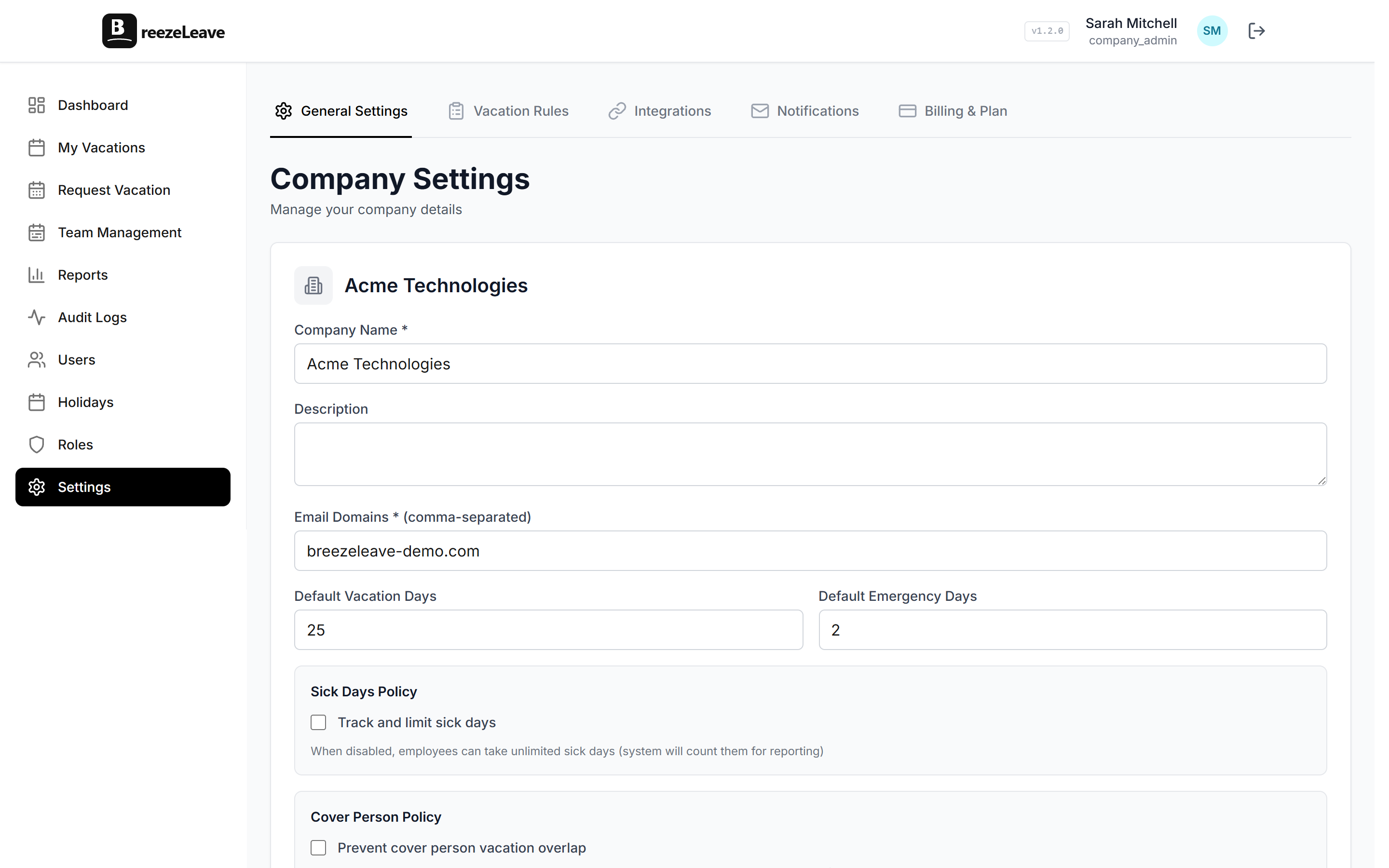
Probation lockout is configured in Company Settings:
- Navigate to Settings
- Set the probation period length (in months)
- Choose restriction type: hard block or require approval
- Save
The system applies the restriction to all employees based on their start date. When probation ends, the restriction lifts automatically. No calendar reminders, no manual updates, no forgotten cases.