Client Project Management for Agencies: Projects, Retainers, Documents, and Health
How agencies can manage client work in BreezeLeave with projects, retainers, documents, health status, capacity context, and budget visibility.
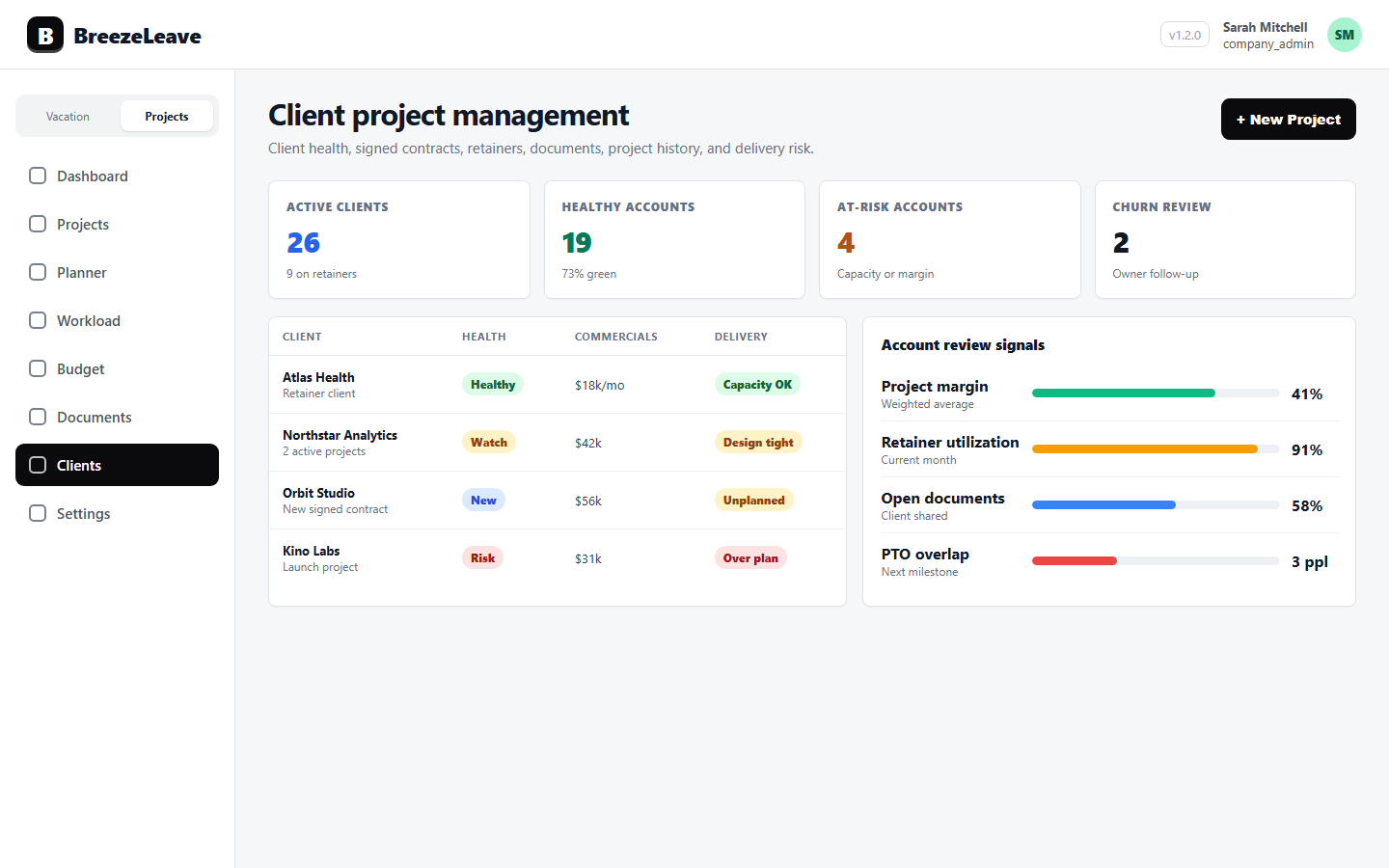
Client project management is not only task management. Agencies also need to know which client owns the work, which retainer or project it belongs to, which documents matter, who has capacity, and whether delivery health is moving in the wrong direction.
BreezeLeave brings those pieces into the same operating model as leave and capacity. The result is a more honest view of client delivery: projects, retainers, documents, health, logged hours, budget context, and availability all support the same review cadence.
1. Put clients and projects at the center
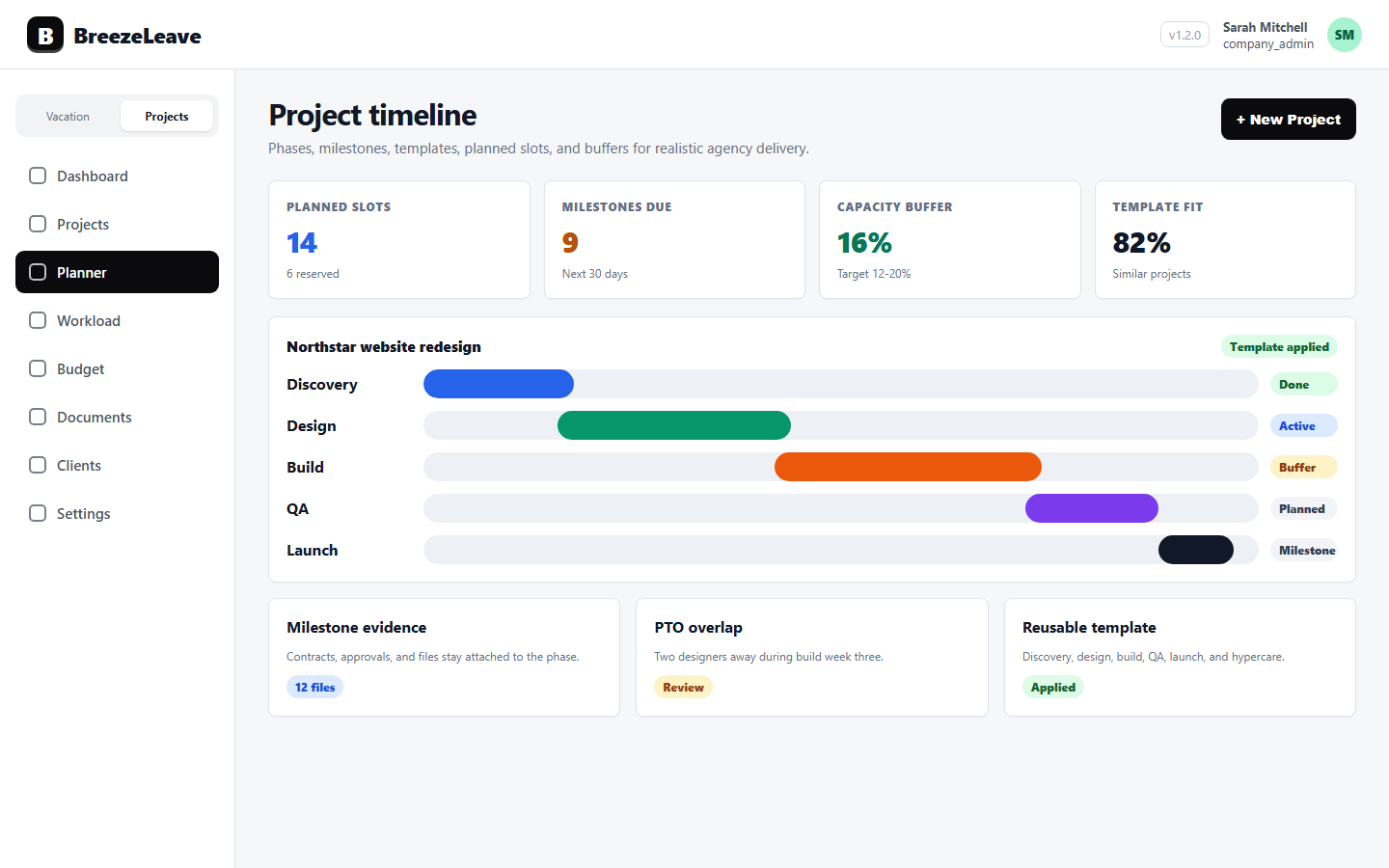
Agencies need a durable client structure before they can manage delivery well. BreezeLeave tracks clients, projects, owners, statuses, phases, milestones, resources, retainers, and supporting accounting data so project work is not reduced to a disconnected task list.
That structure helps answer practical questions: which clients have active projects, which projects are connected to recurring retainer work, which owners are accountable, and which client records need delivery or financial attention.
The product-level entry point is client project management.
2. Manage retainers without hiding capacity risk
Retainers can look calm on paper while capacity is already tight. Monthly hours, assigned people, logged ClickUp time, client health, and upcoming PTO all matter to the same account review.
BreezeLeave supports retainer planning with monthly allocation context and project-level resources. Managers can compare planned work and logged hours, see whether a retainer is consuming more effort than expected, and use capacity planning before committing to new work.
For the capacity side of that review, see project capacity planning and project capacity planning for agencies.
3. Keep documents attached to the work
Client delivery depends on more than status fields. Statements of work, handoff documents, client files, milestone attachments, and internal reference material need to stay close to the project or client they support.
BreezeLeave supports company, client, project, and milestone-scoped documents. That keeps delivery paperwork easier to find during project review, budget review, and account handoff, without relying on scattered chat links as the system of record.
4. Use health status as an operating signal
Client health should not be treated as a vague sentiment field. It is most useful when it sits next to project delivery, logged hours, retainer usage, documents, and budget context. Then a health change can trigger a real review instead of becoming a passive label.
For example, a client marked at risk may need a budget check, a capacity review, a document cleanup, or a retainer planning discussion. BreezeLeave gives those surrounding views a shared home, which makes the next action easier to identify.
5. Connect client management to time and budget
Client project management becomes stronger when it includes actual effort and financial health. ClickUp logged hours show where time is going. Budget views show revenue, cost, margin, retainers, scenarios, and forecast context. Capacity planning shows whether the team can keep the commitment.
Agencies can build a simple operating loop: review client health, inspect active projects and retainers, check documents and handoffs, compare planned work with logged hours, and escalate budget or capacity risk while there is still time to adjust.
Continue with ClickUp time tracking and project budget tracking to complete the project SEO cluster.
Related articles
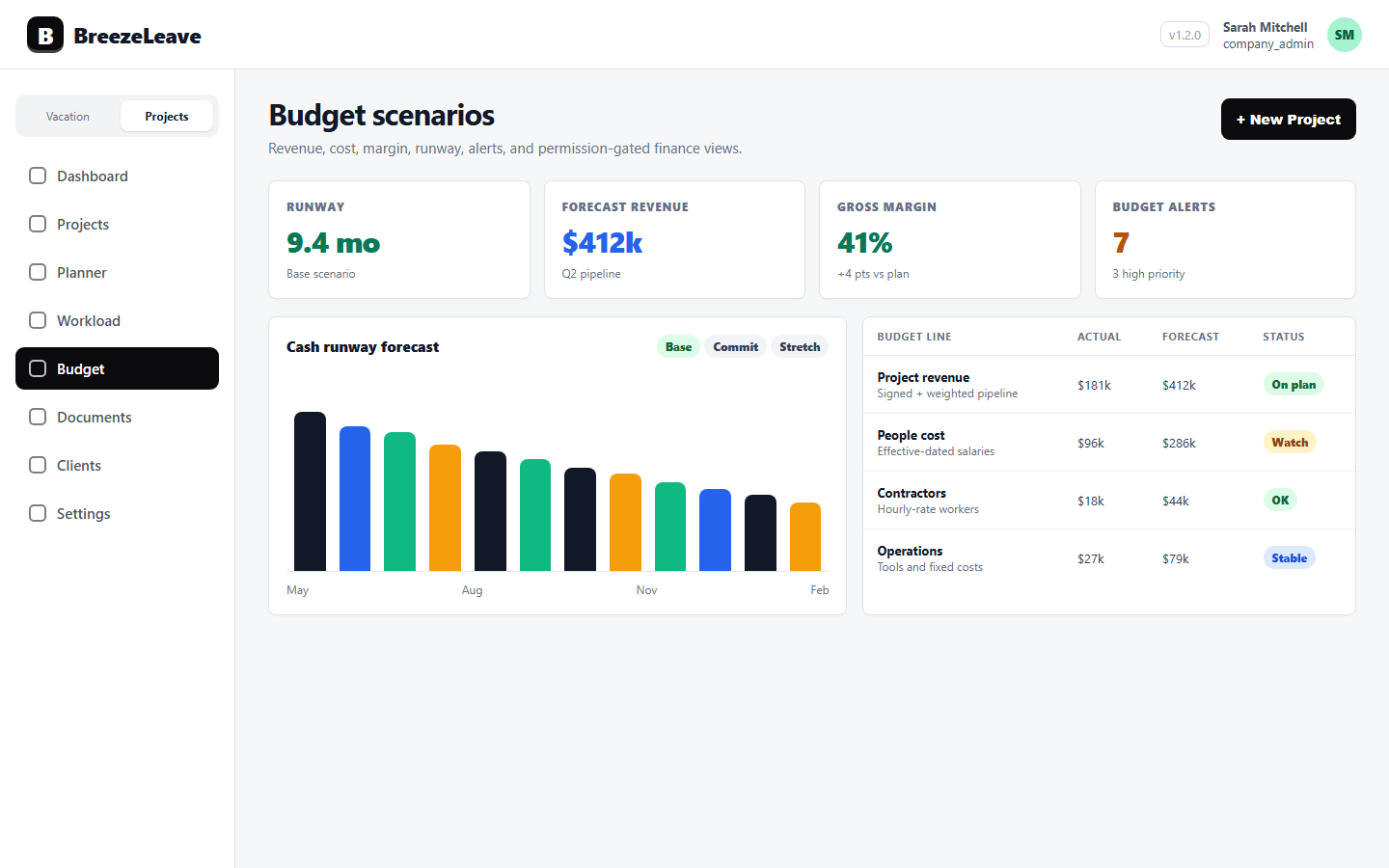
Agency Budget Reviews: Categories, Scenarios, Cash Runway, Alerts, and Headcount
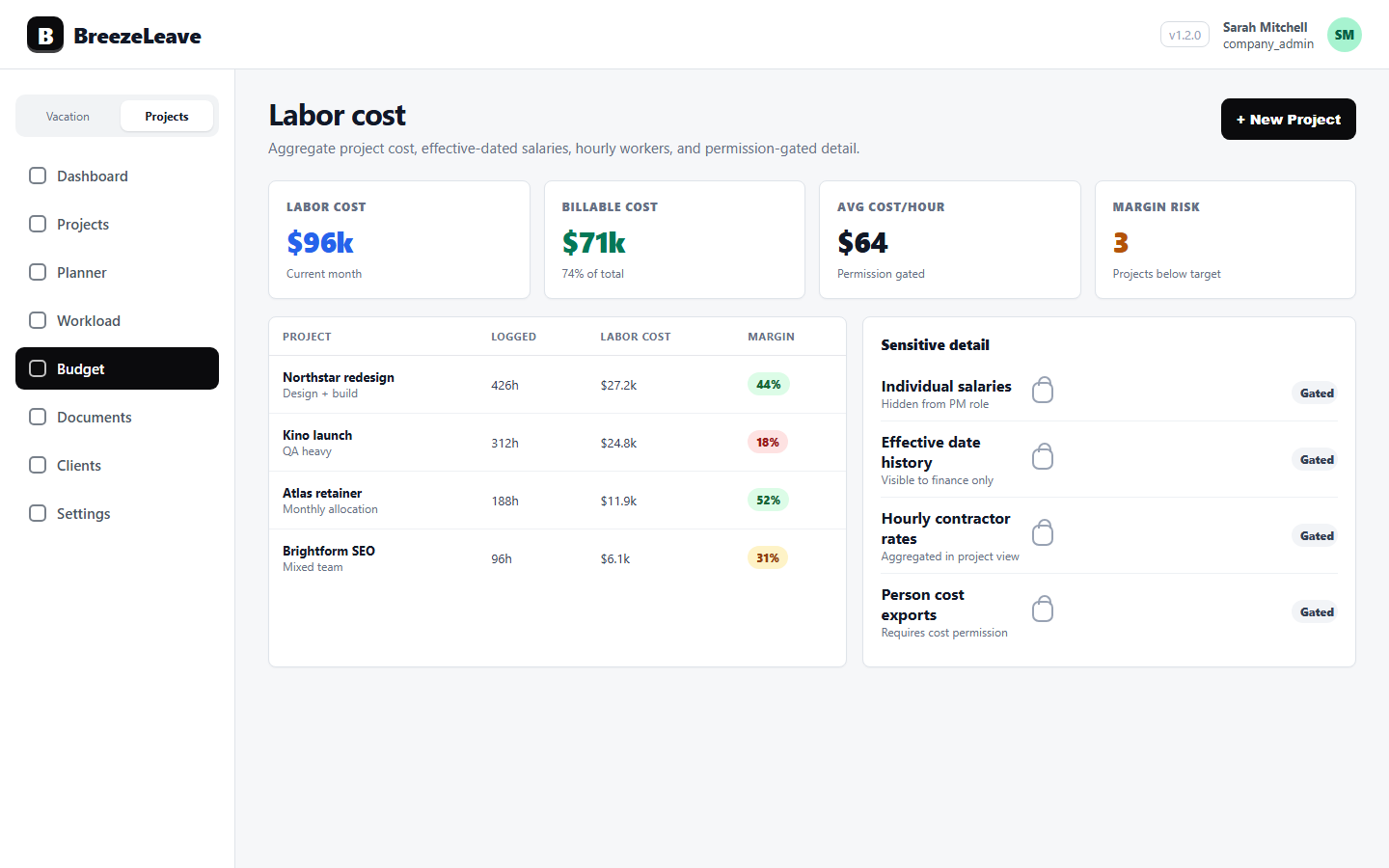
Labor Cost Tracking for Agencies Without Exposing Everyone's Salary