Law Firm PTO Coverage and Audit Trail Guide
A law firm office manager guide to PTO coverage, conflict prevention, and the audit trail that holds up when balances, approvals, or compliance reviews are challenged.
At a 20-attorney litigation firm, the office manager opens her email on a Tuesday morning to find three things: a paralegal asking for the rest of the week off for a family emergency, a senior associate who forgot to log her three days of leave from last month, and a partner asking why the firm's records show he took four vacation days in March when he is sure it was three. The paralegal needs an answer in an hour because a court filing is due Thursday. The senior associate's balance is wrong by three days. The partner wants the audit log to settle the March question. By 10 a.m., the manager has not started her own work.
This guide is for the office manager at a small to mid-size law firm who handles leave for attorneys, paralegals, and support staff. The two things that make law firm leave management different from a generic small business: every filing deadline is a coverage problem, and every balance change might end up in front of a partner who wants to know what happened, when, and by whom. The work below is about getting both right with a single tool.
Why law firm leave is its own discipline
Law firms share a few patterns that change how leave management has to work:
- Court filing deadlines do not move. A summary judgment response is due on a date set by the court. If the associate handling it is out, someone else covers, end of story. The leave system has to surface that conflict before approval, not after.
- Billable hour pressure shapes vacation culture. Attorneys carry annual billable targets. Vacation taken in slow weeks is normal. Vacation taken at quarter-end when targets are close is unusual and worth a conversation.
- Coverage is by matter, not by team. A litigation associate's backup is not whoever else is in the office. It is the associate familiar with her active matters. Cover assignments have to be explicit.
- Records get audited. Partner reviews, malpractice insurance questionnaires, and internal compensation discussions all reference leave records. Every approval, denial, and adjustment needs a timestamp and an actor.
The right tool is not the one with the most features. It is the one that records every change cleanly and prevents the coverage failures that turn into client complaints.
The court filing risk: how leave creates it
The single most expensive failure mode in law firm leave management is approving a request without checking whether the attorney has a filing deadline that week. It is not a frequent failure, but when it happens the cost is real: a missed deadline, a client call, and a partner asking why nobody flagged it.
Three things in BreezeLeave reduce the risk:
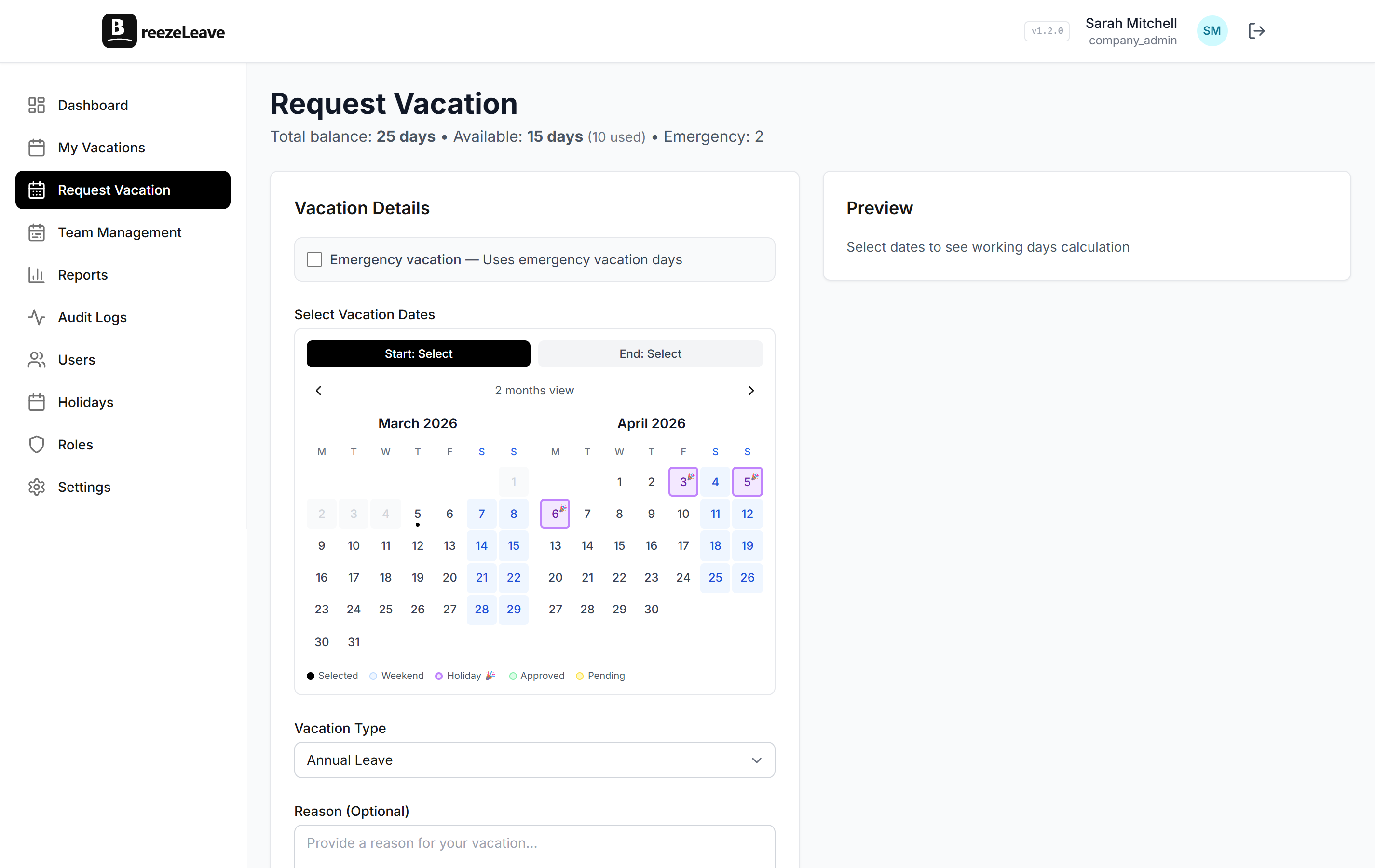
- Concurrent-absence limits per team. Set a rule that no more than one litigation associate can be out at the same time. The approver sees the warning before approving the second request.
- Cover person assignments. Every attorney has a named cover attorney for her active matters. When a request is approved, the cover person is notified and the matter list is shared. Detail is in the cover person assignments piece.
- Blackout dates around known deadlines. Trial weeks, motion deadlines, and discovery cutoffs go on the firm calendar. Requests that fall inside those windows require partner approval rather than office manager approval.
The friction is the feature
Conflict warnings slow approval down on purpose. The office manager would rather spend two minutes confirming coverage on Tuesday than spend two hours on Friday explaining why a deadline slipped. The point is not to deny requests. It is to make sure the right person decided.
Coverage assignment in practice
Coverage in a law firm is not a generic backup. It is matter-aware. A litigation associate's cover is the associate familiar with her cases. A real estate attorney's cover is another real estate attorney, not whoever is free. The leave tool should respect this distinction.
The pattern that works:
| Role | Cover assignment | Approver |
|---|---|---|
| Litigation associate | Another litigation associate at same level | Litigation partner |
| Transactional associate | Senior transactional associate or counsel | Transactional partner |
| Paralegal | Lead paralegal in the practice group | Lead attorney on active matters |
| Support staff | Office manager pools coverage | Office manager |
| Partner | Co-managing partner | Managing partner or executive committee |
The table is the firm's coverage policy in one screen. Configure it once in the team management page, and the approval chain plus cover assignment apply automatically the next time a request comes in.
The audit trail the firm needs
Law firms ask more of their audit trail than most businesses. The questions that come up:
- Who approved this request and when?
- What was the balance immediately before and after the approval?
- Who made this adjustment, and what reason did they record?
- When was the cover person assignment last changed?
- Did anyone deny this request before the eventual approval, and why?
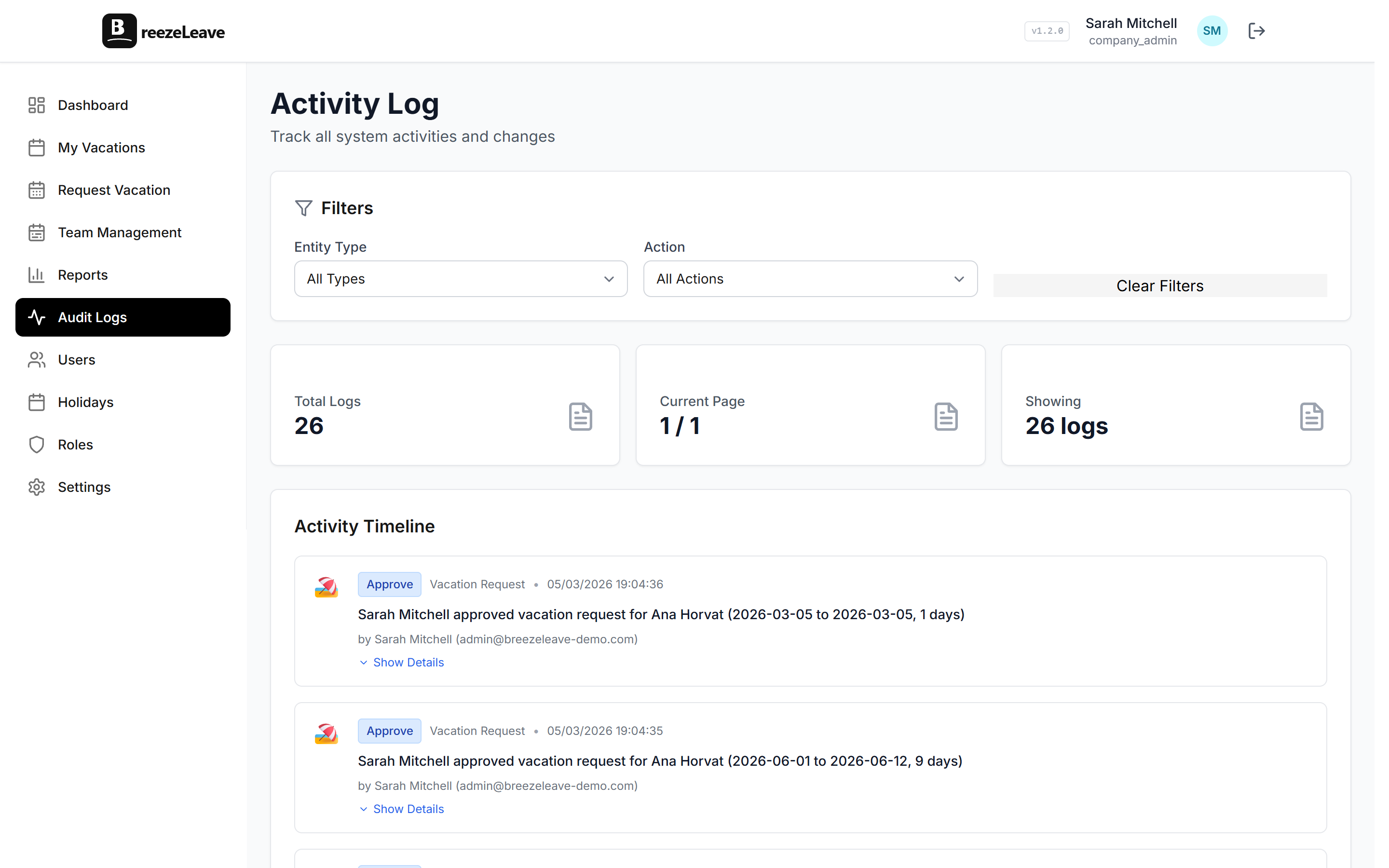
BreezeLeave records each of these as a discrete audit event with a timestamp, an actor, and the before-and-after state. The audit log is filterable by employee, by action type, and by date range, which is what partners and outside auditors actually ask for. The audit logging article explains what each event captures and why each field matters for a defensible record.
Balance adjustments and the partner question
Balance adjustments are the part of law firm leave management that draws the most scrutiny. When a partner asks why his recorded vacation days do not match his memory, the answer cannot be "I do not know" or "the system glitched". It has to be a timestamped record showing what changed, who changed it, and what reason they entered.
Three rules for adjustments to hold up:
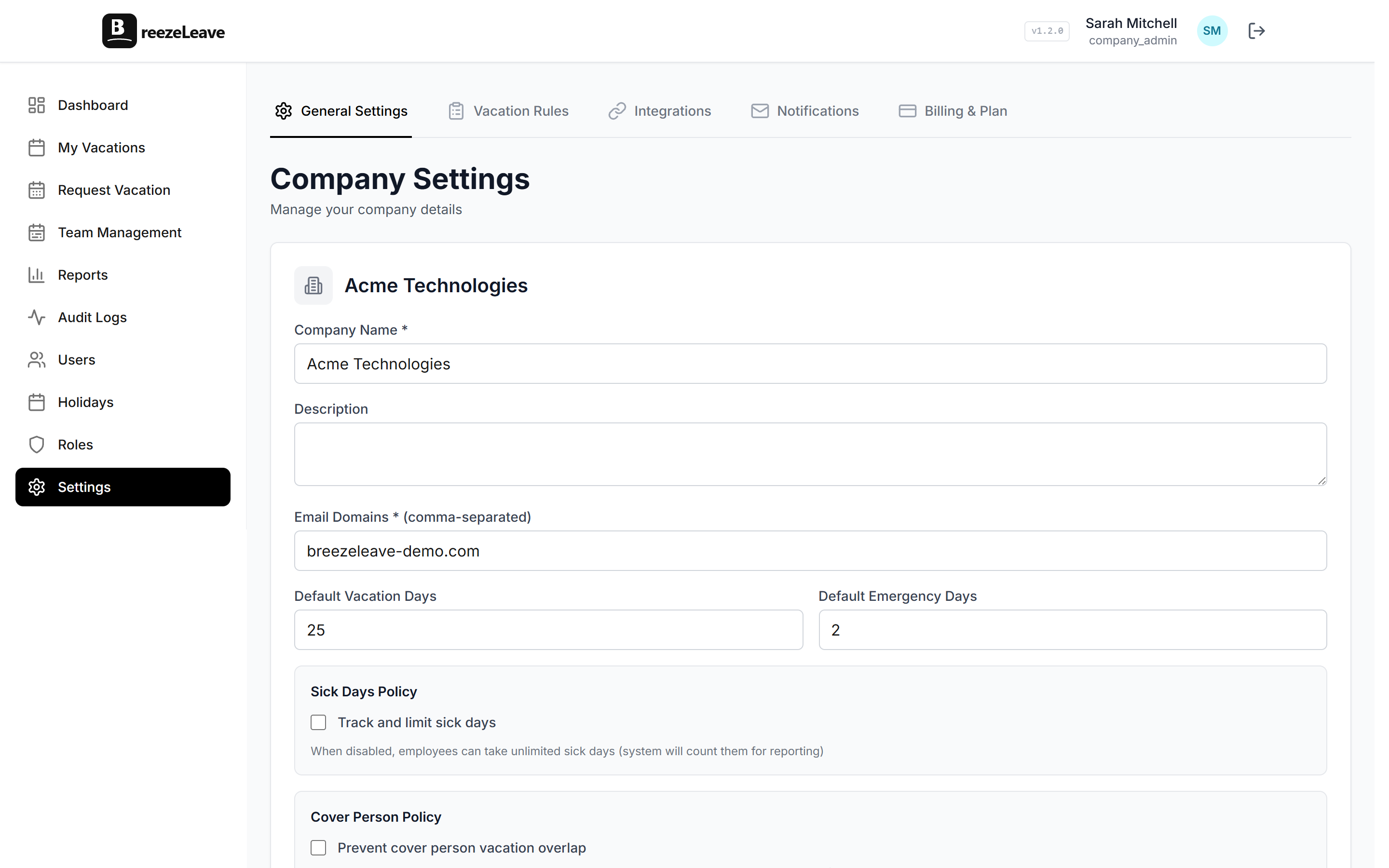
- Every adjustment requires a reason in the note field. "Carry over from prior year per partner approval, see email 2026-01-12" is a record. "Adjustment" is not.
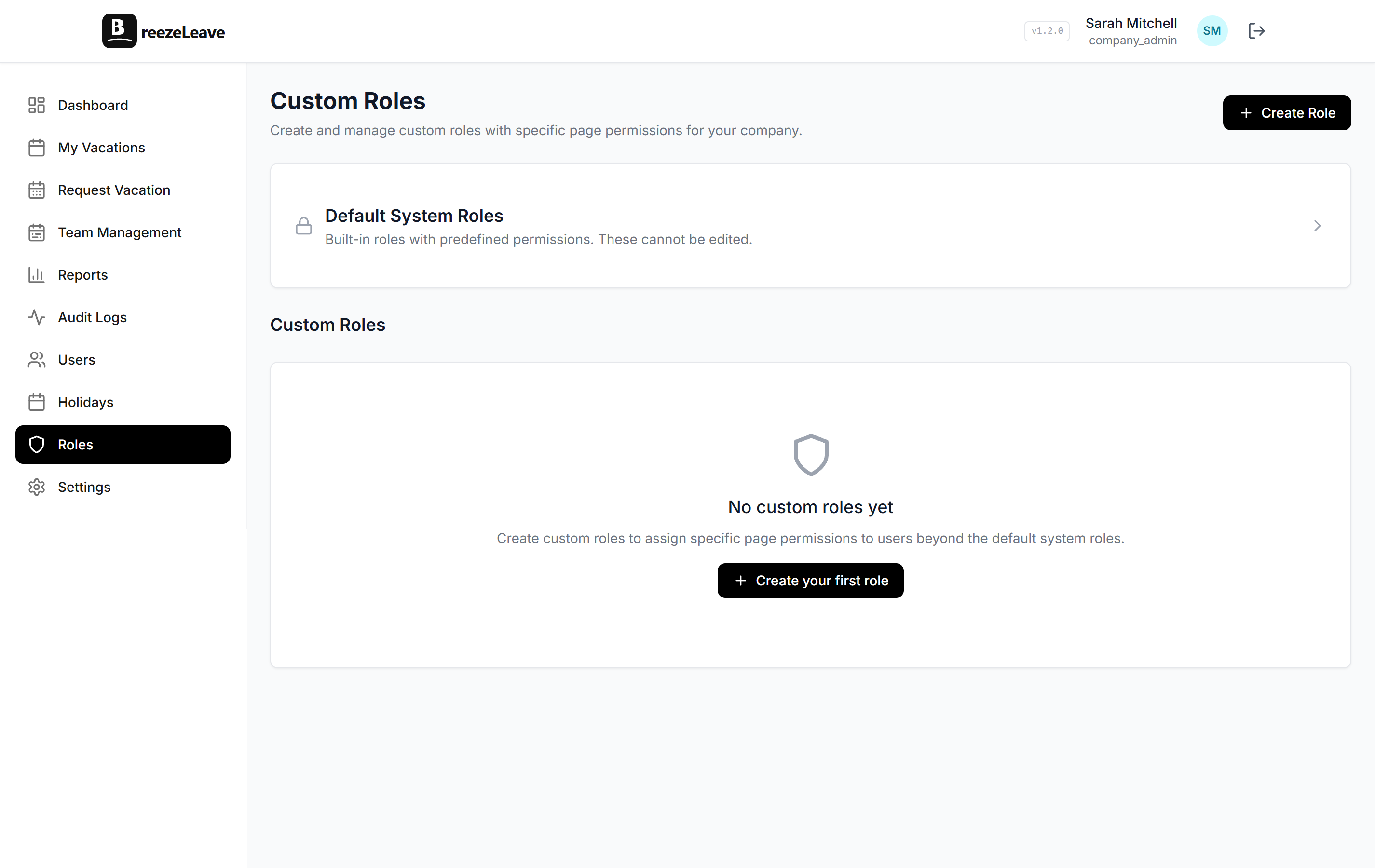
- The role allowed to adjust is restricted. Office manager and managing partner only. The role-based access piece explains how to scope this.
- Self-adjustment is disabled. Nobody changes their own balance. If a partner believes his balance is wrong, the office manager adjusts with a recorded reason.
These rules are not bureaucracy. They are what makes the audit trail defensible the first time someone asks. Without them, the audit log is a list of events without context, which is barely better than a spreadsheet.
Billable hour pressure and vacation timing
Most attorneys do not need a system to nudge them to take vacation. They need a system that does not penalize them for taking it at the wrong time. The billable-hour calendar is part of the planning context, not a rule against time off.
Two patterns help:
- Quarter-end visibility. The shared team calendar shows requests in flight. Attorneys planning their own time off see who is already out and adjust accordingly. The shared calendar article shows the pattern.
- Reminder before busy weeks. A note from the office manager 30 days before known busy windows (year-end close, trial weeks) lets attorneys plan vacation earlier rather than fight for the last available week.
Sick leave and the doctor note question
Sick leave in law firms has its own pattern. Most firms maintain separate sick and vacation buckets so that an attorney out with the flu does not burn vacation days. The audit trail matters here too, because long absences sometimes intersect with FMLA, short-term disability, or partner-level compensation decisions.
Two pieces of policy worth writing down:
- When a doctor note is required. Common rule: after three consecutive sick days. Note the rule in the handbook and configure the leave type to flag requests that cross the threshold.
- Who sees sick leave records. Partner-level only. Paralegals and other associates should not see colleagues' sick leave history. Role-based access controls this in BreezeLeave.
The malpractice insurance and compliance angle
Malpractice carriers and bar associations occasionally ask firms to describe how they prevent missed deadlines and coverage failures. The answer that holds up is a policy plus a record. Policy: cover person assignments, concurrent-absence limits, partner approval for leave during deadline windows. Record: an audit log showing the policy was applied to specific requests.
BreezeLeave is not a compliance product. It does not certify anything. What it provides is the record. The office manager can export the audit log for a date range or a specific employee when an external request comes in. The law firm overview page covers how the audit and coverage features connect when the firm is asked to describe its leave controls.
What the office manager's Monday morning looks like after the change
Before: the office manager checks three sources to answer one request, calls the partner to confirm coverage, updates a spreadsheet, and emails the requestor. Ten minutes per request, three requests an hour, four hours of the morning gone.
After: the request arrives with the cover person already assigned, the concurrent-absence check already run, and the partner notified if the dates cross a blackout. The office manager reviews, approves, and moves on. Two minutes per request. The audit trail is built as a byproduct, not as a separate log. The four hours go back to the work the office manager was hired for.
The short list
A law firm has leave management that holds up when the following are true:
- Every attorney has a named cover person tied to her practice group.
- Concurrent-absence limits prevent two of the same role being out without partner approval.
- Known deadline windows are on the firm calendar as blackout or partner-only approval.
- Balance adjustments require a documented reason and are restricted to office manager and managing partner.
- The audit log is exportable for a date range or specific employee on demand.
- Sick leave records are visible only at partner level.
Hit those six and the firm has the record it needs and the coverage it expects. To see the audit log that backs the policy, see the BreezeLeave audit trail, or review the law firm overview for how the audit, coverage, and approval features fit together.