Cover Person Assignments: Never Leave a Role Uncovered
When someone goes on vacation, who handles their work? Cover person assignments make this explicit so nothing falls through the cracks.
The developer goes on vacation. A production bug hits. The team scrambles to figure out who knows that part of the codebase. Nobody does, really. The fix takes three days instead of three hours.
This is what happens when vacation handoffs are informal. "I'll be around on Slack if anything comes up" is not a coverage plan. Cover person assignments are.
What is a cover person?
A cover person is the designated colleague who handles an employee's responsibilities while they're on leave. It's not a backup for everything they do. It's the person who knows enough to keep things moving and escalate if needed.
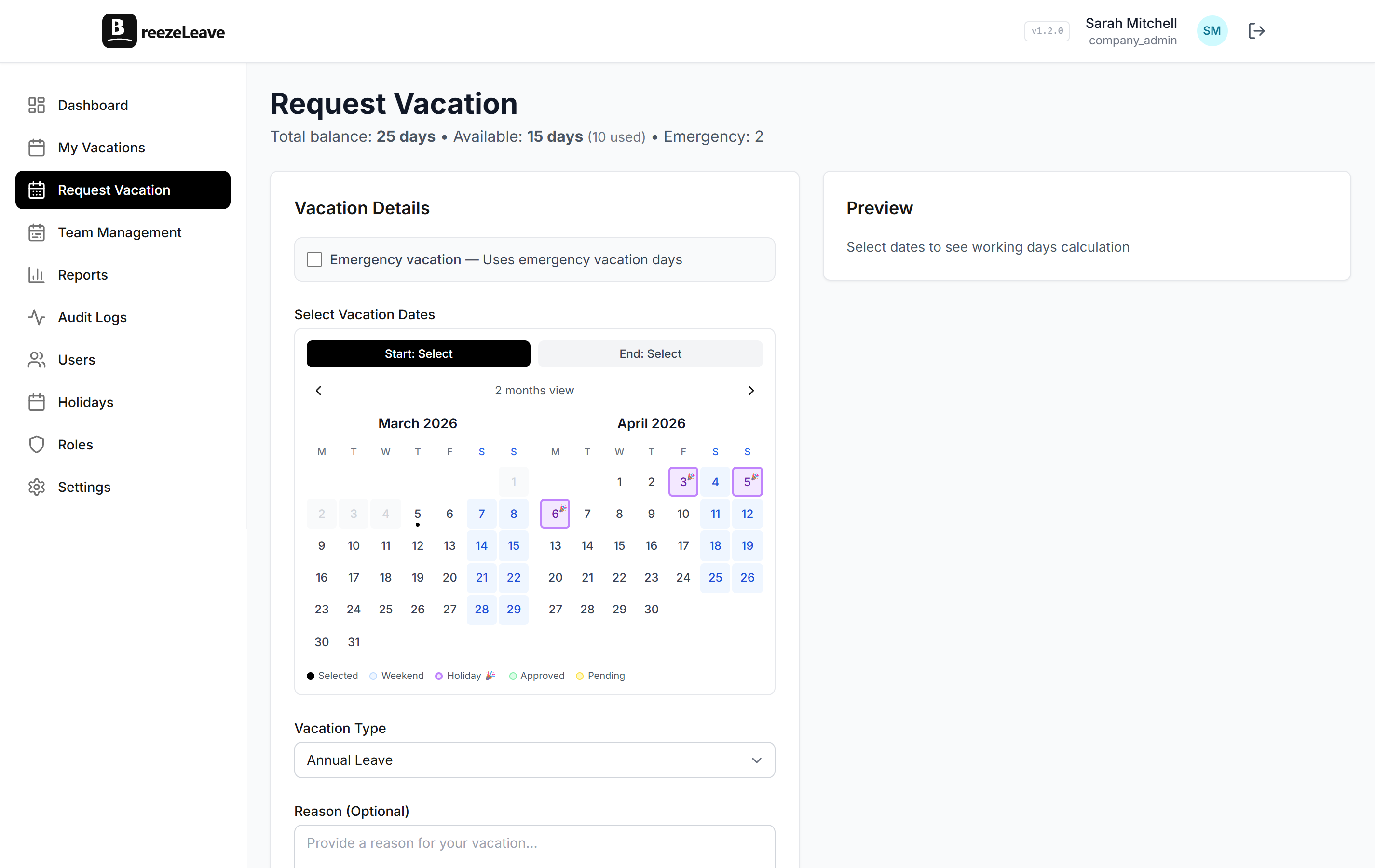
In BreezeLeave, when an employee submits a vacation request, they can assign a cover person directly in the request form. The cover person is visible to managers during approval, shown on the team calendar, and recorded in the system for reference.
Why it matters
A vacation request without a cover person is a gap in your operations. A vacation request with a cover person is a managed transition. The difference is one field in a form, but it changes how confidently a manager can hit "approve."
How cover assignments work in BreezeLeave
The cover person feature is built into the vacation request flow:
- Employee opens the new vacation request form
- They fill in dates, leave type, and notes
- They select a cover person from their team members
- The request is submitted for approval
The manager reviewing the request can see who's covering. This is especially useful when multiple people request overlapping dates, so the manager can check whether the same person is assigned as cover for two different absences (which usually means something needs to change).
When to require cover assignments
Not every absence needs a formal cover person. A one-day personal day probably doesn't need one. A two-week vacation absolutely does. Here's a practical guideline:
| Leave Duration | Cover Person | Reason |
|---|---|---|
| 1 day | Optional | Team can usually absorb one day |
| 2 to 3 days | Recommended | Meetings need redirecting, tasks may stall |
| 4+ days | Required | Extended absence needs explicit ownership |
| Sick leave | Assigned by manager | Employee can't plan ahead when sick |
BreezeLeave makes the cover person field available on all requests. Whether you want to make it mandatory is a company policy decision, but having it visible encourages employees to think about coverage even when it's not strictly required.
Cover person visibility across the team
The cover assignment isn't just between the employee and their manager. It's visible in several places:
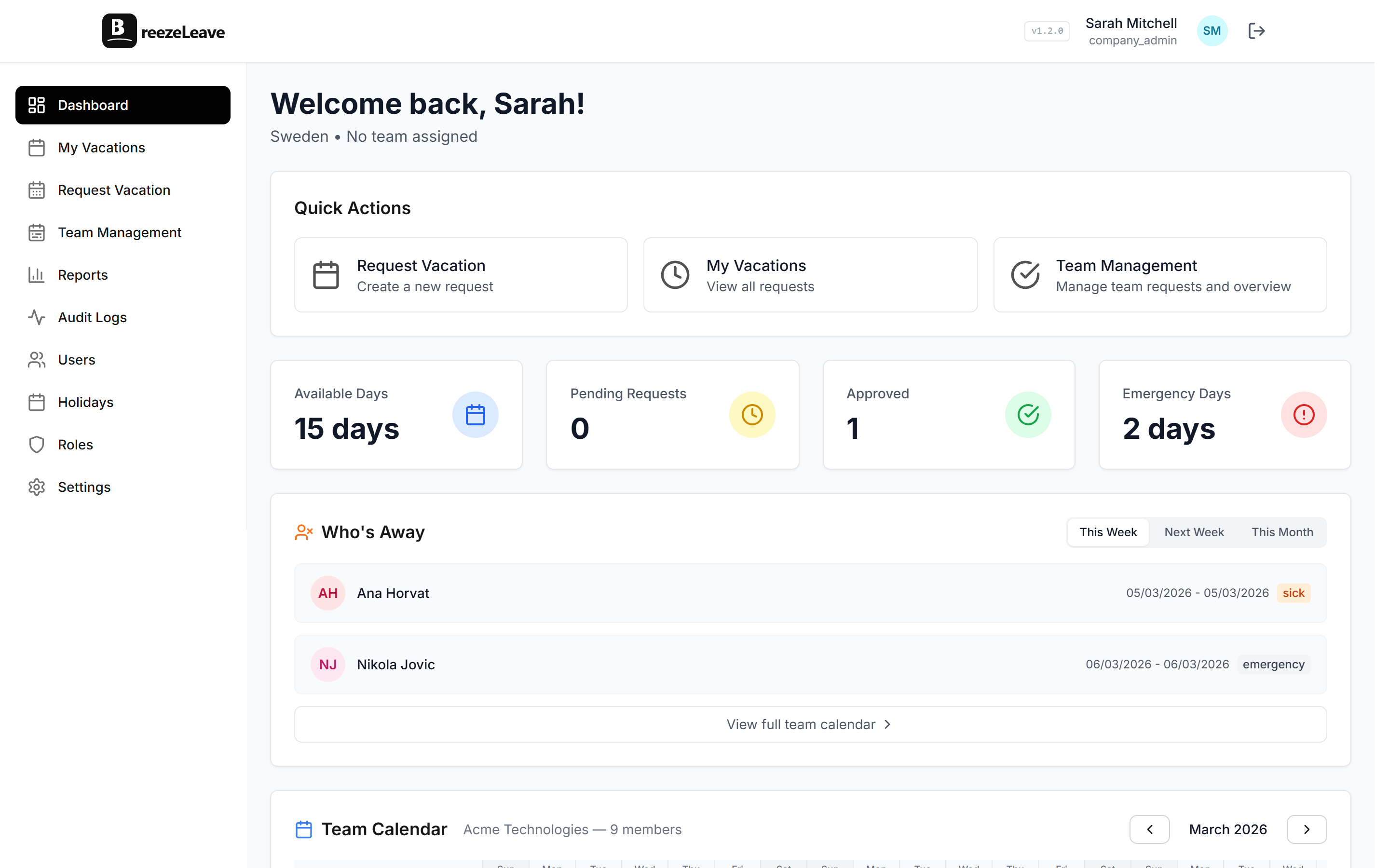
- Team calendar. When viewing who's off, you can see who's covering for them.
- Vacation request details. Managers and HR see the cover person when reviewing requests.
- Notifications. If you use Slack or Teams notifications, the cover person can be included in the absence announcement so the team knows who to contact.
This visibility is the whole point. It's not enough for the manager to know who's covering. The entire team needs to know who to go to when the person is out.
Cover assignments and team capacity
Cover person assignments connect directly to team capacity planning. If you're approving a vacation request, you want to know:
- Is the cover person already overloaded?
- Is the cover person also going on leave during that period?
- Does the cover person have the right skills for the role?
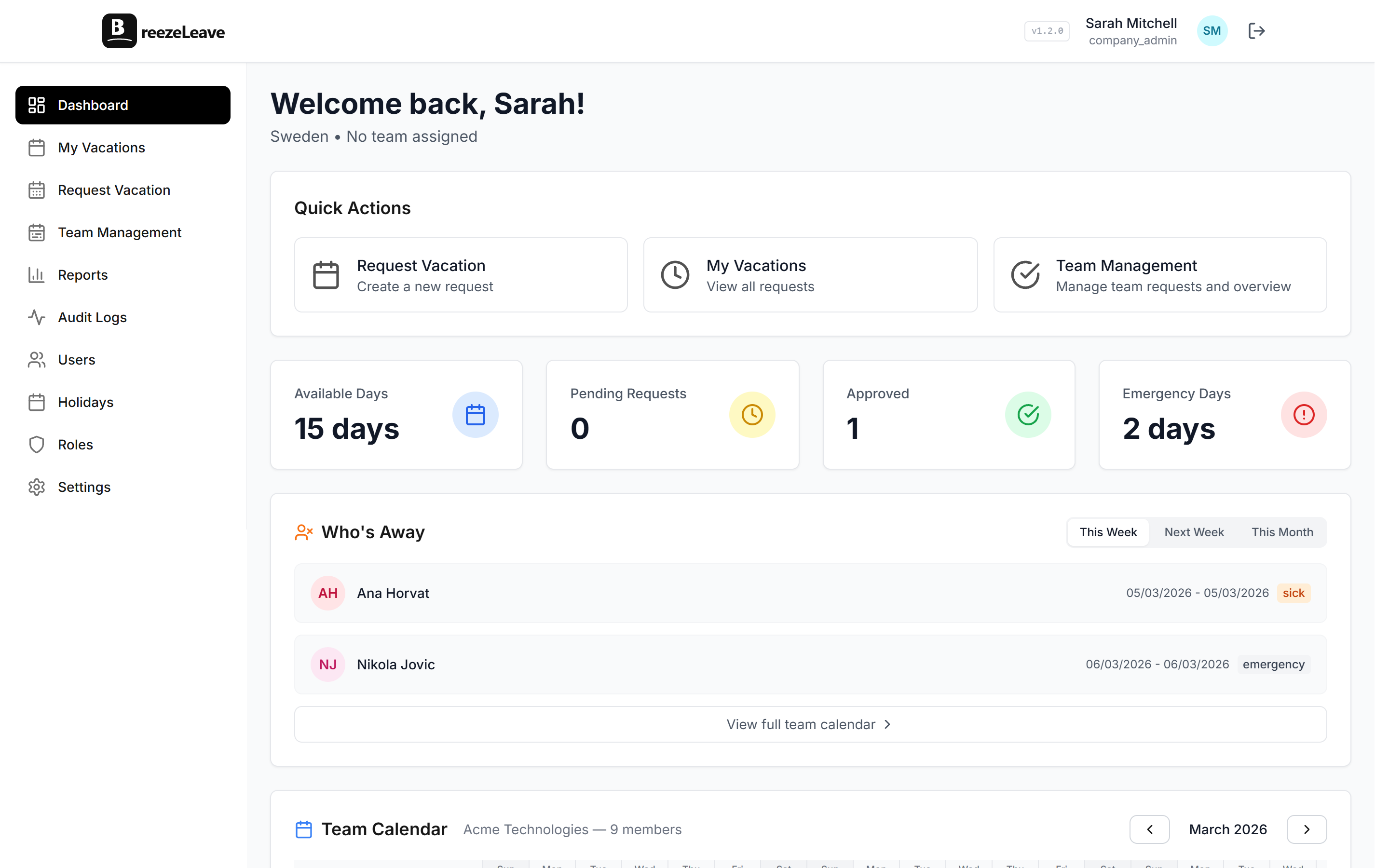
BreezeLeave's team calendar shows you all of this at a glance. Before approving a request, a manager can check whether the proposed cover person is actually available during those dates.
Making it part of your culture
The technical setup is simple; it's a dropdown in a form. The cultural shift is what matters. When cover person assignments become standard practice:
- Managers approve leave faster because they can see coverage is handled
- Employees take vacation with less guilt because someone is explicitly covering
- Teams develop broader knowledge because people regularly cover for each other
- The "only one person knows this" problem gradually goes away
The best teams don't just manage vacation. They manage the transitions around it. Cover person assignments are how you make those transitions smooth.