Retainer Capacity Planning for Agencies: Monthly Allocations Without Spreadsheet Drift
How agencies can plan retainer capacity with monthly allocations, logged hours, PTO-aware workload, client context, and budget visibility.
Retainers are supposed to make agency work calmer. The client gets predictable access to the team. The agency gets predictable revenue. Everyone avoids the drama of restarting a project from zero every month.
Then the month starts. The client asks for "one quick landing page update." A campaign needs two extra review rounds. The strategist is out for a week. A developer gets pulled into another launch. By the 24th, the retainer is technically over its monthly allocation, but nobody made a clear decision to over-service it. It just happened quietly.
Good retainer capacity planning is mostly about catching that drift early. Not with a giant resource planning ritual, and not with a spreadsheet that gets cleaned up after the damage is done. Agencies need a simple monthly rhythm that connects client commitments, logged hours, workload, PTO, and budget visibility in the same conversation.
Why Retainers Drift
Fixed projects usually have a visible arc: scope, timeline, budget, delivery, closeout. A retainer is different. It resets every month, which makes it easier for small exceptions to hide inside the normal flow of work.
- Small asks feel harmless. A 30-minute call, a quick copy change, a short report refresh. None of them are alarming on their own.
- Different roles absorb work differently. Ten extra design hours may be manageable. Ten extra senior strategist hours may block three other clients.
- PTO changes the math. A 60-hour monthly allocation does not mean much if the only person who understands the account is out during the busiest week.
- Logged hours arrive too late. If account leads only review hours at month-end, the only options left are apology, write-off, or an awkward upsell.
This is why retainer planning cannot be only a finance exercise. Finance sees the margin. Delivery sees the workload. Account managers see the client expectations. PTO and holidays decide whether the plan is realistic in the first place.
The Monthly Retainer Planning Rhythm
The useful rhythm is boring on purpose. Every month, before the work gets noisy, the account owner and delivery lead should answer the same questions for each active retainer:
- What is the monthly allocation? Start with the actual commercial commitment: hours, days, deliverables, or budget. If the agreement is vague, write down the working assumption for the month.
- What work is already expected? List recurring work first: reporting, check-ins, campaign monitoring, design support, content updates, development maintenance, QA, and project management.
- Which roles are needed? Split the allocation by role. A 40-hour retainer made of 30 junior production hours behaves very differently from one made of 20 senior consulting hours.
- Who is actually available? Check PTO, public holidays, known sick leave, travel, internal events, and other client deadlines before treating capacity as available.
- What will trigger a client conversation? Decide what happens at 70%, 85%, or 100% of the monthly allocation. The exact threshold matters less than agreeing on it before the month is gone.
This turns retainer management from "Did we go over?" into "Are we still on track?" That shift is small, but it changes the tone of the whole client relationship.
A practical monthly checklist
- Confirm each retainer's monthly allocation and expected recurring work
- Check who is on PTO during the client's busiest weeks
- Reserve time for account management, QA, and reporting, not just production
- Review last month's overages, write-offs, and urgent requests
- Agree which clients need expectation-setting before work begins
Scenario 1: The "Small Requests" Retainer
A SaaS client has a 30-hour monthly marketing retainer. On paper, it covers campaign reporting, two landing page updates, a monthly strategy call, and light ad hoc support. Nothing looks risky.
But the ad hoc work is never really light. The client asks for a deck review, then a new email variation, then help preparing for a partner launch. Each request is reasonable. The problem is that nobody is measuring the combined effect until the retainer is already at 34 hours.
In this situation, the agency does not need a dramatic intervention. It needs an earlier signal. At the midpoint of the month, the account owner should be able to see planned allocation against logged hours and ask a plain question: do we keep going, trade something out, or tell the client this work belongs in next month's allocation?
Retainer discipline is not about saying no to clients. It is about making the trade-off visible while there is still time to choose.
Scenario 2: The PTO Week Nobody Planned Around
Another client has a development support retainer. The allocation is 50 hours per month, mostly handled by one senior developer and one QA specialist. The client's biggest release window lands in the second week of the month.
The senior developer has approved vacation during that same week. The time off is perfectly valid. The planning mistake is treating the retainer as if the same 50 hours are available in the same shape.
A PTO-aware planning review catches this before the month starts. Maybe the agency moves technical discovery earlier. Maybe QA prepares test cases before the developer leaves. Maybe the account lead tells the client that only urgent production issues will be covered that week. None of those options are complicated. They only become painful when discovered late.
This is where the retainer conversation overlaps with workload capacity planning. Availability is not just a headcount number. It depends on role, timing, PTO, holidays, and the other work already sitting on the same people.
What To Review Weekly
Monthly planning sets the baseline, but retainers need a lighter weekly check. This should not become another meeting that exists forever because nobody is brave enough to delete it. For most agencies, 15 minutes is enough if the numbers are visible.
| Question | Why It Matters | Action |
|---|---|---|
| How much of the allocation is used? | Shows whether the retainer is burning too quickly | Adjust scope or pace before month-end |
| Which roles are overloaded? | Prevents one specialist from becoming the bottleneck | Shift tasks, defer work, or protect focus time |
| Who is out next week? | Makes PTO visible before client deadlines hit | Assign cover or reset expectations |
| What changed since the plan? | Separates normal work from new scope | Document the trade-off for the client |
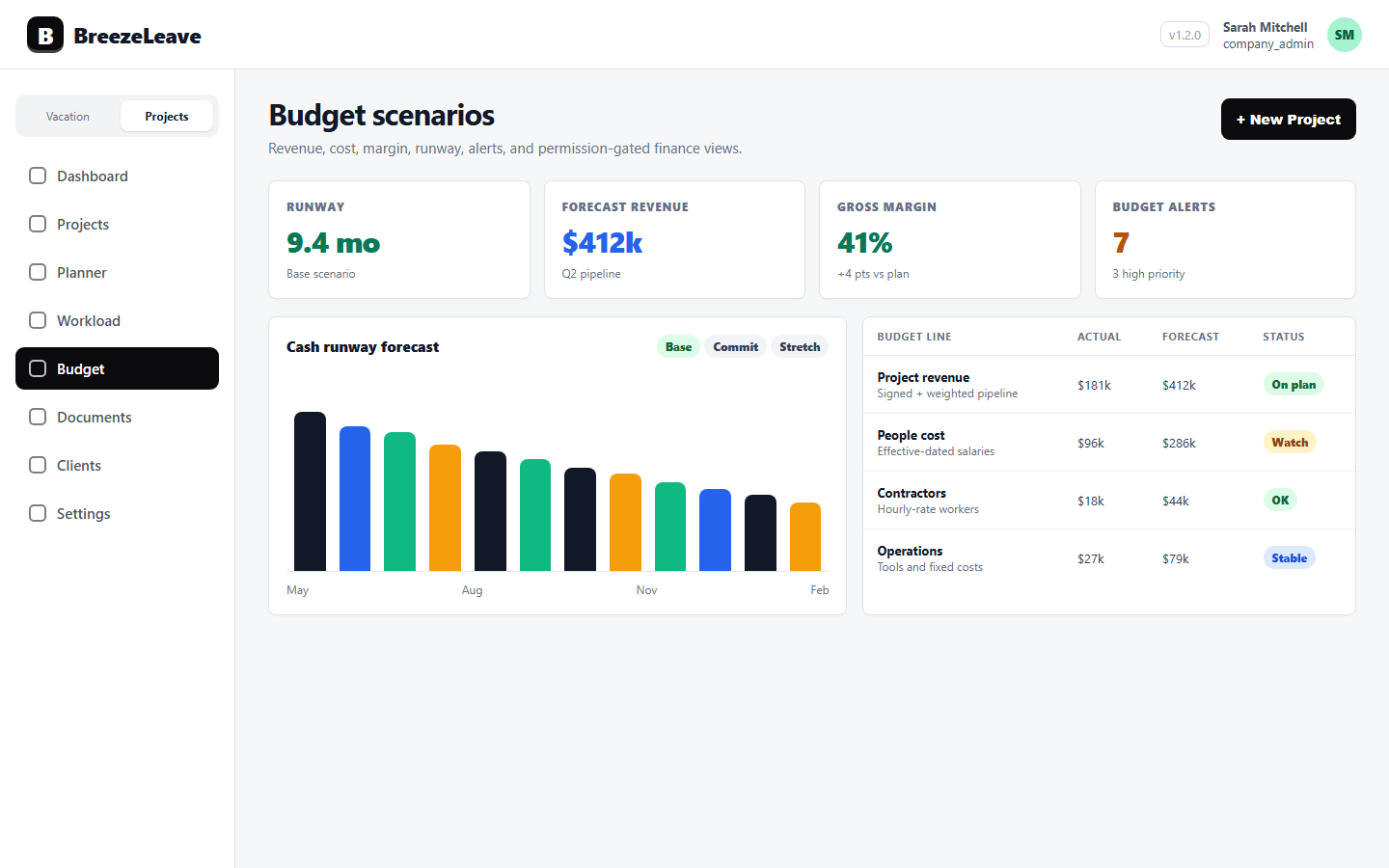
BreezeLeave helps agencies keep retainer work connected to client records, monthly allocations, logged hours, workload, project accounting, and PTO-aware capacity planning. That turns the review into a recurring operating habit instead of a month-end cleanup exercise.
For the budget side of the workflow, see project budget tracking.
Keep Client Health In The Same Conversation
A retainer can be profitable while the relationship is getting worse. The team may be staying inside the monthly allocation, but only because they are avoiding strategic work, delaying small requests, or spending too much time defending the contract.
The opposite can happen too. A retainer can look heavy for one month because the agency is doing exactly the right thing: helping with a launch, absorbing a transition, or cleaning up a backlog that will reduce future support load.
That is why client context matters. Retainer reviews should include more than hours used. They should include the client's current priorities, upcoming deadlines, unresolved blockers, documents, project history, and the commercial reality of the account.
For the client-side workflow, see client project management.
A Simple Retainer Review Agenda
If your current process is a spreadsheet and a hurried account meeting, start smaller than you think. A good review agenda can fit on one screen:
- Allocation: What did we sell for this month, and what assumption are we planning against?
- Workload: Which people and roles are assigned, and what else is already on their plate?
- Availability: Who has PTO or public holidays during critical client windows?
- Burn: Are logged hours tracking normally for this point in the month?
- Scope: Which new requests have arrived, and what are they replacing?
- Decision: Continue, defer, swap scope, add budget, or escalate.
The most important word on that list is "decision." Retainers become unhealthy when overages happen by accident. If the agency chooses to invest extra time in a strategic client, that may be the right call. If the team is quietly donating hours because nobody wants to have a scope conversation, that is a management problem.
The short version
Plan retainers monthly, check them weekly, and connect capacity to real availability. Logged hours tell you what happened. PTO-aware workload planning helps you decide what should happen next.
Related articles
Project Budget Tracking for Agencies: Revenue, Cost, Margin, and Retainers
Agency Budget Reviews: Categories, Scenarios, Cash Runway, Alerts, and Headcount