How to Prevent Team Vacation Conflicts Without Becoming the Schedule Police
Half the backend team booked the same week. Again. Learn how to set up conflict detection that catches overlaps before they become your Monday morning problem.
It was a Thursday in May when I opened our team calendar and realized that four of my six backend engineers had approved time off for the second week of July. Same week. All four. One of those approvals had my name on it. I had clicked "yes" on a Tuesday afternoon between two meetings without cross-referencing a single thing. The fifth engineer was about to submit the same dates. We were one rubber-stamp away from having a single person covering production for an entire week during our busiest traffic season.
That was the week I stopped trusting my own ability to keep team vacation conflicts straight in my head.
The Real Reason Team Vacation Conflicts Keep Happening
It is tempting to blame individuals. Why did they all pick the same week? But honestly, think about it: the second week of July is right after a long weekend in most countries, school is out, flights are slightly cheaper on those exact dates. Of course everyone picked it. The problem was never that people wanted the same days off. The problem was that nothing in the system told person number four that persons one through three already had it locked down.
Most teams handle vacation scheduling in one of two broken ways:
- The manager manually eyeballs a shared calendar before approving each request (and misses things, because of course they do).
- The team operates on a vague honor system where people are expected to "check with the team" before booking. This works great until it doesn't, which is approximately every summer and every December.
If your team is growing and this is starting to feel unmanageable, you are not alone. We wrote about that scaling challenge for growing teams in a separate post.
War story
At a previous company, we had a Slack channel called #vacation-heads-up where people were supposed to post before requesting days off. It worked for about three months. Then someone posted, nobody objected, and two weeks later the team lead realized "no objections" meant "nobody read the channel." We shipped a hotfix that week with one engineer and a product manager who knew some Python. Good times.
What "Prevent Vacation Overlap" Actually Means in Practice
When people talk about wanting to prevent vacation overlap, what they usually mean is: "I want to make sure we always have enough people around to keep things running." That is a minimum team coverage problem, not a "who asked first" problem.
The distinction matters. If you frame it as a queue (first come, first served) you create an annual land grab where the people who plan earliest always win. Or the people who have the most institutional knowledge about when to book. The new hire who joined in October finds out in November that Christmas week has been fully claimed since September. That is not a fair system. It only looks like one.
Framing it as a coverage problem changes the question from "who submitted first?" to "can we afford to have this person off on these dates?" And that question has a concrete, checkable answer.
How Vacation Conflict Detection Works Under the Hood
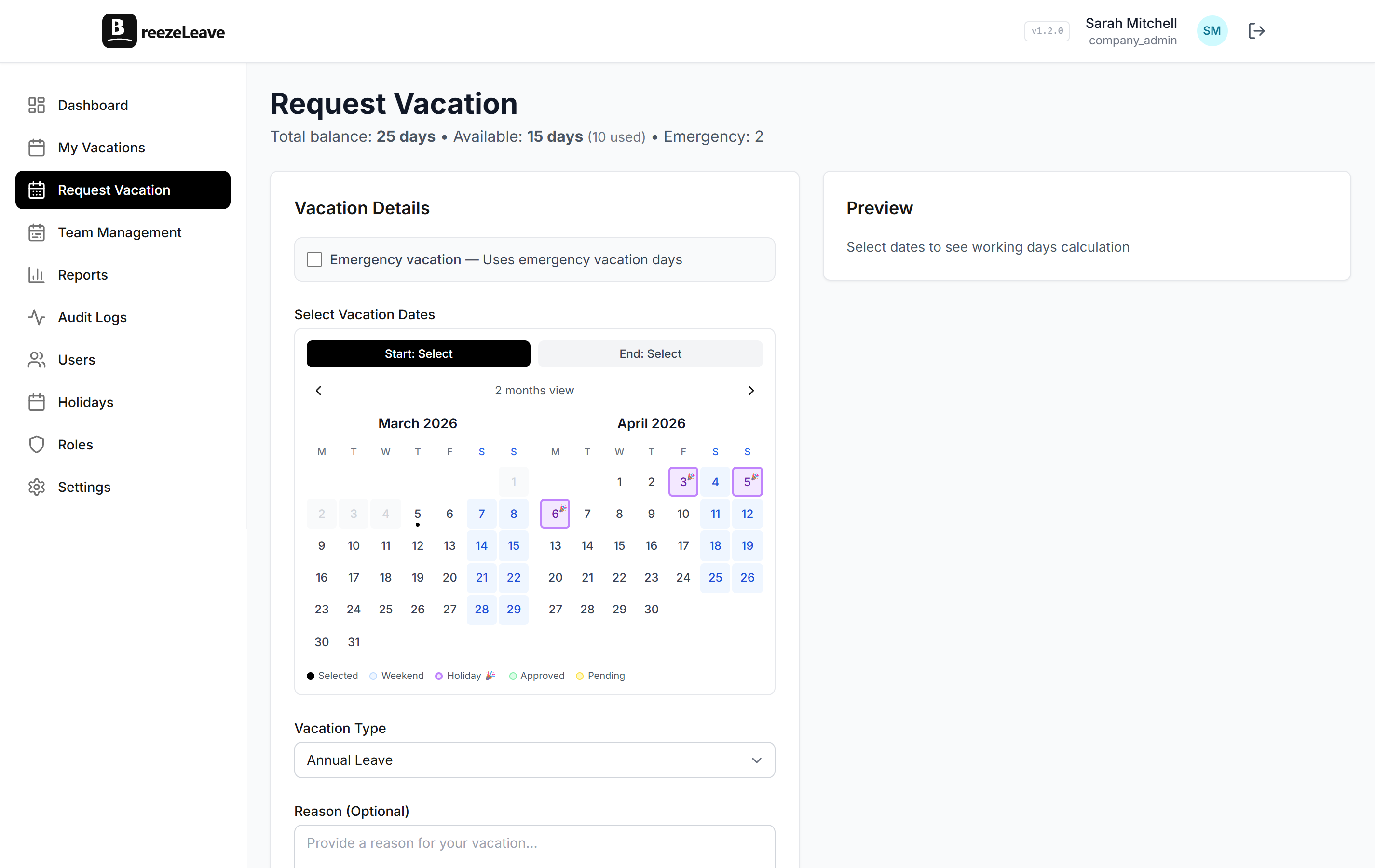
A proper conflict detection system does the following, step by step, the moment someone hits "Submit" on a vacation request:
A typical conflict check (what happens in those 200ms after you click Submit):
1. Employee requests July 7-11
2. System checks each day in range against team roster:
Jul 7 (Mon) Alice: OFF, Bob: OFF .............. 2 of 6 out [OK]
Jul 8 (Tue) Alice: OFF, Bob: OFF, Carol: OFF .. 3 of 6 out [OK]
Jul 9 (Wed) Alice: OFF, Bob: OFF, Carol: OFF .. 3 of 6 out [OK]
Jul 10 (Thu) Alice: OFF, Carol: OFF ............ 2 of 6 out [OK]
Jul 11 (Fri) Alice: OFF, Carol: OFF, Dan: OFF . 3 of 6 out [OK]
3. Team rule: max 3 concurrent absences (min coverage = 50%)
4. Adding this request would push Jul 8-9 to 4 of 6 out
CONFLICT: auto-approval blocked. Routed to manager.
Why Submission-Time Checks Matter
The key detail: this check runs at submission time, not three days later when a manager finally opens their approval queue. The employee finds out immediately that those dates have a conflict. They have not booked flights yet. They have not told their partner "it's confirmed." They have not mentally checked out for that week. The feedback loop is tight enough that they can adjust the dates, try a different week, or have a conversation with their manager about whether an exception makes sense.
How BreezeLeave Handles It
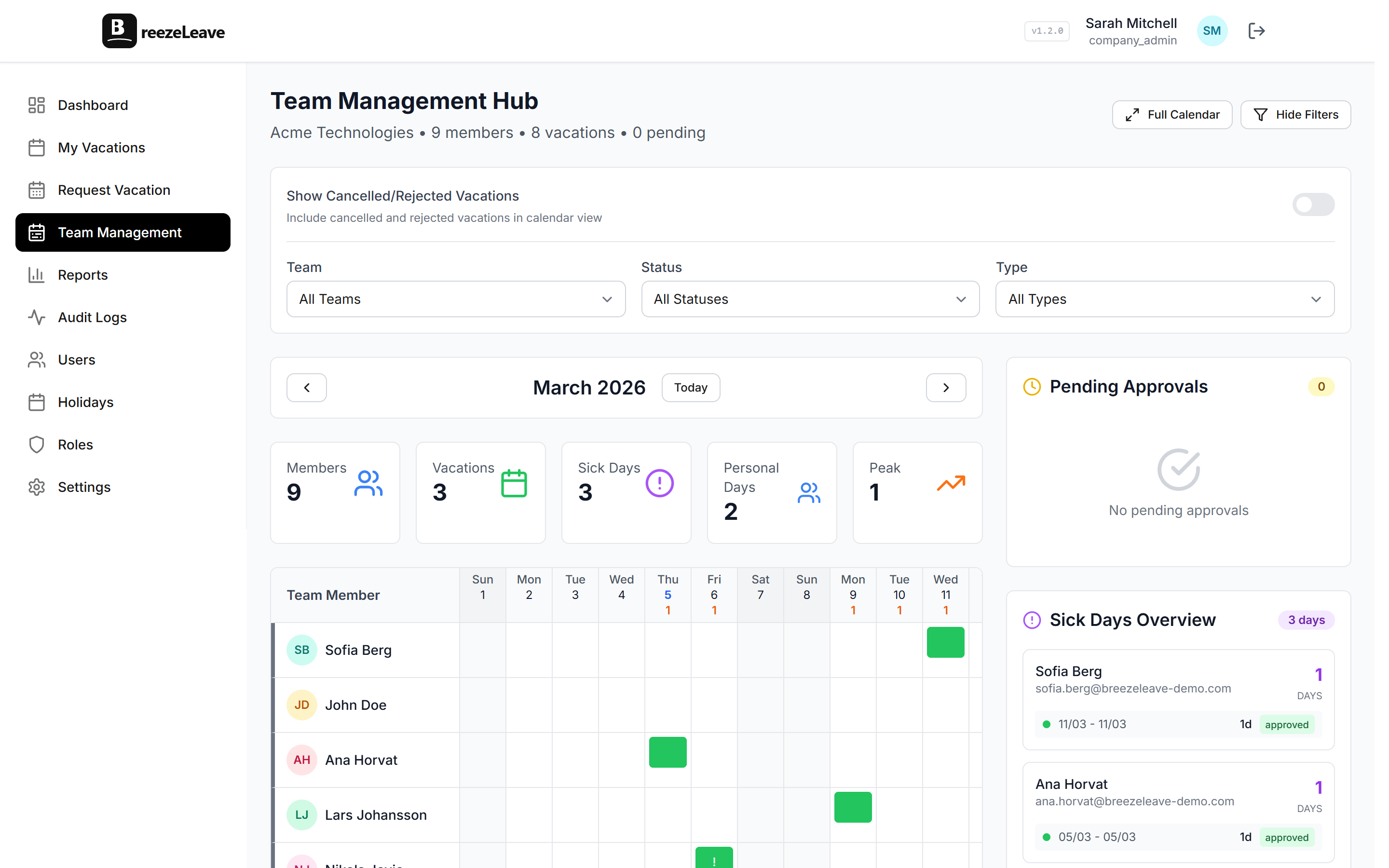
This is exactly how BreezeLeave handles it. When you configure a team, you set a minimum coverage rule, either as a number of people who must be present or a percentage of the team. Every vacation request is validated against that rule in real time:
- If the request passes, it flows through to auto-approval (assuming your other rules are met).
- If it does not pass, the request gets flagged and routed to the manager with full context about who else is already off that week.
We go deeper into why auto-approval matters in our post on why you should auto-approve most vacation requests.
Setting Up Minimum Team Coverage Rules That Actually Work
The temptation is to be conservative. "We're a team of eight, so no more than one person off at a time." That sounds safe. But in practice it means your team can barely take vacation during any popular period without triggering a conflict. You end up overriding the rule constantly, which teaches everyone to ignore it.
Think About What Actually Breaks
Better approach: think about what actually breaks when people are out. For most teams, the honest answer is something like:
- We need at least one person who can handle production incidents. That is an on-call constraint, not a headcount constraint. Track it separately.
- We need enough people to run standup and not have it feel pointless. That is usually around 50-60% of the team.
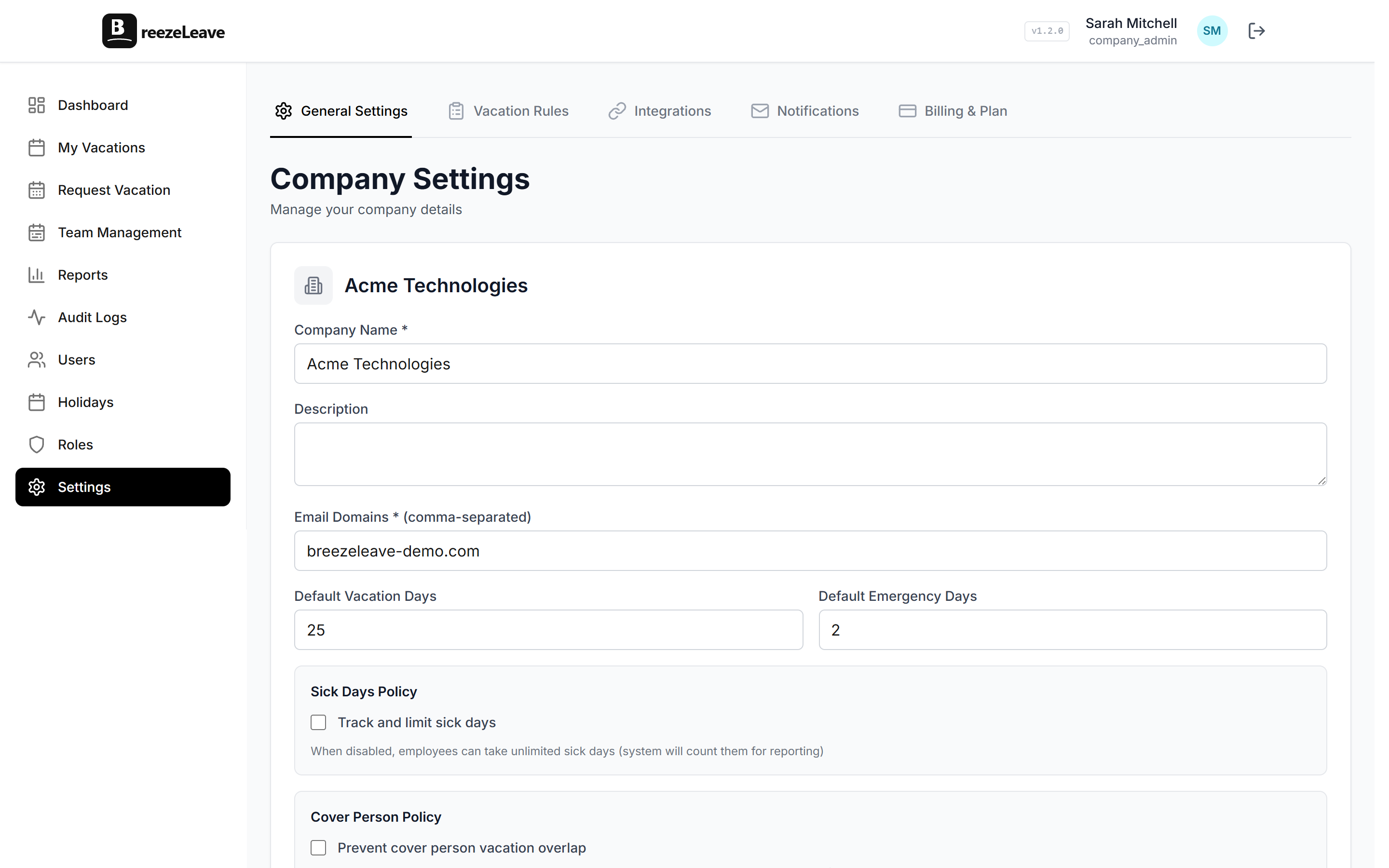
- We cannot have the entire frontend or entire backend out simultaneously. That is a sub-team constraint, and you should configure it at the sub-team level.
A team of eight might realistically set their concurrent absence limit at three. That means five people are always present, which is enough to keep sprint work moving and handle anything urgent. During known slow periods (the week after a big release, late August), you could even relax it to four.
War story
A team I worked with set their limit at one person off at a time for a team of five. Within two months, the manager had overridden the rule for 60% of requests because it was just too restrictive. The override became the norm, which meant the rule was doing nothing except adding an extra click to every approval. They bumped it to two, overrides dropped to near zero, and they never once had a coverage problem. The right limit is the one you almost never need to override.
Team Scheduling Conflicts During Peak Periods
Summer and the holidays are a different animal. Even generous concurrent absence limits will produce conflicts because demand for those weeks is simply higher than supply. You cannot automate your way out of the fact that eight people want the same two weeks in December and only three can be off.
Make the Process Transparent and Early
What you can do is make the process transparent and early:
- Open peak period booking early. In October, open December booking. Give people a two-week window to submit preferences, then allocate based on your rules. Everyone knows the timeline. Nobody gets blindsided.
- Rotate who gets priority. If someone got Christmas week last year, they go to the back of the line this year. Document it. People accept "not this year, but next year" much better than "sorry, someone beat you to it."
- Be honest about blackout dates. If there are days where you genuinely cannot afford absences (end of quarter, product launches, compliance deadlines) mark them as blackout dates in the system and communicate them well in advance. People plan around constraints they know about. They resent constraints they discover after the fact.
Why Managers Should Not Be the Conflict Detection System
Relying on managers to spot vacation conflicts works until it doesn't. And when it doesn't, it fails silently. No manager is gonna tell you "I approved that request without checking the calendar because I was in back-to-back meetings and just wanted to clear my inbox." But that is what happens. Regularly.
Let Managers Focus on Judgment Calls
Managers should be making judgment calls about exceptions:
- Should we bend the rule for someone whose kid is graduating?
- Should we adjust coverage for a week where we know the workload is light?
Those are human decisions that require context and empathy. Whether three other people already have July 9th off is not a judgment call. It is a fact. Let the system check the facts.
How This Looks in BreezeLeave
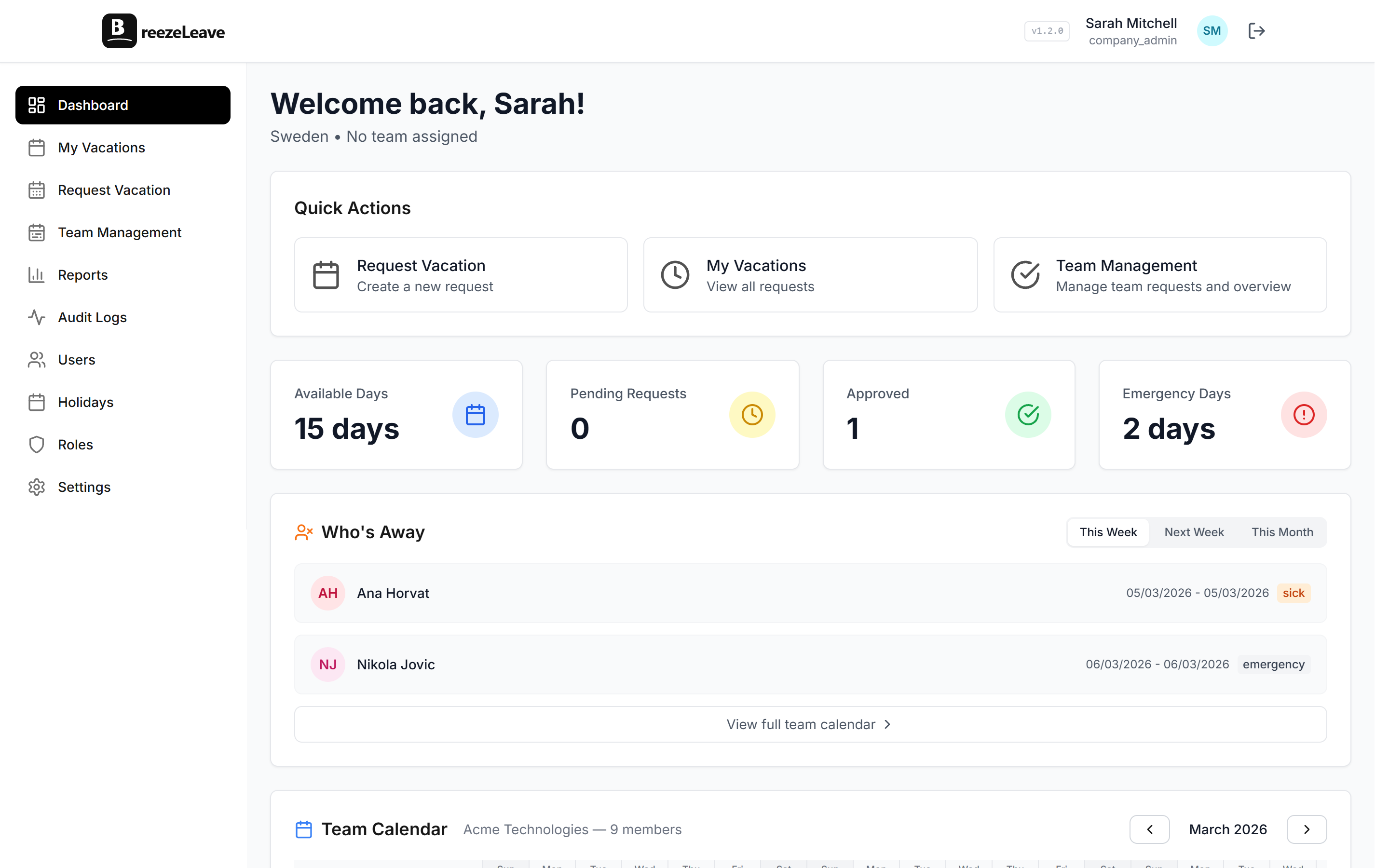
In BreezeLeave, when a manager opens their approval queue, every request has already been validated against the team's coverage rules. If a request is in the queue, it means coverage checks passed. The manager is not auditing a calendar. They are reviewing edge cases and making the calls that require their attention. That is a much better use of a team lead's time than cross-referencing a Google Calendar with a spreadsheet every Friday. And if your team is distributed across borders, managing PTO across countries adds another layer of complexity that manual tracking simply cannot handle. For distributed teams specifically, our guide on leave management for remote teams covers how to handle scheduling across locations.
War story
I once spent an entire Sunday evening building a color-coded spreadsheet to track vacation overlaps for Q3. It had conditional formatting, COUNTIF formulas, the works. It was outdated by Wednesday because someone submitted a new request and nobody updated the sheet. I sent a passive-aggressive Slack message about it. Nobody responded. I deserved that.
Getting This Right Is Simpler Than You Think
The entire system boils down to three decisions per team:
| Decision | What to Set | Recommendation |
|---|---|---|
| Max concurrent absences | How many people can be off at the same time | Start at 30-40% of team size. Adjust after one quarter based on override frequency. |
| Sub-group constraints | Separate limits for on-call, client-facing, or specialized roles | Set tighter limits for critical sub-groups only. |
| Peak periods and blackout dates | Dates where special rules apply | Mark them now, not the week before they happen. |
Configure those three things, and the vast majority of team vacation conflicts resolve themselves. Not through uncomfortable conversations or passive-aggressive calendar audits. Through a system that checks coverage at the moment it matters and gives everyone clear, immediate feedback.
The goal was never to stop people from taking time off. The goal is to stop finding out about conflicts after everyone has already booked their flights. Catch it at submission. Fix it in seconds. Keep the team covered. Go back to the work that actually needs you.