Free vs Paid PTO Tracker: What Changes as Teams Grow
A founder's view on when a free PTO tracker stops being enough: the operational signals that suggest a paid plan would carry the team, with a dated comparison and best-fit guidance.
Reviewed: 2026-05-13. This article compares free and paid PTO tracking based on operational signals, not on absolute pricing. Confirm current plan terms on the BreezeLeave pricing page before making a plan decision.
A six-person startup tracks PTO in a shared spreadsheet for the first year. It works. The second year they grow to twelve, and the spreadsheet starts to drift. Somebody forgets to subtract a half-day, the balance column does not match what the finance team paid out at year-end, and the founder spends a Sunday reconciling. The team is ready for a tracker, but the question is which kind. The free version of a dedicated tool, or a paid plan that covers the parts that broke?
This article is for the founder or HR admin trying to make that call without over-buying or under-buying. The framing is operational: the signals that suggest a free plan is enough, the signals that suggest a paid plan is worth it, and where BreezeLeave fits in each case. Pricing details should be confirmed on the pricing page because they evolve faster than blog articles.
When a free PTO tracker is enough
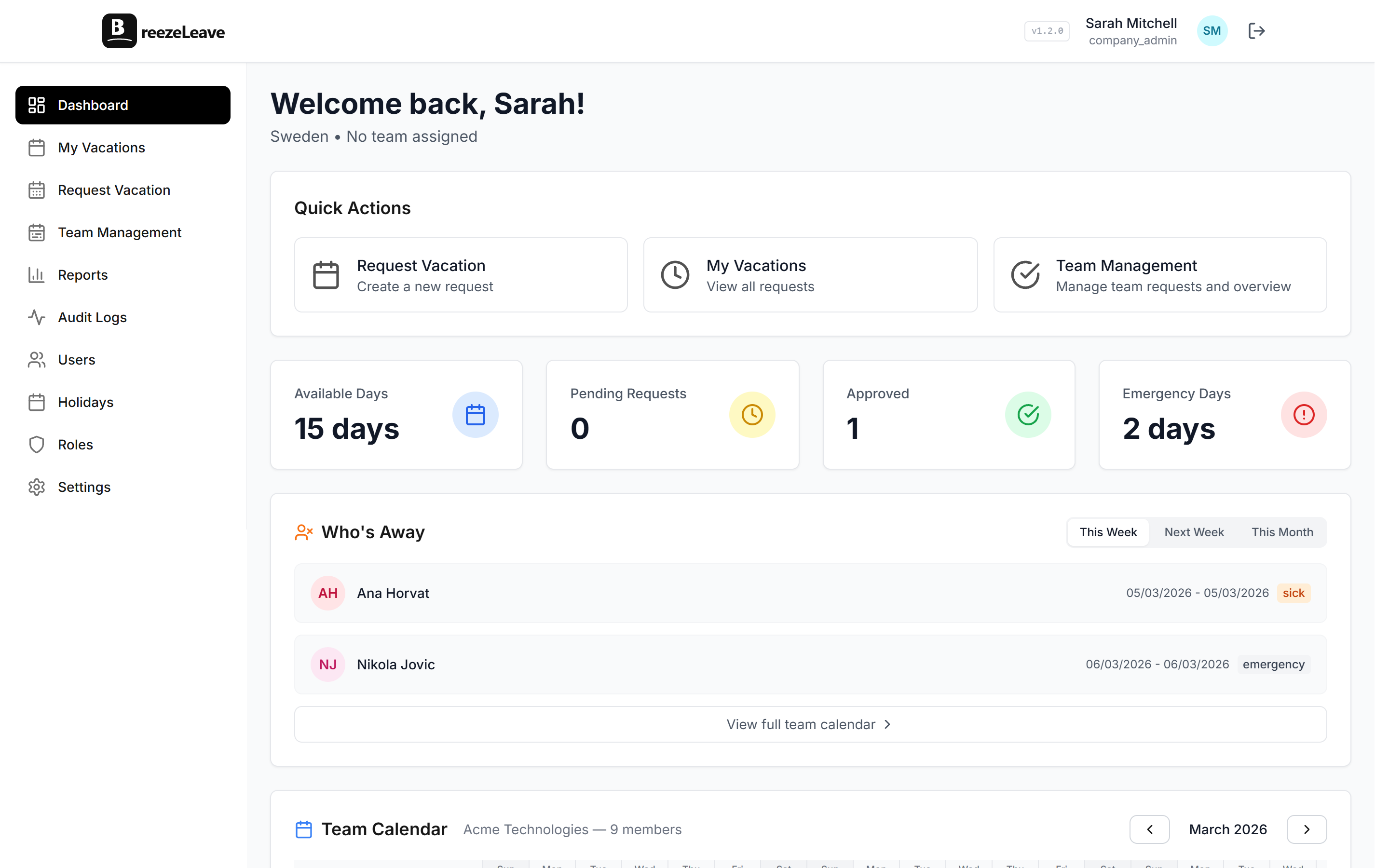
A free PTO tracker handles the basics: employees request leave, managers approve, balances update, the team sees a shared calendar. For a small team without complex approval rules or country-specific holidays, that is most of the job. Three signals suggest the free plan still fits:
- Single approval chain. Every request goes to one approver, usually the founder or the head of operations.
- Single country. All employees work under the same statutory holiday calendar and the same leave types.
- No bookkeeping integration yet. Payroll is run manually or by an accountant who pulls a simple report at month-end.
At this stage, the dedicated free tracker replaces the spreadsheet and does not force the team to learn an elaborate configuration surface. BreezeLeave's Starter plan covers this profile. Small teams pay nothing while balances, approvals, and the shared calendar are real.
When the free plan starts to bite
A few signals make the free plan feel cramped. Often it is not one issue; it is the accumulation of small frictions that adds up to a paid plan being worth the spend.
| Signal | What breaks on a free plan | What a paid plan adds |
|---|---|---|
| Team size over the seat limit | Free tier seat cap reached | Higher seat allowance |
| Multi-step approvals | Single approver bottleneck | Approval chain rules |
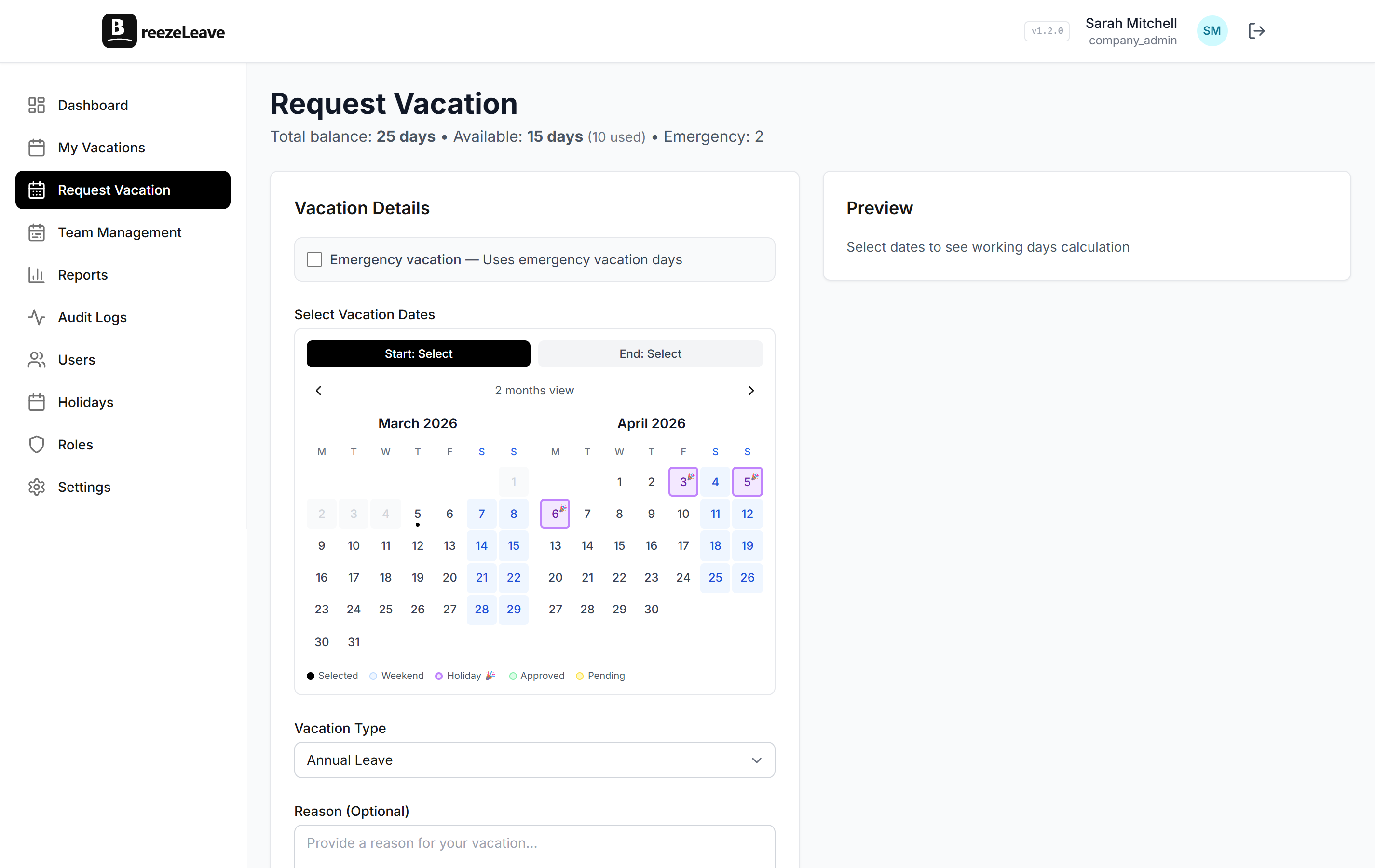
| Multiple operating countries | Single holiday calendar | Per-country holiday and working-day setup |
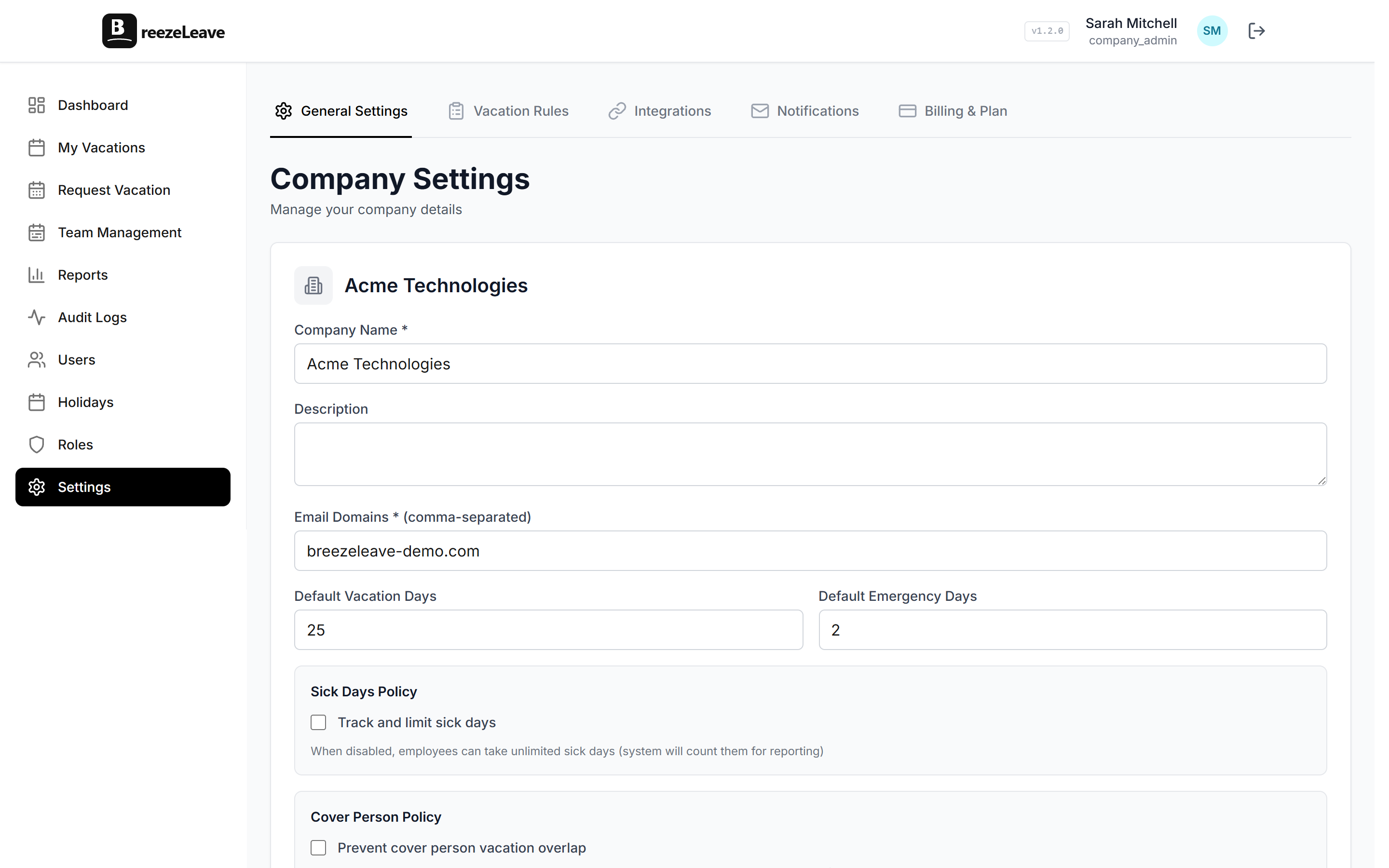
| Rules engine (probation, blackout, advance notice) | Rules enforced manually | Configurable rules per leave type |
| Slack or Teams approvals | Limited or absent | Chat-native request and approval |
| Payroll export | Basic CSV | Payroll-ready bookkeeping view |
The table is intentionally general. The exact features on each BreezeLeave plan are on the pricing page and may change. The signals are what to watch for; the plan name is a separate question.
The "growing pains" pattern
A common growth pattern: the team crosses one signal at a time. The free plan covers the first two crossings without obvious cost. The third one. Usually a multi-country holiday calendar or a Slack-native approval flow. Is the one that makes the case for a paid plan.
A worked example for a 25-person company with offices in two countries:
- Crossing 1. Team grew past the founder's ability to approve every request. Solution on free: route through one head-of-ops account. Tolerable.
- Crossing 2. Sick leave needed to be tracked separately. Solution on free: add a leave type. Tolerable.
- Crossing 3. Opened a second country with different public holidays. The shared calendar started showing Swedish Midsommar as a normal Friday for the Stockholm employees. The accountant flagged the payroll mismatch.
Crossing 3 is the moment the paid plan typically pays for itself. The holiday management article covers what changes when the company operates across borders.
Best fit: free plan
The free plan is the right choice when:
- The team is under the seat cap on the Starter plan.
- One person approves every leave request.
- Everyone works in the same country.
- Sick leave is tracked but does not need certificate workflows.
- Payroll is monthly and an accountant handles the export.
A startup matching this profile gets real value from the free plan and should not be rushed onto a paid tier. The leave management for startups article covers the rest of the operational picture at that stage.
Best fit: paid plan
A paid plan is the right choice when:
- The team is past the seat cap on the free plan.
- Approvals run through more than one approver per request.
- The company operates in more than one country with distinct holidays.
- The rules engine handles probation, blackouts, advance notice, or concurrent absence caps.
- Slack or Microsoft Teams is the primary collaboration channel.
- Payroll runs against a bookkeeping export each month.
At this point, the paid plan is the lower-cost option in total. The hour the HR admin spends every month reconciling the spreadsheet is more expensive than the subscription, and the reconciliation is the part most likely to be wrong.
Best fit: a different tool entirely
BreezeLeave is built around leave operations. Two profiles are usually better served by something else:
- Teams that need a full HR suite. Recruiting, onboarding, document management, and performance reviews together. An HR suite that includes a leave module covers the broader job, with the trade-off that the leave module is rarely as deep as a dedicated tool. The dedicated leave vs HR suite article covers the trade-off in detail.
- Teams whose primary need is project capacity planning. A team that tracks PTO mainly to plan project timelines is using leave as a side input to a larger decision. A project capacity tool with leave inputs may fit better than a leave tool with project add-ons.
Both groups can still use BreezeLeave alongside other tools. The point is that the decision is not always between BreezeLeave free and BreezeLeave paid. Sometimes it is between BreezeLeave and a different category of tool.
How to decide
Three checks settle most decisions:
- List the signals from the table above that already apply to the team today.
- List the signals likely to apply in the next six months based on hiring plans.
- Confirm the current plan terms on the BreezeLeave pricing page.
If only one signal applies today and the next six months looks stable, the free plan is the right call. If two or more signals apply, the paid plan usually pays for itself in time saved. Edge cases sit between the two; the implementation checklist covers what a structured move looks like.
See BreezeLeave pricing
See current plan terms and seat caps on the BreezeLeave pricing page. For a feature-by-feature comparison against the spreadsheet template most teams start with, the vacation tracker vs spreadsheet template article covers the cost of staying on the spreadsheet too long.