
Agency Workload Forecasting with PTO, Public Holidays, and Active Projects
How agencies can forecast workload using planned work, PTO, public holidays, logged hours, utilization, active projects, and free capacity.
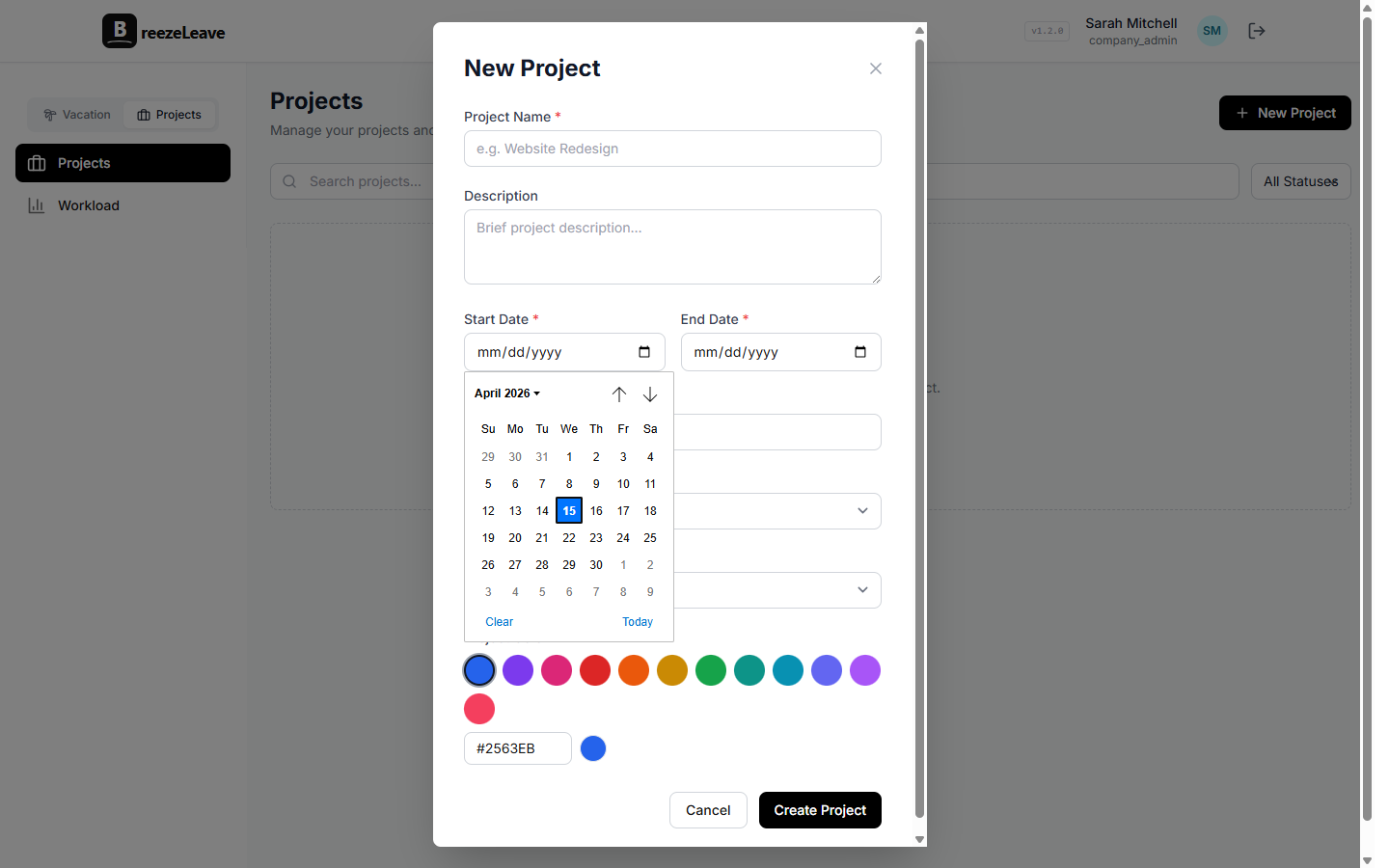
Agency workload forecasting gets messy for one simple reason: the work is planned in projects, but the capacity disappears in calendars. A strategy lead is staffed on three accounts. Two designers are booked on a launch. The Croatian team has a public holiday on Thursday. The UK client wants a Friday turnaround. Someone's two-week PTO request looks harmless until you place it against everything else already promised.
That is where leave management and project operations meet. The useful question is not "how many people do we employ?" It is "how many usable delivery hours do we have, by role, by country, and by week, after PTO, public holidays, active project work, and real logged effort are taken into account?"
BreezeLeave brings PTO, public holidays, project allocations, logged hours, utilization, active assignments, project mix, and capacity forecast views into the same operational picture so managers can spot workload risk before it becomes a missed deadline, a burned out team, or a very awkward client call.
Forecast availability, not headcount
Headcount is a weak capacity signal. A team of ten people is not ten people of delivery capacity if two are on PTO, one country has a public holiday, one person is over plan, and a retainer needs urgent support.
A useful forecast starts with available working time and then subtracts the real constraints:
- PTO and other approved absences, because those hours are not available no matter how urgent the project is.
- Public holidays, because a team split across countries does not share one universal working calendar.
- Active project allocations, because a person who is already 80% allocated only has a small amount of realistic free capacity.
- Logged hours, because actual delivery effort often exposes whether the plan was too optimistic.
- Role constraints, because five available people do not help if none of them can cover paid media, QA, design review, or client strategy.
This is the same principle behind workload capacity planning: capacity is not a single company-wide number. It is a moving weekly picture of who can actually do the work.
A simple agency forecasting example
Imagine a 24-person agency with delivery people in Zagreb, Berlin, London, and Stockholm. On paper, next week looks healthy. The agency has three active retainers, one website build, one paid campaign launch, and a few smaller support tickets. Nothing looks impossible.
Then the calendar view changes the story:
- The Zagreb team has a Thursday public holiday, and two people requested Friday PTO.
- The Stockholm team has one designer away for a full week.
- The Berlin team is working, but the senior developer is already allocated to a launch.
- The London account manager is available, but two client workshops will consume most of Tuesday and Wednesday.
Nobody is doing anything wrong. People are taking normal leave. Holidays are normal. Client work is normal. The risk appears because all of those normal things overlap. A forecast that only looks at projects says "green." A forecast that includes PTO, public holidays, and active assignments says "watch Thursday and Friday very carefully."
Practical rule
Do not review agency capacity by month only. Monthly totals hide the exact week where everyone becomes unavailable. Forecast in weekly blocks, then inspect the handful of days around holidays, launches, workshops, and major client deadlines.
Public holidays create uneven project weeks
Multi-country agencies rarely lose capacity evenly. A public holiday in one country may remove an entire discipline from a project while the client, account team, or other office keeps working.
For example, a Croatian designer might have Labour Day off on May 1 while a UK client is working. A German developer might have October 3 off for German Unity Day while a Zagreb delivery team is online. A Swedish team may treat Midsommar as a serious summer pause while another office sees an ordinary Friday. If your forecast does not account for those country calendars, you will plan as if the week has five normal working days when one part of the delivery chain only has four.
The hard part is not remembering that holidays exist. The hard part is seeing their impact next to the project plan. A Thursday holiday often turns into a low-capacity Friday because people request a bridge day. That can be perfectly reasonable from a leave policy perspective and still create delivery risk if the agency has a go-live, campaign handoff, or client review scheduled for the same week.
If your team works across countries, the deeper operational playbook is in our guide to managing PTO across countries. For workload forecasting, the key habit is simpler: every forecast review should ask which countries are actually working on the dates that matter.
Separate role capacity from general capacity
Agencies often talk about capacity as if one free person can absorb any work. That is not how delivery works. A copywriter cannot cover backend QA. A paid media specialist cannot replace a motion designer. An account director can help unblock a client conversation, but they cannot create the production hours a project needs.
A better forecast groups availability by role or capability. At minimum, most agencies should be able to answer these questions for the next four to eight weeks:
- Which roles are over capacity after approved leave and holidays?
- Which projects depend on one person with no obvious backup?
- Which retainers are consuming more logged hours than planned?
- Which weeks have enough total hours but not enough of the right skills?
- Which PTO requests overlap with launches, reporting cycles, or client workshops?
This is where project mix matters. A week with three strategy workshops is not the same as a week with three production tasks. Both may be "120 hours" in a spreadsheet, but they pull from different people and create different review bottlenecks.
Use logged hours as a forecast correction
Planned work is an assumption. Logged hours show whether that assumption is holding. If the team logs more time than expected on a project, the forecast should respond. If a team logs too little because time hygiene is weak, the forecast needs cleanup before leadership trusts it.
Say a monthly retainer is planned at 80 hours. By the middle of week two, the team has already logged 55 hours because the client requested extra reporting and an unplanned landing page. The calendar still shows the same PTO and holidays, but the workload forecast has changed. The remaining month now has less free capacity than the original plan implied.
The opposite can also happen. A project may look under control because logged hours are lower than expected, but the reason is weak time hygiene rather than real efficiency. If people are not logging client calls, QA passes, review time, and account coordination, the forecast becomes a polite fiction. Before leadership trusts utilization numbers, the agency needs consistent time tracking habits.
Pair forecasting with ClickUp time tracking and workload capacity planning.
Watch for conflicts before the approval queue
The cleanest workload forecast is built before leave is approved, not after. When a PTO request arrives, the manager should already be able to see who else is out, which public holidays sit in the same range, and which projects depend on that person.
This does not mean agencies should reject normal vacations because work exists. Work always exists. The point is to approve leave with context: move a review date, assign a cover person, warn the account lead, or shift a planned sprint before the absence becomes a surprise.
The same thinking applies to team capacity planning and vacation conflict prevention. The goal is not to make managers suspicious of time off. The goal is to remove the guessing from approvals so the agency can protect both delivery and rest.
Review forecast ranges weekly
Forecasts should move as PTO requests are approved, projects change, and logged hours come in. A weekly review gives managers time to adjust assignments, move a planned slot, discuss scope, or warn account owners before a client deadline is at risk.
For most agencies, a useful cadence looks like this:
- Every week: review the next two to four weeks for PTO, holidays, active project deadlines, and role bottlenecks.
- Every month: compare planned allocations with logged hours and adjust retainer assumptions before they drift too far from reality.
- Every quarter: look ahead for holiday clusters, seasonal vacation demand, major campaigns, and any hiring or contractor needs.
- Before peak periods: inspect bridge days, school holiday periods, summer travel weeks, and December coverage while there is still time to change the plan.
The weekly review should be boring. That is the point. If the agency only looks at capacity when someone is already overloaded, the forecast has become a postmortem. A good review is quick, factual, and early enough to be useful.
The best workload forecasts do not try to predict every surprise. They make the obvious constraints visible early enough that managers can respond while the plan is still flexible.
Start with the next six weeks. Put PTO, public holidays, active project work, logged hours, and free capacity in one review. Then ask the practical agency questions: who is overloaded, which role is the bottleneck, what deadlines sit next to holidays, and which client promises need to be adjusted now rather than apologized for later?
Related articles
Project Capacity Planning for Agencies: Connecting PTO, Workload, and Budget
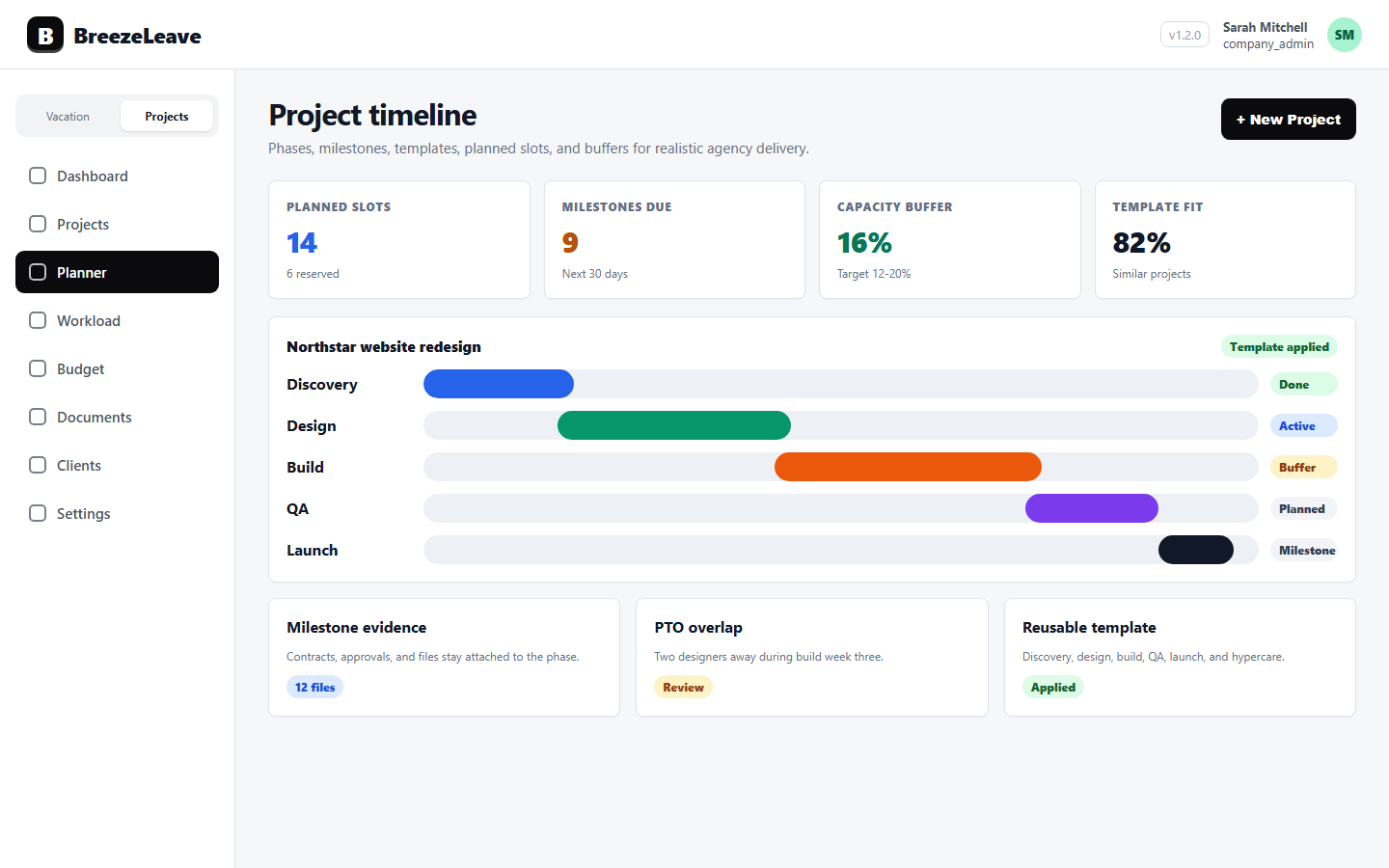
Project Planner for Agencies: Planned Slots, Unplanned Work, and Capacity