Retainer Management, Capacity, and Budgeting Guide
A practical guide to retainer management for agencies. Monthly allocation hours, retainer teams, capacity planning around other projects, and budget math you can defend.
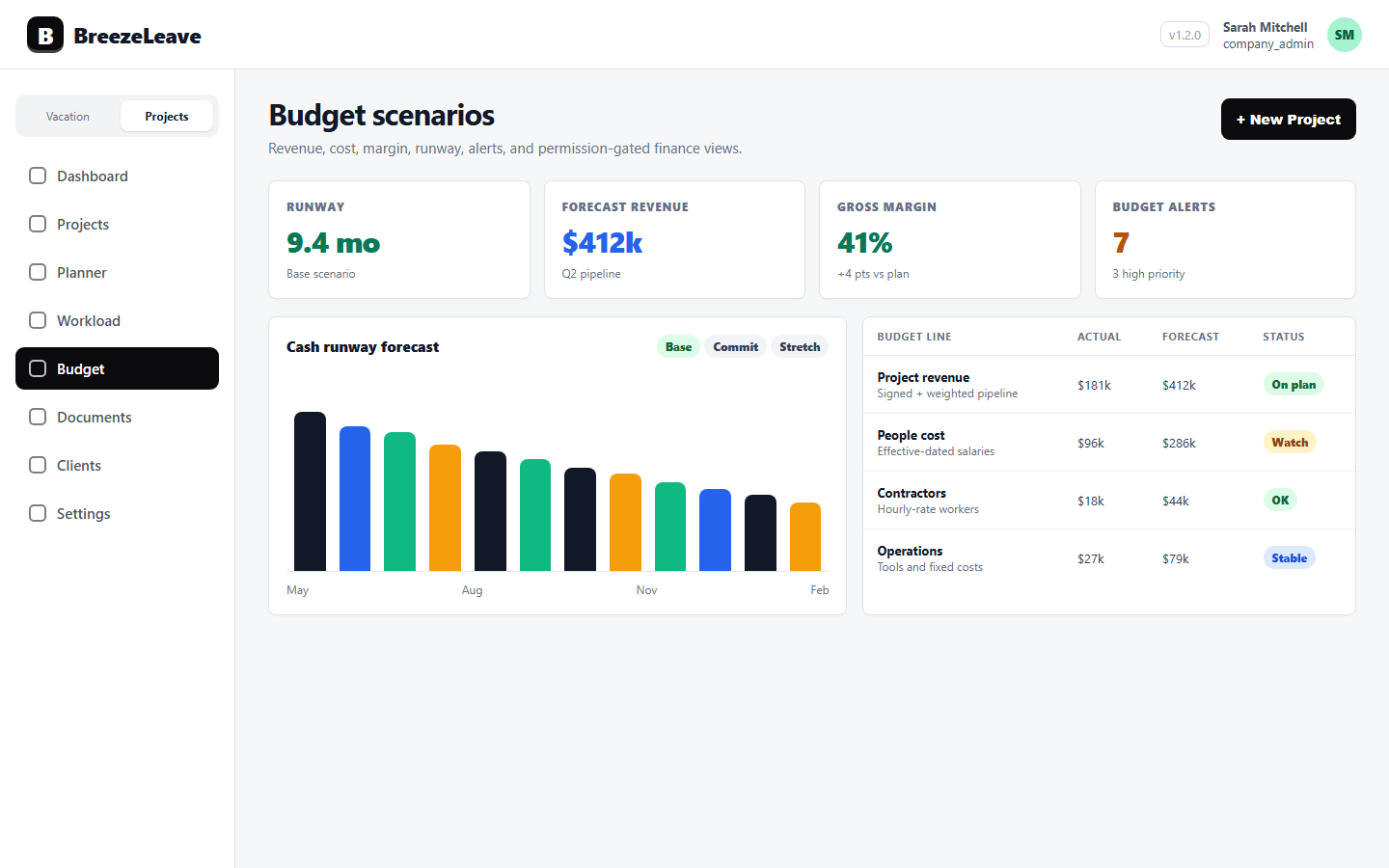
The retainer was signed in February. Forty hours a month, $7,500, renews quarterly. By the third week of April, the senior strategist is at 47 logged hours on the account, the junior designer has been pulled in twice for client requests nobody scoped, and the project budget view still says the retainer is comfortably profitable because the loaded cost has not been refreshed since the contract was signed. The account lead is about to recommend a price increase at renewal. The finance lead is about to ask why the margin slipped. Both are reading the same retainer differently because nobody is reviewing it the same way each month.
This article is for the agency owner or account lead who runs three to twelve active retainers and wants a routine that holds. The decisions are concrete: how much capacity belongs to the retainer team, how to catch over-burning and under-burning before the invoice goes out, and what to put in the renewal conversation that is not a guess.
What a retainer actually is
A retainer is a recurring commitment with three moving parts. The client pays a fixed fee every month (or quarter). The agency commits a defined number of hours, named scope, or service level. A named team delivers the work. If any one of those parts is fuzzy, the retainer will drift, and the drift will only become visible at month-end when there is nothing useful to do about it.
The contract usually says the hours reset at the start of each month. Unused hours either disappear, roll over with a cap, or convert to credit. The retainer team is sometimes explicit (named senior, named designer, named developer) and sometimes implicit (whichever pod has capacity). The fee is fixed; the cost is not, because the cost depends on which mix of people actually does the work.
BreezeLeave models a retainer as a project with a monthly allocation in hours, a retainer team assigned to it, and a reset cadence. Logged time from ClickUp rolls up against the allocation, planned slots from the project planner sit alongside it, and the client record carries the commercial context: fee, invoice schedule, renewal date.
The three failure modes
Retainer reviews fail in three predictable ways. Each one looks fine in isolation. Together, they explain most renewal frustrations.
- Over-burning. The team consumes more than the allocation covers. A 50-hour retainer that logs 64 hours has lost 14 hours of agency capacity to work the client is not paying for. The agency has two choices: surface it (uncomfortable) or absorb it (silent margin erosion). Most teams pick silence until renewal.
- Under-burning. The team consumes less than the allocation. A 50-hour retainer that logs 31 hours sounds like good news for the agency, but the client paid for 50 and got 31. The renewal conversation is now harder because the client has data that says the retainer is oversized.
- Capacity drift. The retainer team is technically delivering inside allocation, but the senior strategist has spent three weeks of every month on this account, which means they are not available for the project work the agency planned them for. Other projects slip, and the retainer is invisibly subsidised by other revenue.
Catching the three modes requires the same data in the same review, every month. Logged hours, allocated hours, the planned hours that have not been logged yet, and the team-level capacity picture for the people on the retainer.
How BreezeLeave models retainers
A retainer in BreezeLeave is a project of subtype "retainer." It carries:
| Field | Purpose | Typical value |
|---|---|---|
| Monthly allocation | Hours the client buys per cycle | 20 to 120 hours |
| Retainer team | Named people who deliver the work | 2 to 6 people |
| Reset cadence | When the hour counter resets | Monthly, sometimes quarterly |
| Monthly fee | Revenue per cycle | $3,000 to $30,000 |
| Rollover policy | What happens to unused hours | Lose, cap-and-roll, or credit |
| Renewal date | When the commercial terms reopen | Quarterly or annual |
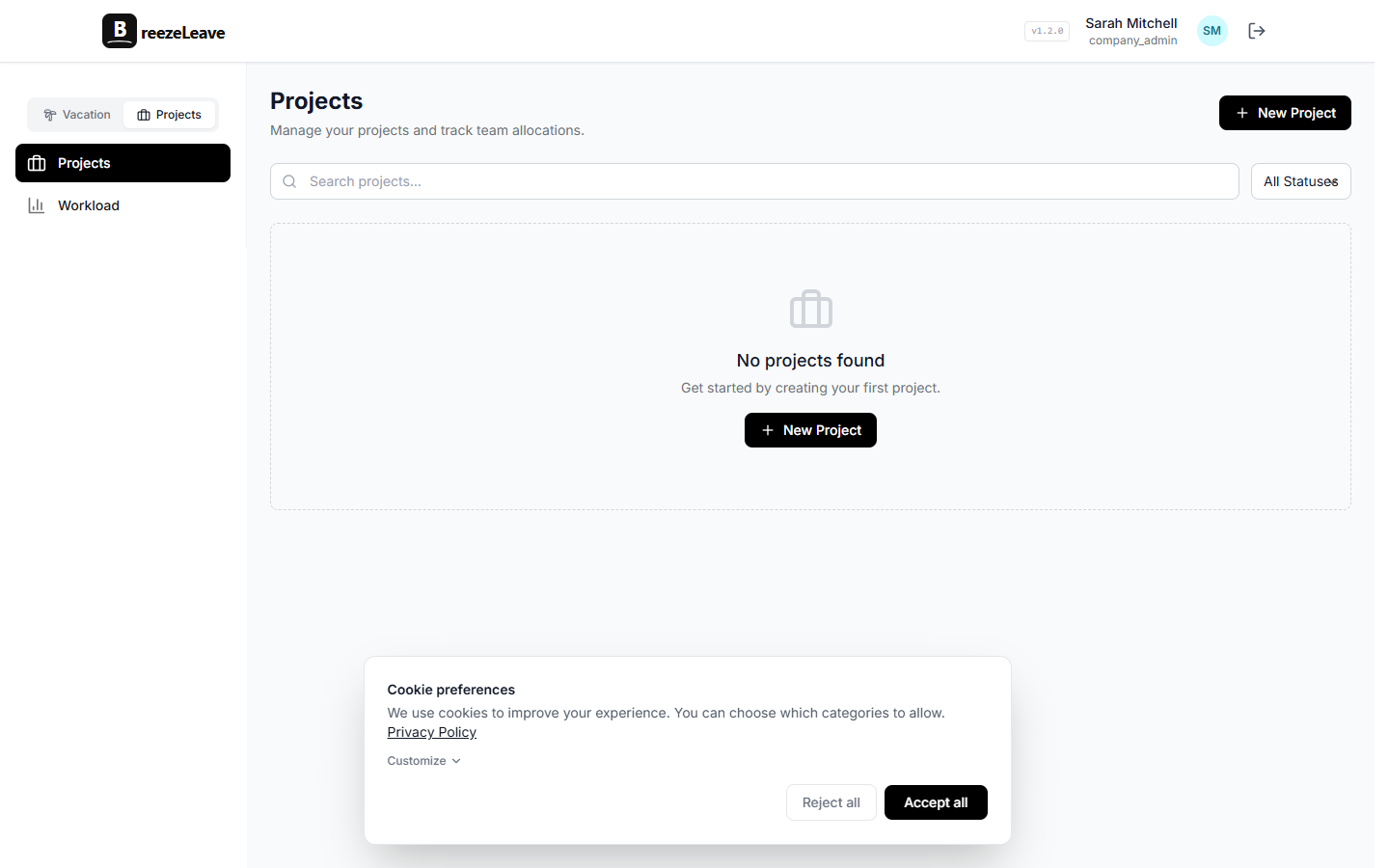
Logged hours land against the retainer when team members log time in ClickUp on tasks tagged to the retainer project. The retainer view shows consumed hours against the allocation in real time, so the account lead can see at the 15th of the month whether the retainer is tracking toward 100 percent consumption or already past it.
A worked retainer: 50 hours for $7,500
Scenario. A creative retainer for a SaaS client: 50 hours per month at $7,500. The retainer team is one senior designer, one junior designer, and one strategist who joins for the monthly planning call. Assumptions stated upfront. Loaded costs are illustrative, not pulled from a real customer. The maths is the same regardless of the rates, but the absolute numbers will differ for any agency reading along.
Revenue is fixed: $7,500 per month. Cost depends on the mix.
| Role | Hours planned | Loaded cost / hour | Cost contribution |
|---|---|---|---|
| Senior designer | 15 | $95 | $1,425 |
| Junior designer | 30 | $55 | $1,650 |
| Strategist | 5 | $120 | $600 |
| Total | 50 | $3,675 |
Planned gross margin on the retainer: $7,500 revenue minus $3,675 cost, leaves $3,825, or 51 percent. That is the number the account lead can defend at renewal as long as the mix holds.
Now the same retainer with role drift. The senior designer ends up doing 25 hours because two months in a row had hard creative decisions. The junior does 20. The strategist still does 5.
| Role | Hours logged | Loaded cost / hour | Cost contribution |
|---|---|---|---|
| Senior designer | 25 | $95 | $2,375 |
| Junior designer | 20 | $55 | $1,100 |
| Strategist | 5 | $120 | $600 |
| Total | 50 | $4,075 |
Revenue is still $7,500. Cost is $4,075. Margin drops to $3,425, or 46 percent. The retainer is still inside its 50-hour allocation. The client experience is fine. The margin moved five points in the wrong direction and nobody noticed, because the only signal anyone tracked was total hours.
The retainer is still profitable in this scenario. The point is that margin is sensitive to role mix in a way total-hours tracking will miss. A retainer review that only looks at "are we under 50 hours?" is doing half the job.
For the broader budget conversation, including how scenarios and runway tie to the same retainer book, see project budget tracking and the agency budget scenario review guide.
How retainer capacity fits with other project work
A retainer team is rarely 100 percent retainer. The senior designer in the example above is also assigned to two fixed-fee projects. The question every month is whether the planned retainer hours plus the planned project hours fit inside the available capacity, taking PTO and public holidays into account.
A useful frame is FTE math. For a designer with 160 working hours in a month, planned across:
- Retainer A: 25 hours
- Project X (fixed scope): 50 hours
- Project Y (fixed scope): 60 hours
- Approved PTO: 16 hours (two days)
- Internal time, slack, admin: 10 hours
That totals 161 hours against 160 available. The designer is one hour over plan before the month starts. A planned slot view shows that before the work begins, and the account lead can renegotiate the retainer week or reassign one of the projects rather than discover the overload at week three.
For the planned-slot mechanics, see agency resource planning and the retainer capacity planning article for the team-level rhythm.
The monthly retainer review
Once a month, on the same day, the account lead opens the retainer view and answers four questions per retainer. The whole review takes 15 minutes for a five-retainer book.
- Hours consumed vs allocated. Is the retainer on track for 100 percent, over, or under? Note the percentage.
- Role mix vs planned. Did the right level of person do the work? If senior hours replaced junior hours, flag it.
- Client experience. Did any work get refused, delayed, or out-of-scope this cycle? If yes, document it.
- What to bill, what to roll, what to credit. Based on contract terms, decide the action for any over or under in the cycle.
The decision belongs in writing. A short note in the retainer record is enough: "April: 47 hours logged of 50 allocated, role mix held, one out-of-scope ask documented and absorbed, no rollover." Future reviews and renewal conversations have a paper trail instead of a memory test.
Contract terms that matter
Five terms in the retainer contract make the operational job harder or easier. Negotiate them deliberately, not by template.
- Rollover policy. Unused hours either disappear (cleanest for the agency, hardest to sell), roll with a cap (one month is common), or convert to credit toward future work. Pick one and write it in plain language.
- Overage handling. Either the agency absorbs up to a stated buffer (e.g. 10 percent), the client pays at a stated hourly rate, or work pauses until the next cycle. The default should not be "absorb silently".
- Scope guardrails. A short list of work types the retainer covers and a shorter list it does not. Strategy and production are usually in. Net new website builds are usually out.
- Notice period. 30 to 90 days is common. Without it, retainer churn lands inside a single planning cycle and capacity becomes a fire drill.
- Price review cadence. Annual review is the safe default. Without it, costs creep and the retainer becomes loss-making two years in.
These five terms separate retainers that hold from retainers that slowly turn into resentment. They are easier to set in the original contract than to add at renewal.
Questions that come up
Should the retainer team be exclusive to the retainer? Almost never. Exclusive teams idle when the client is quiet, which is a hidden cost. A retainer team that also carries fixed-project work absorbs the variation in client demand. The trade-off is that the team has to plan capacity carefully, which is what the retainer view exists to support.
How long should the planning horizon be? One month at a minimum, with a rolling three-month view for retainers that are part of a larger program. Anything longer is forecast, not plan.
What if logged hours arrive late? The retainer view is only as accurate as the time entries. A weekly nudge to the team to log hours the same week is the cheapest way to keep the view trustworthy. The logged hours hygiene checklist has the routine.
Should rollover hours be visible to the client? Usually yes. A statement that shows allocated, consumed, and rolled-over hours builds trust and prevents disputes at renewal. Hidden balances are the most common cause of retainer arguments.
Putting the routine in place
A retainer book that runs cleanly looks boring from the outside. Each retainer has a named team, a fixed allocation, a monthly review scheduled on the calendar, and a contract that names the policy for rollover, overage, scope, notice, and price. The work of running it is the same 15-minute review every month, with documented actions afterwards.
For the underlying product mechanics, including how to set up a retainer team and configure the allocation cadence, the retainer management software page covers the setup. For the capacity rhythm that wraps the retainer into the agency's wider planning, agency resource planning and project budget tracking are the next stops.
Plan a retainer book that holds at renewal. The pricing page shows the plans that include the retainer module and the budget views.
Related articles
Retainer Capacity Planning for Agencies: Monthly Allocations Without Spreadsheet Drift
Project Budget Tracking for Agencies: Revenue, Cost, Margin, and Retainers